I’m a Sagittarius. Fire sign, double fire in my chart, and I’ve spent most of my adult life learning what that actually means in practice — which is less about being dramatic or impulsive (though fire energy has that shadow) and more about understanding what it means to carry a particular quality of energy that wants to move, to create, to push toward the horizon before the current ground is fully understood.
Fire doesn’t wait. That’s both the gift and the lesson.
Of all four elements, fire is the one most associated with the kind of energy that makes things happen — the spark that starts something, the heat that transforms it, the light that shows what was previously in the dark. Every tradition that has worked with elemental frameworks has understood fire as the activating element, the one without which the others cannot fully express themselves. Earth without fire stays dormant. Water without fire never becomes the steam that rises. Air without fire is movement without direction.
And yet fire alone — without earth to ground it, water to temper it, air to give it direction — burns through everything it touches and leaves ash.
The spiritual work of fire isn’t just learning to access its energy. It’s learning to be in relationship with it.
Every human culture in recorded history has worked with fire as a sacred element. The universal quality of this isn’t accidental — fire is the element humans had the most direct and consequential relationship with for most of our existence. It was warmth, light, protection, the ability to cook food and transform raw materials, the center of community life. Its sacredness is inseparable from its necessity.
In classical Western esoteric tradition — the four-element framework running through alchemy, astrology, tarot, and modern pagan practice — fire is the element of the south, of summer, of noon, of the will made manifest in the world. It corresponds to the wand as a symbol, to the suit of Wands in tarot, to passion, creativity, and the energy of directed action.
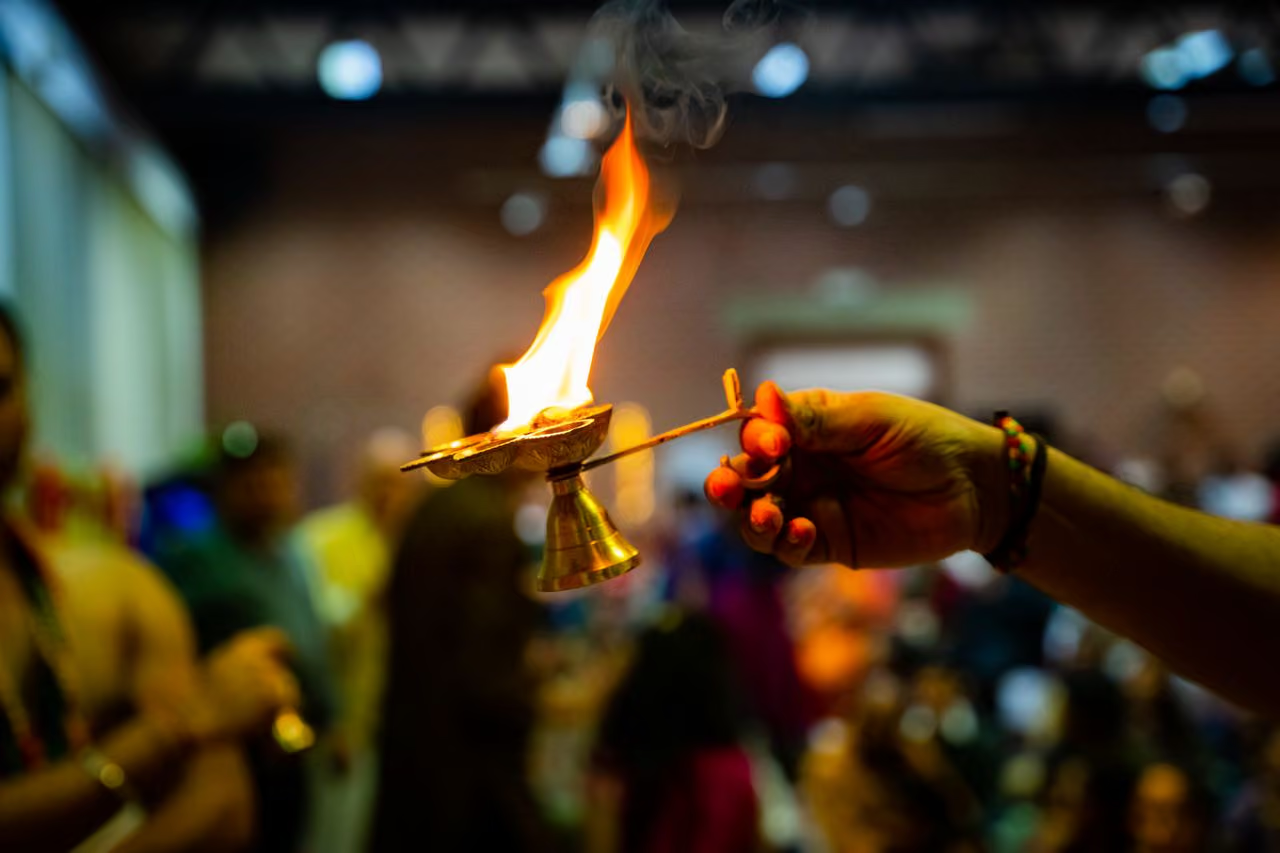
In Hindu cosmology and Ayurveda, fire (agni) is one of five classical elements and is considered the most transformative — the element that digests, purifies, and converts raw material into something usable. Agni governs the digestive fire in the body, the fire of intelligence that processes experience, and the sacred fire at the center of ceremony. Agni is also a deity — one of the oldest and most important in the Vedic pantheon, the messenger between humans and the divine, the one who carries offerings upward into the realm of the gods.
In Chinese five-element theory, fire (火, huǒ) governs the heart and small intestine, summer, the south, and the emotion of joy — and in its shadow, anxiety. Fire in the Chinese system is the element of connection, warmth, and relationship — the hearth that draws people together as much as the flame that transforms.
In Celtic and Northern European traditions, fire is the element of Beltane and midsummer — the high point of the year’s energy, the time of maximum light and vitality. The ritual lighting of the Beltane fire, through which cattle were driven for purification, treats fire as a threshold and a cleanser — a force that burns away what is no longer needed and blesses what passes through it.
Across nearly every shamanic tradition globally, fire is the gateway to the spirit world — the place where the boundaries between ordinary and non-ordinary reality thin. Sitting with fire, watching its movement, allowing the mind to enter the altered state that sustained flame-gazing naturally produces — this is one of the oldest forms of spiritual practice available.
Prometheus, in Greek mythology, stole fire from the gods to give to humanity — and was punished eternally for it. The story is instructive: fire was considered so powerful, so transformative, that divine beings hoarded it. The fire of creative intelligence, of the ability to transform the world, of the divine spark — these were understood as sacred and dangerous simultaneously. That dual quality is still the most honest description of what working with fire energy actually involves.

Fire isn’t a single quality — it’s a domain. Here’s what falls within it.
Transformation and change. Fire is the element of transformation in its most immediate sense — it literally changes the state of what it touches. Wood becomes flame becomes ash becomes soil. Raw becomes cooked. Ore becomes metal. Spiritually, fire governs the capacity to change, to allow what needs to end to end, and to trust that something new emerges from what the fire consumes. Working with fire energy means developing a relationship with change that isn’t only loss — understanding that what the flame burns was ready to become something else.
Creative will and passion. Fire is the energy behind every creative act — the spark of inspiration, the sustained heat required to develop an idea into something real, the courage to put something you made into the world. Artists, musicians, writers, performers — anyone whose work requires sustained creative output understands fire energy intimately, whether they name it that or not. The challenge of fire in creative work is sustaining it: inspiration arrives as a spark, but the work requires a sustained burn, which is a different kind of relationship with the element.
Courage and the will to act. Fire governs the courage to move — to begin something when beginning is uncertain, to continue when continuation is difficult, to take a position and hold it under pressure. The solar plexus chakra’s connection to fire is not coincidental: the seat of personal power is a fire center, and when fire energy is healthy and clear, the capacity to act from genuine authority — not bravado, not reactivity, but real inner clarity — is available.
Purification. Many traditions work with fire as a purifying element — burning what no longer serves, releasing what has accumulated, clearing the way for what comes next. Fire ceremonies, candle magic, the burning of written intentions or old letters — all draw on fire’s capacity to transmute rather than simply remove. What passes through fire doesn’t disappear; it changes form.
Divine inspiration and illumination. The flame as a symbol of divine presence appears across almost every spiritual tradition — the burning bush, the Olympian flame, the eternal flame in sacred spaces, the candle lit in prayer. Fire carries the quality of illumination: it makes visible what was hidden in darkness, both literally and metaphorically. Spiritual insight, revelation, the sudden clarity that arrives after sustained seeking — these are fire experiences.
Fire’s primary home in the chakra system is Manipura — the solar plexus, the third chakra, between the navel and the sternum. Manipura means “city of gems” in Sanskrit — a name that suggests the richness of what this energy center holds when it’s functioning well.
The solar plexus governs personal power, will, confidence, self-esteem, and the capacity to take directed action in the world. When it’s balanced and fire energy is flowing, there’s a quality of purposeful confidence — you know what you want, you trust your own judgment, and you can act without being derailed by others’ opinions or your own inner critic.
When solar plexus fire is depleted — which chronic self-doubt, prolonged criticism, and the sustained experience of not being seen or heard all contribute to — the symptoms are familiar: difficulty making decisions, waiting for permission that never comes, a sense of powerlessness in the face of circumstances that should be navigable. Fire energy has gone out, or it’s smoldering when it needs to burn.
When solar plexus fire is excessive — running hot without direction or grounding — it expresses as aggression, control, the need to dominate or impose. Too much fire without earth to contain it, water to temper it, air to give it intelligent direction.
Working with fire element practices — citrine and carnelian for solar plexus activation, candle meditation, physical movement that generates heat, creative work that requires sustained output — is among the most direct ways to restore and maintain healthy fire energy.
In tarot, fire’s suit is Wands — the cards of passion, creative energy, ambition, and the force of will directed outward into the world. Wands energy moves fast, lights up quickly, and — like fire itself — can sustain or burn through depending on how it’s tended.
The Ace of Wands is pure creative spark — the moment of inspiration before it has taken any particular shape. The Three of Wands is fire establishing its vision and beginning to reach outward. The Nine of Wands is fire that has been burning a long time, weary but not extinguished, still holding its position. The King of Wands is fire mastered and directed — vision, charisma, and the ability to lead others toward what is being built.
The fire zodiac signs carry these qualities in astrology. Aries, ruled by Mars, is fire as initiation — the first spark, the charge forward, the energy of beginning. Leo, ruled by the Sun, is fire as radiance and creative self-expression — the performer, the leader, the one who warms others with their presence. Sagittarius, ruled by Jupiter, is fire as exploration and philosophical reach — the archer aimed at the distant horizon, the one who needs to understand not just what is but what could be.
That last one I know from the inside. Fire as the need to keep reaching, to keep making, to not mistake the temporary dimming of the flame for its end.
Candle meditation. Sit in a darkened room with a single candle at eye level. Let your gaze soften and rest on the flame without forcing focus. Watch how it moves — the way it responds to breath and air current, the constant transformation at its core. Let your awareness settle into what the flame does rather than what you think about it. This is one of the oldest forms of fire meditation available and one of the most immediately effective for accessing fire’s illuminating, clarifying quality.
Fire ceremony and burning rituals. Write what you want to release on a piece of paper — an old pattern, a fear, a version of yourself that you’ve outgrown — and burn it safely. Watch it transform. This is fire as purification: not suppression or denial but genuine release through transformation. Fire ceremony at seasonal transitions, at the new or full moon, or at any significant life threshold is a powerful way to mark endings that need to be honored before new beginnings can take hold.
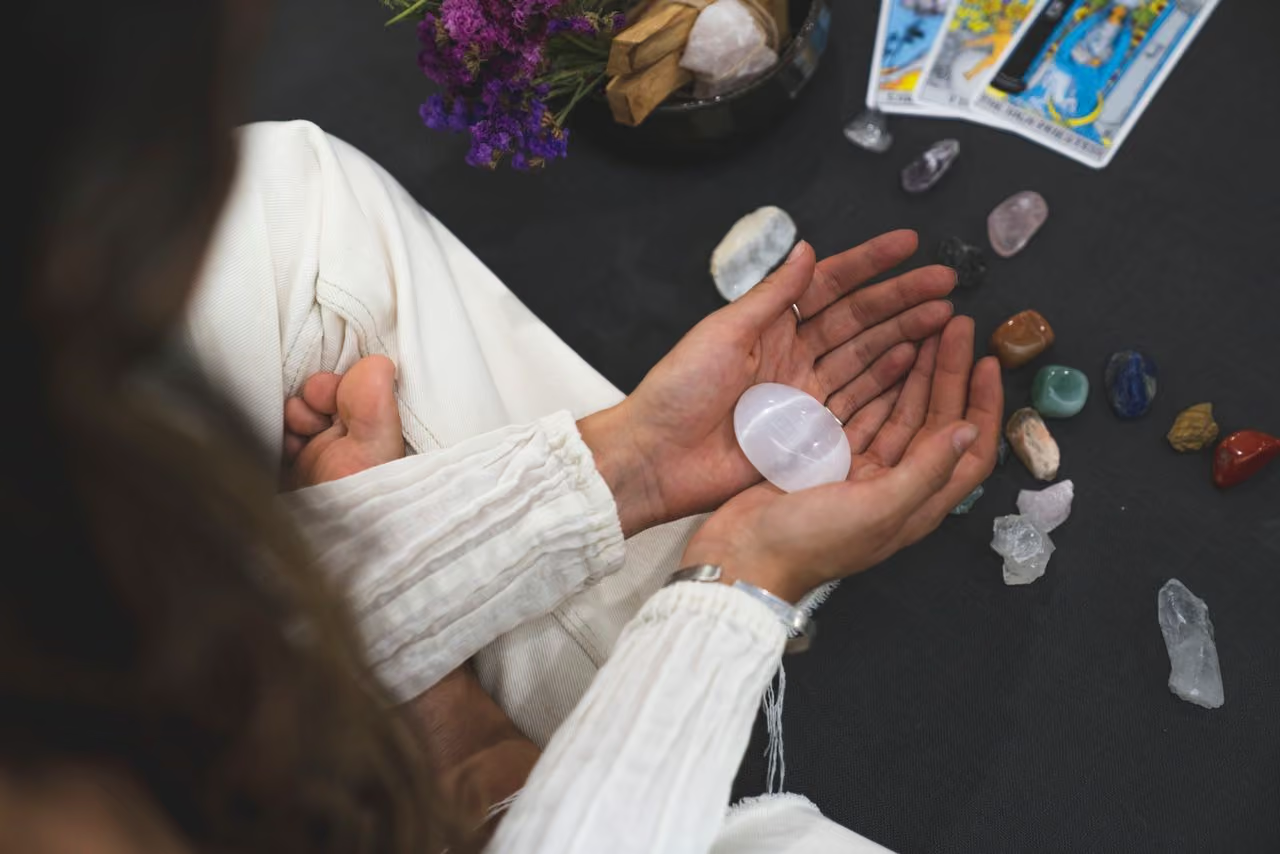
Working with fire element crystals. Citrine, carnelian, tiger’s eye, sunstone, and garnet are among the most accessible fire element crystals. Hold them during meditation, carry them when you need access to fire energy — before a performance, a difficult conversation, a creative session that requires sustained output. Citrine in particular is the solar plexus stone most aligned with fire’s solar, expansive quality.
Physical movement that generates heat. Fire energy lives in the body as warmth and vitality. Dance, vigorous yoga, running, any movement practice that generates heat and gets the body fully engaged is a fire practice. The solar plexus activates through physical movement in a way that seated meditation alone doesn’t always reach. If fire energy feels depleted, move before you meditate.
Creative practice as fire work. Making something — music, visual art, writing, cooking, any act of genuine creative production — is working with fire energy directly. The sustained attention required, the willingness to move through the difficult middle where the initial spark has faded and the work isn’t finished, the courage to complete and share — all of this is fire in practice. Treating creative work as spiritual practice, rather than as a separate category of activity, is one of the most honest ways to honor the fire element.
Time in summer sun. Fire’s season is summer, its time is noon, its direction is south. Spending time outdoors in direct summer sunlight — consciously, with awareness rather than just incidentally — is the most literal form of fire element connection available. Let the warmth land on your skin and be received rather than endured.
Fire energy becomes shadow when it loses its relationship to the other elements.
Fire without earth becomes consuming — passion without grounding, creative energy without the patience to build anything lasting, the spark that lights everything and sustains nothing.
Fire without water becomes cruel — will without compassion, ambition without feeling, the drive to achieve that runs over everything in its path without registering the damage.
Fire without air becomes blind — action without thought, courage without intelligence, the charge forward that hasn’t considered where it’s going or why.
The spiritual practice of fire is not just access to its energy but the willingness to tend it — to feed it when it dims, contain it when it runs hot, and trust that the things it burns were ready to become something new. Fire that is tended becomes the hearth. Fire that is left untended becomes the wildfire. The difference is attention.
Light a candle. Sit with it for five minutes — not meditating on a concept, not working through something, just watching the flame.
Notice what it does. How it responds to the air in the room. How it finds its own stillness within constant movement. How the light it casts changes the quality of everything around it.
Ask yourself one question: what am I building? Not what should I be building, not what do I wish I were building — what am I actually, currently building with the energy I have?
Let whatever comes up be information rather than judgment. Fire illuminates — it doesn’t evaluate.
Blow the candle out when you’re ready. Watch the smoke rise. Notice what you’re carrying as you return to the rest of your day.
Don’t forget to follow Kellee for the latest news and music:
add soundcloud, IG





Sign up to get our latest news and stay connected.
Thank you! Your submission has been received!
Oops! Something went wrong while submitting the form



.avif)

.avif)
