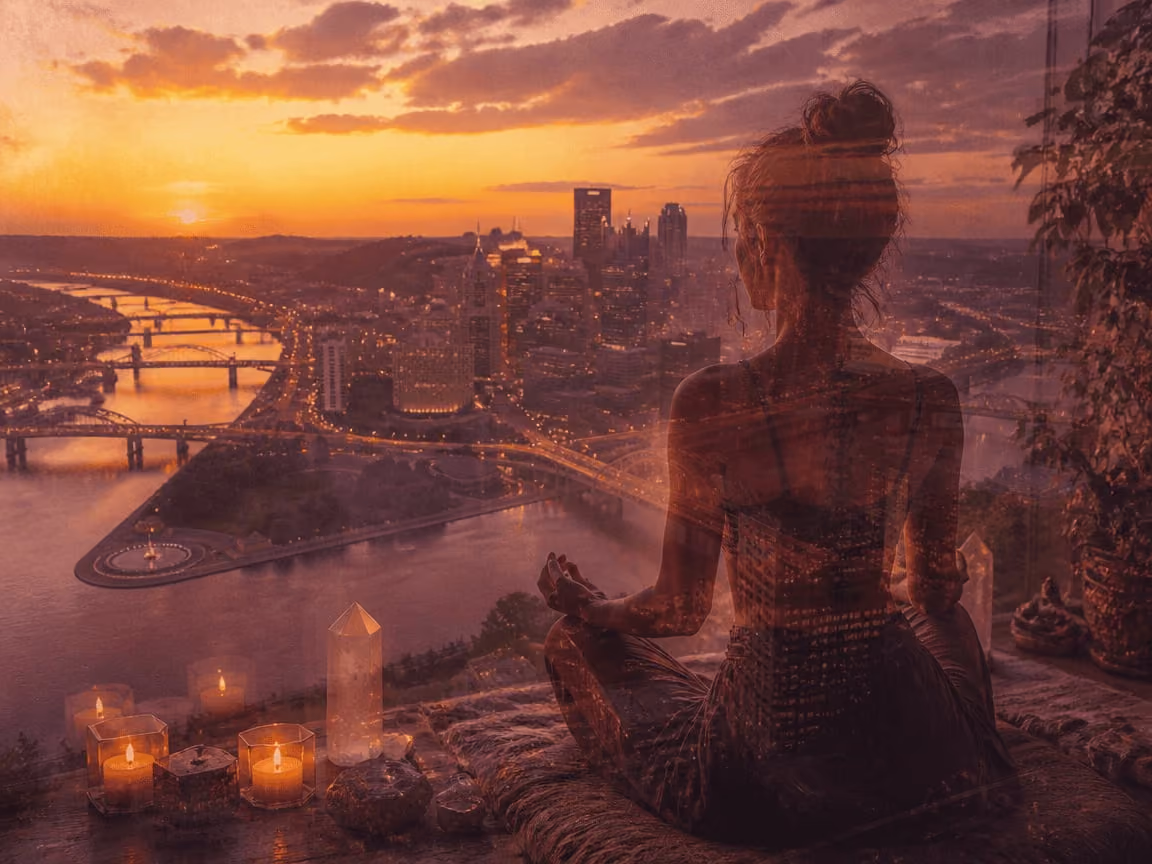
There's a reason so many spiritual traditions have tracked the moon for thousands of years. It's not superstition. It's observation — the careful, accumulated recognition that the lunar cycle maps onto the cycles of energy, creativity, and growth in ways that are genuinely useful if you pay attention to them.
The waxing moon is my favorite phase to work with. It's the two weeks between the new moon and the full moon, when the light is growing — and so, if you're working with it intentionally, is everything you're trying to build. This is the phase for momentum. For action. For taking the seed you planted at the new moon and doing something with it while the energy is moving in your direction.
I've worked with lunar cycles as part of my spiritual practice for years. What I've found is that the waxing moon isn't magic in some vague sense — it's a container. A two-week window with a specific quality of energy that, once you learn to recognize it, becomes one of the most useful tools in any creative or spiritual practice.
The Lunar Cycle has been known to reflect different phases of life that people are going through. Whether it’s a time to plan or a time to let go, the phase of the moon affects what people are doing with their lives. In this post, we will be introducing ourselves to the different phases of the moon, especially the waxing moon. We will talk about how waxing moons affect us and what we can do during this time to help to improve ourselves through different ways such as rituals.
This guide is everything I know about working with it well. We will be touching on the following items:

As you might already know, the moon orbits the earth, and the earth revolves around the sun. So why does the moon always look different, but the sun always just looks the same? Well, how we see the moon on earth depends on its position relative to the earth and sun. While the moon might appear to be a different shape at times, the physical shape never actually changes. The shape looks different because of the amount of light the moon is reflecting off of its surface.
There are several different shapes or phases that the moon goes through. These phases include: new moon, waxing crescent, first quarter, waxing gibbous, full moon, waning gibbous, third quarter and waning crescent. This is a monthly cycle that the moon goes through in this order. As you can see, the moon orbits around a lot faster than the earth orbits around the sun.
A new moon occurs when the far side of the moon reflects off of the sun. When looking at the moon from earth during this phase, you can’t really see it. A full moon occurs when the side of the moon closest to us reflects off of the sun, and the shape we see appears to be the full diameter of the moon.
You’ve probably heard of the phrase lunar eclipse, but what is it exactly? Well, a total lunar eclipse occurs when the moon is on the exact opposite end of the earth from the sun, so the earth is blocking the sun’s light from reaching the moon. There can also be a partial lunar eclipse, meaning that only part of the earth’s shadow covers the moon. The earth’s shadow is called the umbra. Once the umbra completely covers the moon, the moon can appear to have a reddish tint.
So now that you know some of the basics, you can hopefully identify some of the phases and know the science about them. Next time there’s a full moon, you can impress your friends and tell them that it occurs because the near side is a reflection of the sun.

The waxing moon is the phase of the lunar cycle when the moon's illuminated surface is increasing, or waxing, from an Old English word meaning to grow or increase. It begins immediately after the new moon, when the moon is invisible or barely visible in the sky, and builds over approximately fourteen days to the full moon, when the entire face is illuminated.
The word waxing confuses people sometimes because we also use it to mean removing hair, which has nothing to do with this. In the lunar context it simply means growing. The opposite — the waning moon — is the phase when the light is decreasing, from full moon back to new.
The three phases within the waxing moon
The important part is that the waxing phase isn't uniform. It has its own internal movement and each sub-phase carries a slightly different quality of energy.
Understanding where you are in the lunar cycle doesn't require any special tools or knowledge. Look up. If the moon is getting bigger each night, you're in the waxing phase. If it's getting smaller, you're in the waning phase. That's the whole arc at its most basic.
Days 1 to 7 after new moon
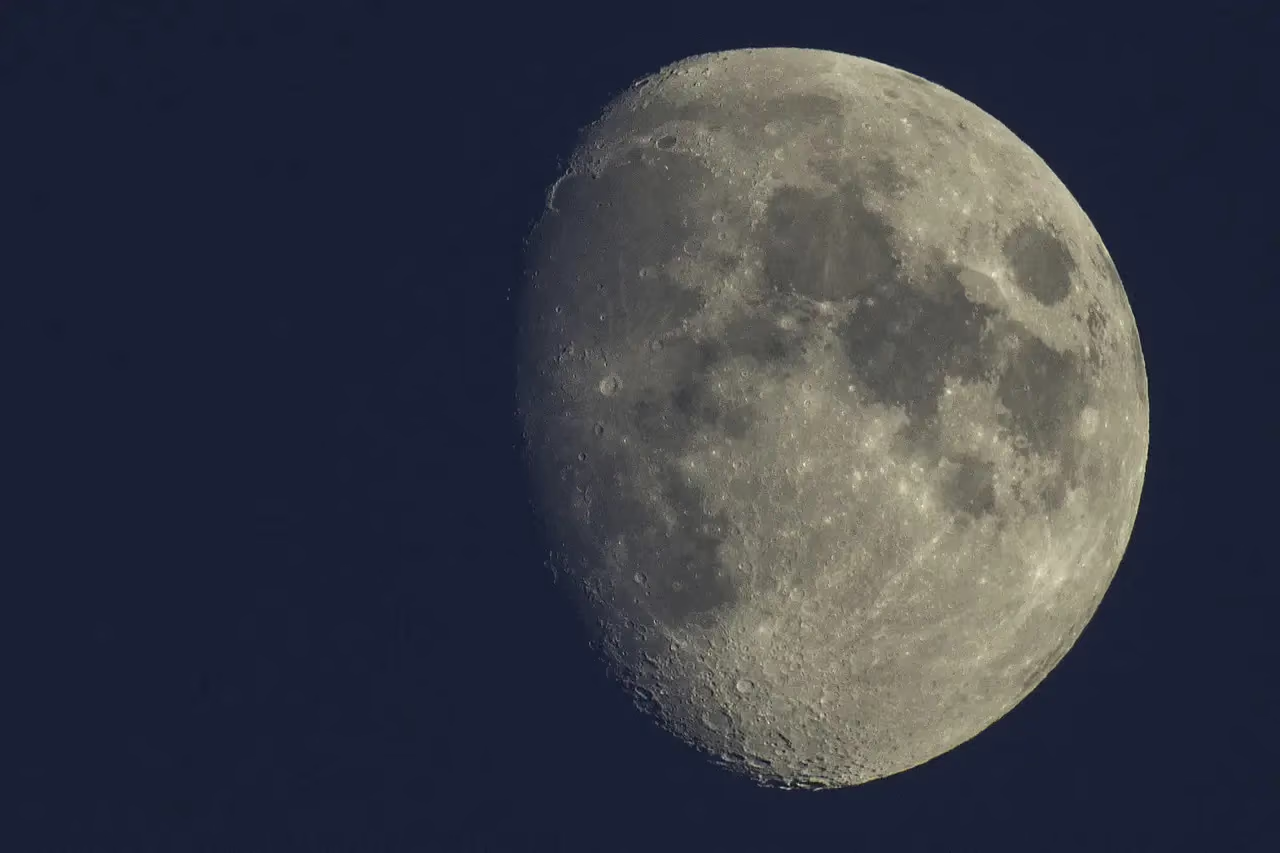
A waxing moon occurs between a new moon phase and a full moon phase. The next phase that happens after a new moon (which was described in the section above) is a waxing crescent. A waxing crescent is when 1-49% of the moon is illuminated, and the shape that you see pretty much looks like a toenail in the sky. The side that appears to be illuminated depends on where you live of course. If you live in the northern hemisphere, it will seem like the right side is illuminated, and if you live in the southern hemisphere, it will seem like the left side is illuminated.
This is the earliest and most tender part of the waxing phase. The moon is just a thin sliver of light in the sky, and the energy matches — it's delicate, tentative, full of potential but not yet momentum. This is the right time for planting seeds, writing intentions clearly, beginning the first small steps toward what you want to build. Don't push too hard here. The energy isn't ready for force yet. It's ready for direction.
Ritual focus: intention clarification. Journaling. Deciding specifically what you're calling in during this cycle. Beginning — even in a small way — something new.
Approximately day 7
The first quarter moon is the halfway point between new and full — the moon appears as a half-circle in the sky, exactly split between light and dark. Which side appears to be illuminated once again depends on where you live. This is a decision point. The intentions you set at the new moon are now being tested by the friction of reality. Something is resisting. A choice has to be made. The first quarter is not a crisis — it's an invitation to commit.
Ritual focus: recommitment to your intentions. Clearing obstacles — practical or energetic. Making the decision you've been avoiding. Taking the action that feels risky but necessary.
Days 7 to 14 before the full moon
The last phase of the waxing moon is the waxing gibbous, which is where 51-99% of the moon appears illuminated. This is when some people confuse a full moon and a waxing gibbous because the moon could look full, but it’s really only 95% illuminated.
The waxing gibbous is the phase of refinement and building force. The moon is almost full — large, bright, unmistakably growing — and the energy is correspondingly intense. This is where the real work happens. You've set the intention, you've made the decision, and now you're in the sustained effort of building toward fruition. It can feel like a pressure cooker here — things are moving quickly, requiring attention, demanding follow-through.
Ritual focus: sustained effort. Refinement of what you're building. Trusting the process even when the outcome isn't yet visible. Staying the course.
And of course, after the full moon there is the waning moon. The waning moon happens in the opposite order of the waxing moon, starting with the waning gibbous. This is when the moon is slightly less illuminated than the full moon. During a waning gibbous, you should be feeling grateful and appreciative of the hard work you’ve done.
The third quarter is when the moon is half lit once again. This phase is about letting go and learning to forgive yourself and others.
Finally, the last waning stage is the waning crescent, which is similar to the waxing crescent. During this time, you might feel empty and lonely. It's time to surrender and rest. Get prepared for the next cycle during this time.
When the moon is in a waning phase, you should be evaluating your old habits and relationships and deciding what’s worth keeping and what’s worth getting rid of. This is a time for downsizing.

To start simply: the energy of the waxing moon is powerful, so it's can be an important piece in deciding when to perform more elaborate rituals. We'll get to those in a minute. But lunar energy has a way of flowing just below the surface, where you might not notice it, during your everyday rituals as well. Luckily, it's easy to tap into the waxing moon's spirit of renewal and new beginnings, even in small ways.
The new moon is when you plant the seed. The waxing moon is when you water it — consistently, with attention, without uprooting it every few days to check whether it's growing. The single most important waxing moon practice is returning to your intentions regularly across the two-week phase rather than setting them once and forgetting them.
Write your intentions somewhere you'll see them. Speak them aloud in the morning. Connect to them before sleep. This isn't about magical thinking — it's about keeping your attention and your actions aligned with what you said you wanted, which is harder than it sounds and more powerful than most people give it credit for.
Candle rituals during the waxing moon work with the symbolism of growing light. Choose a candle color aligned with your intention — green for abundance and growth, orange for creativity and motivation, yellow for clarity and confidence, white for general amplification. Carve or write your intention on the candle if it's a taper, or write it on a piece of paper to place beneath a pillar candle. Light it with intention. Let it burn while you focus on what you're building. You can work with the same candle across multiple nights through the waxing phase, returning to it and reconnecting to the intention each time.
For a deeper candle ritual practice during the new and waxing moon, the candles and new moon ritual guide has the full framework.
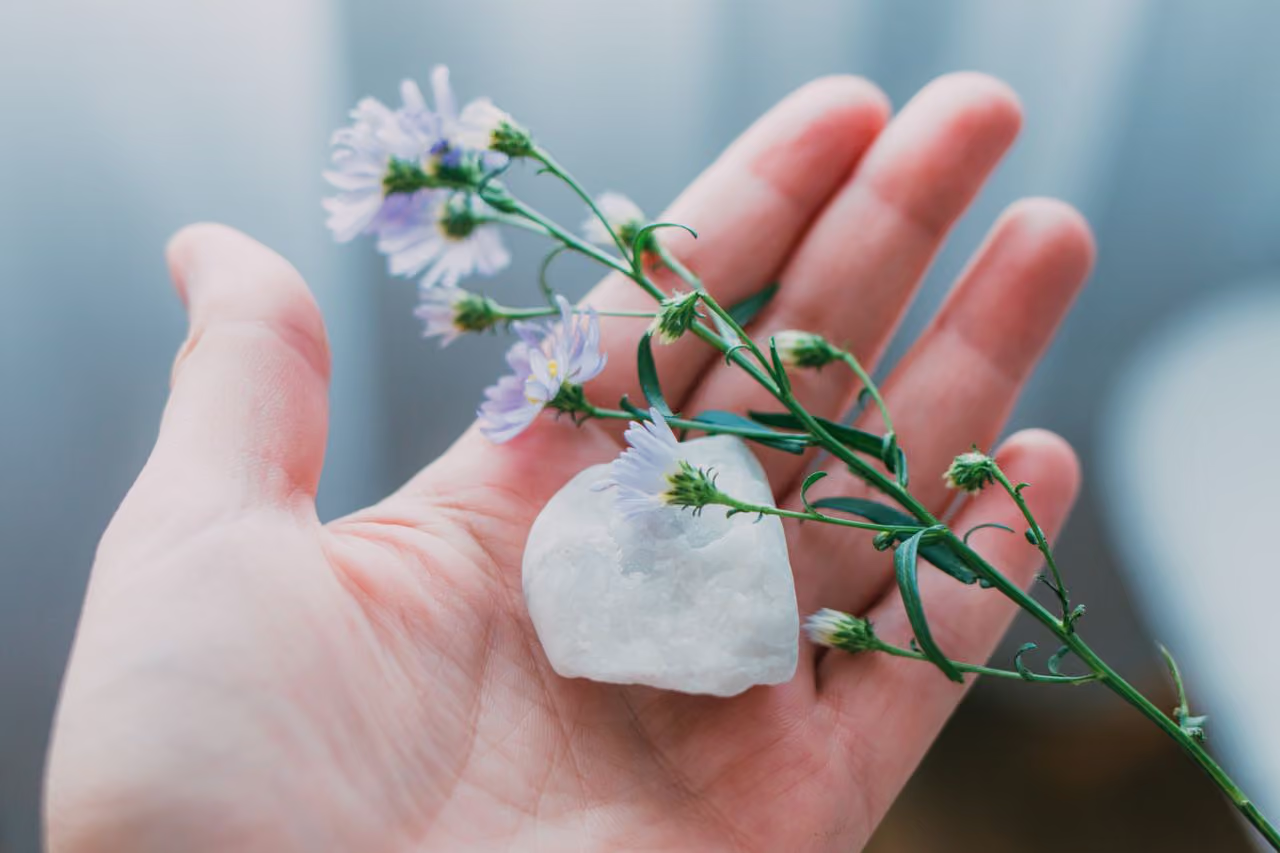
The waxing moon is one of the best times to work with crystals that carry expansive, growth-oriented energy. Citrine for abundance and manifestation. Green aventurine for opportunity. Carnelian for motivation and creative drive. Clear quartz for amplifying whatever intention you're working with. Moonstone for deepening your connection to lunar energy.
Place your crystals where they'll catch the moonlight during the waxing phase — a windowsill is ideal. Hold them during meditation or ritual and direct your intentions into them. Carry them with you as physical anchors for the energy you're building.
The waxing moon is a natural time for forward-facing journaling — not processing or releasing, which belongs to the waning phase, but visioning and planning. What are you building? What does it look like when it's complete? What do you need to do, release, or become to get there? What is asking for your attention and energy right now?
Some practitioners use a consistent waxing moon journaling structure — the same questions each cycle — to track patterns across months. Over time you start to see what consistently seeds and grows, what consistently stalls at the first quarter, what tends to arrive at the full moon and what needs another cycle. This long-view tracking is one of the most underrated tools in lunar practice.
The waxing moon's energy is active and building — which makes it naturally compatible with physical, embodied practices rather than purely contemplative ones. Dance. Movement. Yoga sequences oriented toward expansion and opening rather than release. Exercise as ritual, done with intention rather than just routine.
The sacral and solar plexus chakras are particularly activated during the waxing phase — the centers of creative energy, personal power, and forward momentum. Music that works with these chakras can amplify your waxing moon practice significantly.
The waxing moon has a long folk tradition of abundance rituals — practices oriented toward drawing in prosperity, opportunity, creativity, and growth. These vary widely across traditions and can be as simple or elaborate as resonates with you.
A simple version: on the night of the waxing crescent, write down what you're calling in — specifically, concretely, without hedging. Place it on your altar or somewhere intentional. Add something that symbolizes abundance to you — a coin, a crystal, a seed, a flower. Light a candle. Speak your intention aloud. Return to it at the first quarter and at the waxing gibbous, adding to it, recommitting to it, noting what has already begun to move.
The ritual matters less than the intention and the consistency. What you're doing, beneath the specific practice, is training your attention — keeping it focused on what you're building rather than letting it scatter across everything that isn't working yet.
.avif)
Below are just some rituals from different sites that you can try. If these don’t work for you, feel free to do your own google search and find some rituals that you are interested in.
A waxing moon is the perfect time to figure out your dreams and intentions. This is a time for you to check in with yourself and figure out what you really want to do with your life. Here are the steps to performing this ritual and gaining spiritual clarity and guidance.
This ritual is a good way to help you figure out your goals and what you want from your life.
Spiritual baths help us to feel more protected when we are vulnerable. To perform this spell bath, you will need the following ingredients: rue, bay leaf, rosemary and one white candle. Then, you will need to follow these steps.
After this, you are free to cast whatever spells you may choose.
In this section we just listed a couple rituals for you to try during this time. There are quite a few different rituals/pre-spell baths you can perform, so it’s important that you find the ones suited for you. If you are looking to cast spells during this time, there are plenty of different resources for you to try on the internet. You can cast spells for love, success, and just to find inner peace within yourself. You can check out some of these spells here.
The waxing moon is not the time for releasing, cleansing, or letting go. That energy belongs to the waning phase — after the full moon, when the light is decreasing and the natural momentum is toward completion and release rather than building and growth.
If you try to do releasing work during the waxing phase — releasing old patterns, cutting cords, clearing out — you'll often find it doesn't stick, or it takes considerably more effort than it would during the waning moon. You're working against the current rather than with it.
The waxing moon is also not the time for the kind of deep introspective work that asks you to go inward and be still. That's new moon energy. The waxing phase is active, outward-facing, and oriented toward what's coming rather than what's already been.
Working with the natural current rather than against it isn't superstition. It's efficiency. The same energy expenditure produces more results when it's aligned with the phase than when it's fighting it.
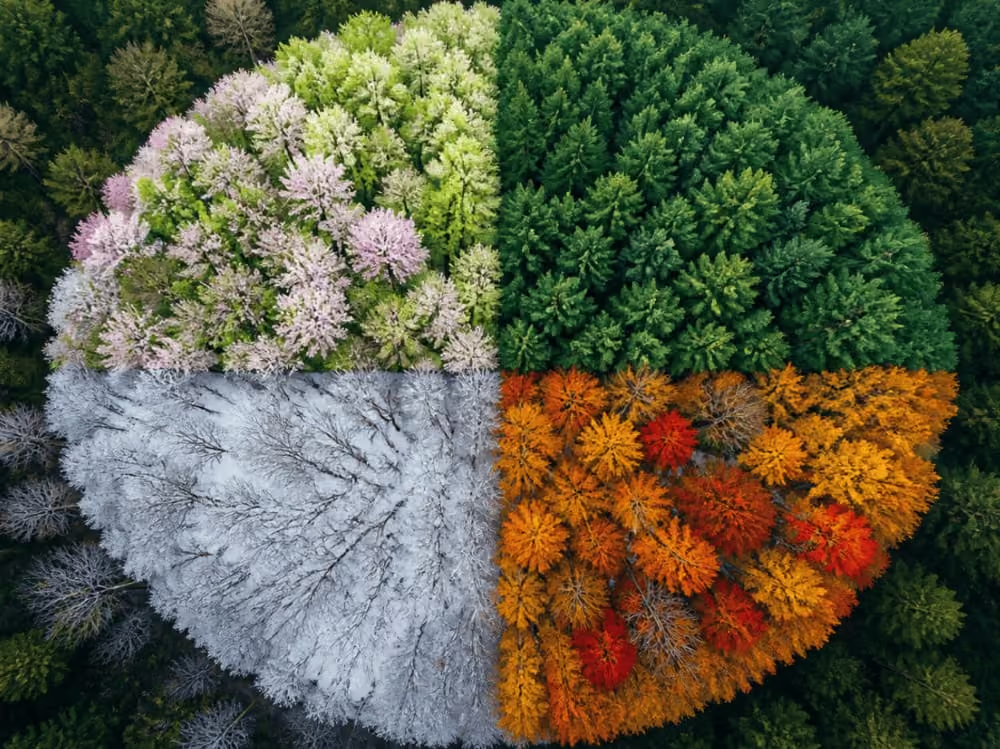
If you work with the Wheel of the Year — the eight seasonal celebrations that mark the solar cycle — the waxing moon practice deepens when you understand how lunar and solar cycles interact. The most potent times for waxing moon ritual work tend to be when the lunar waxing phase coincides with the solar growth season: spring through midsummer, from Ostara through Litha.
The waxing moon that falls near Beltane, for example, carries a particularly concentrated creative and generative energy — the fire festival's themes of vitality and creative power amplified by the moon's growing light. Working with both simultaneously doesn't require elaborate ritual. It just requires awareness of where you are in both cycles at once.
When the moon is in the waxing phases, you should be figuring out your plans and getting a move on them. Hopefully, this article gave you a good insight into the meaning behind a waxing moon and how you perform rituals during this time.
Don’t forget to follow Kellee for the latest news and music:
add soundcloud, IG





Sign up to get our latest news and stay connected.
Thank you! Your submission has been received!
Oops! Something went wrong while submitting the form

.avif)

.avif)