.avif)
There is no human culture in recorded history that did not consider water sacred.
Not one. Across every continent, every era, every religious and spiritual tradition we have knowledge of — water has been understood as more than a physical substance. As a living being. As a carrier of divine energy. As the boundary between the ordinary world and something larger. As the most fundamental medium of purification, of transformation, of the passage between states.
This near-universal recognition isn't coincidence. It isn't primitive thinking that science has superseded. It's the accumulated wisdom of billions of human beings who paid close attention to what water does — not just chemically, but experientially. What it feels like to immerse your body in it. How it changes the quality of a space. What it carries away and what it carries in.
Water covers seventy percent of the earth's surface. The human body is roughly sixty percent water. We begin our lives in water. Many traditions teach that we return to water. The relationship between human consciousness and water is older than any religion or spiritual framework and runs underneath all of them.
This is what that relationship means.
Despite the enormous diversity of human spiritual expression, water's sacred meaning shows striking consistency across cultures that had no contact with each other. Understanding those common threads is the most honest way into what water actually means spiritually — not what any single tradition says, but what the accumulated human experience of water reveals.
The most universal spiritual use of water is cleansing — the removal of spiritual contamination, negative energy, sin, or whatever a given tradition calls the accumulated weight of harmful experience. Baptism in Christianity. Mikveh in Judaism. Wudu in Islam. Ritual bathing before Hindu ceremony. The sweat lodge's steam rising from heated rocks and water. The morning shower as a secular version of the same ancient practice.
What these share is the understanding that water doesn't just clean the physical body. It cleans something subtler — the energetic residue of experience, the weight of what's been carried, the spiritual condition of the person who enters. You go in one way and come out another. The water mediates the change.
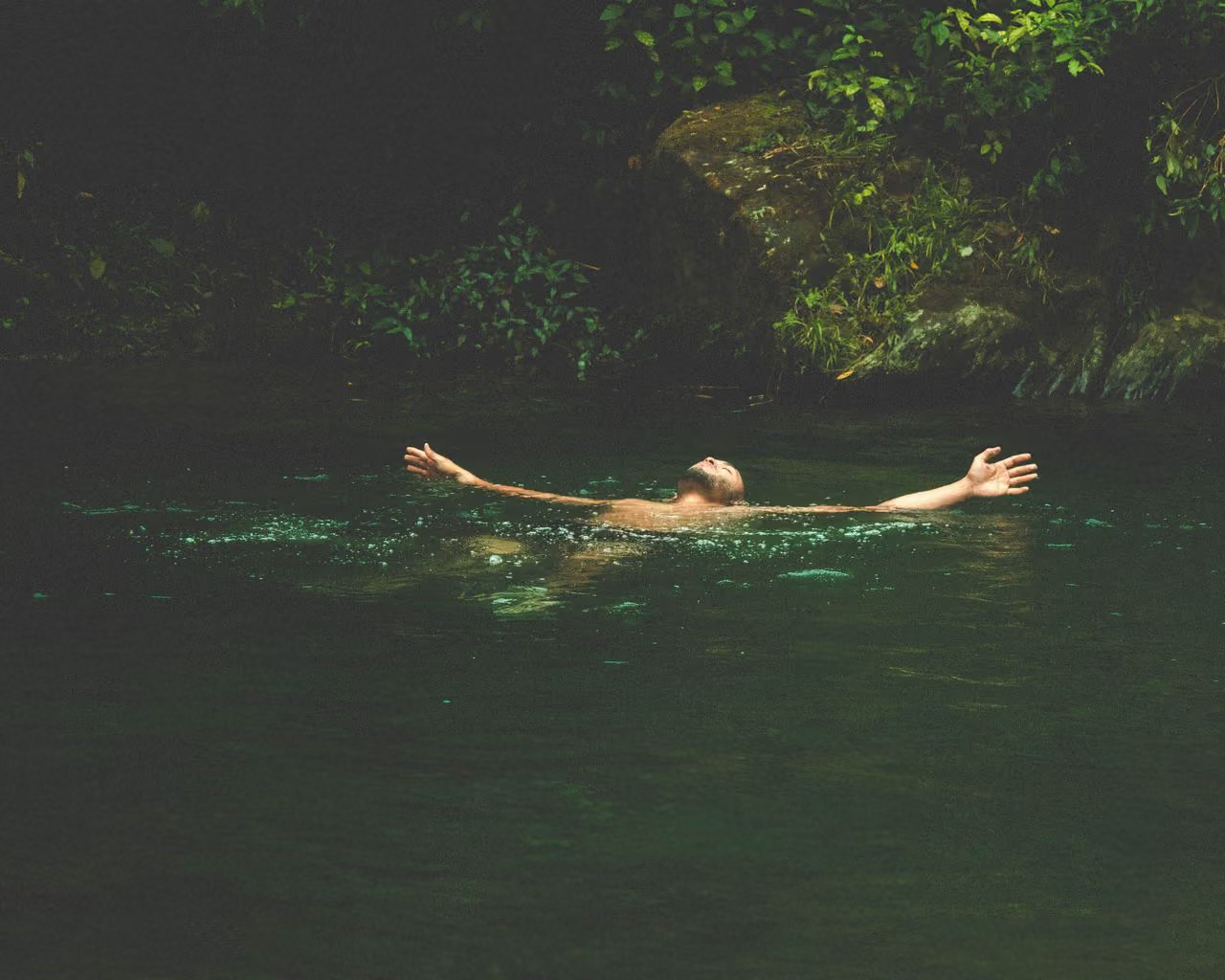
Water is generative. It makes things grow. Without it, nothing lives. Every ancient agricultural civilization developed elaborate religious relationships with water sources — rivers, rains, springs — because their survival depended on water's appearance and abundance. But the spiritual meaning of water's generative power goes deeper than practical agricultural concern.
Water in the body's energy system corresponds to the sacral chakra — the energy center governing creativity, sexuality, pleasure, and the generation of new life in all its forms. The fluidity of water maps onto the fluidity of creative process. The way water finds its way around obstacles rather than forcing through them. The way it takes the shape of whatever contains it without losing its essential nature.
In virtually every tradition and in the psychological frameworks that emerged from them, water represents what lies beneath the surface — the unconscious, the emotional, the intuitive, the things that move through us that we don't always see or name. The ocean as the vast unconscious. Rivers as the flow of feeling through time. Still water as reflection — the capacity to see yourself clearly.
Carl Jung wrote extensively about water as a symbol of the unconscious in dreams, and his framework maps closely onto what traditional cultures had always understood: water is where the things we don't yet know about ourselves live.
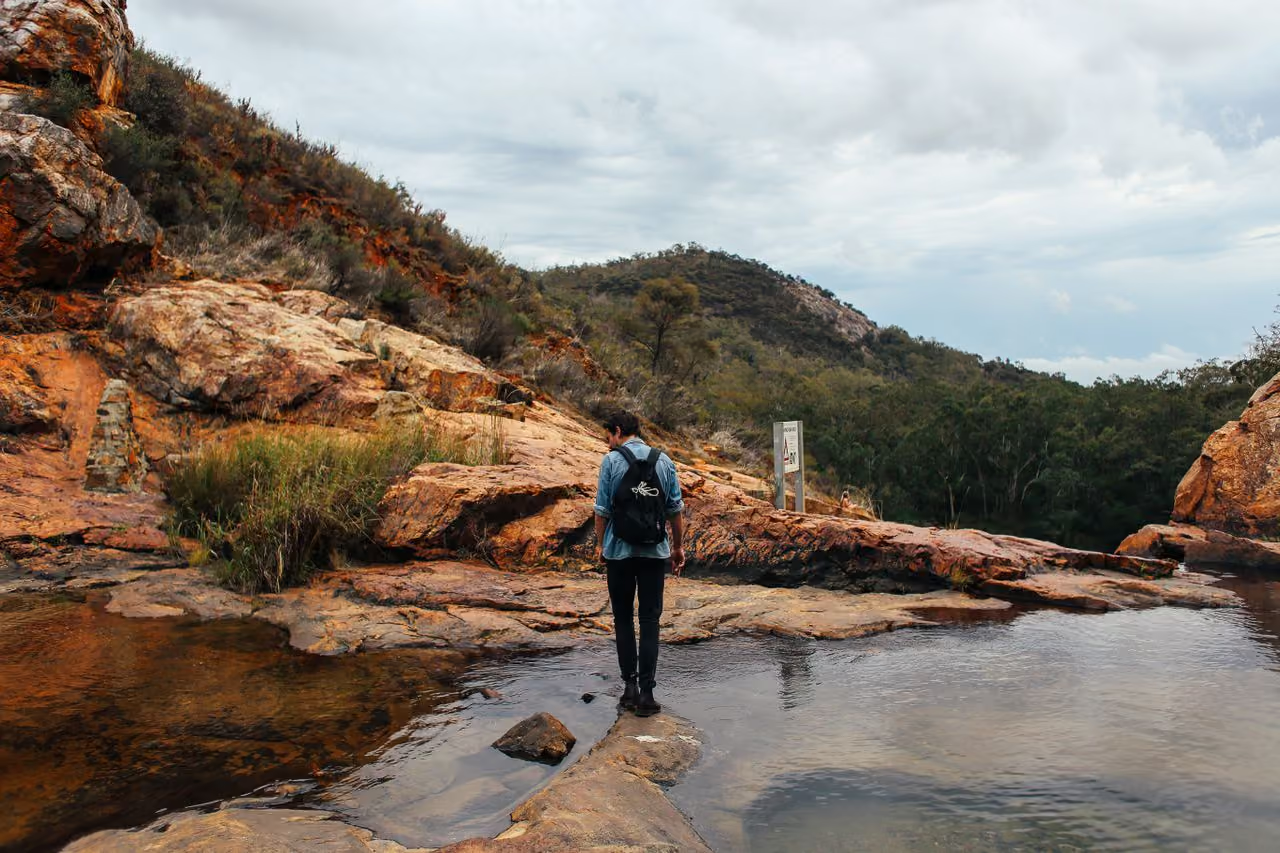
Water is the threshold. The river Styx in Greek mythology. The rivers and lakes that separate the living from the dead in Celtic tradition. The waters above and below in the Genesis creation narrative. The ocean as the place from which life emerges and to which it returns.
Liminal spaces — places of transition, of between-ness — are frequently water spaces. Coastlines, riverbanks, swamps and marshes, the shoreline between tidal zones. These are where the ordinary rules of solid ground don't fully apply, where things can move between states more easily than elsewhere.
Water flows. It doesn't fight its way through obstacles — it finds the path of least resistance, accumulates force, and moves around what won't move for it. Every tradition that works with water as an elemental force understands this quality as a teaching about how emotion and creative energy work when they're healthy: not forced, not blocked, but moving. The energy flows freely.
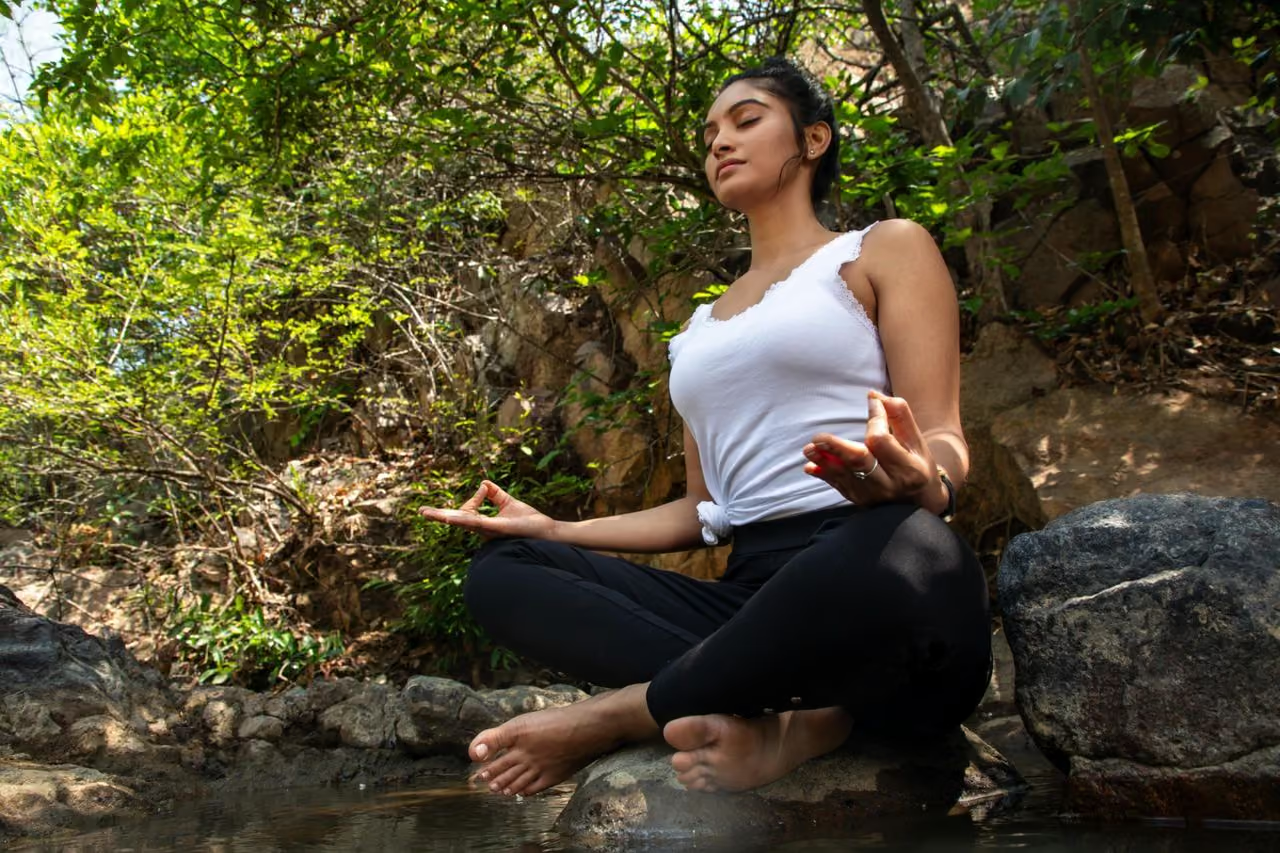
In the Hindu and yogic tradition that gave us the chakra system, each of the seven major energy centers corresponds to one of the five classical elements. Water is the element of the sacral chakra — Svadhisthana — located just below the navel.
The sacral chakra governs creativity in the broadest sense: not just artistic creation but the generative capacity of life itself. Sexuality, pleasure, emotional fluidity, the ability to feel deeply and to let feeling move through rather than getting stuck. When the sacral chakra is balanced, creative energy flows. When it's blocked, creativity stagnates, emotion becomes rigid, and the relationship to pleasure and desire becomes complicated.
Working with water is one of the most direct ways to open and support the sacral chakra. Immersion in water — bathing, swimming, time near rivers, lakes, or the ocean — speaks directly to the sacral's elemental nature. The sound of water has particular resonance for this chakra. Music around 417hz, the sacral's Solfeggio frequency, can be combined with water sounds for a layered healing effect.
The sacral chakra's relationship to water also explains something about creative blocks and how to work with them. When creative energy feels stuck or dried up, the solution is rarely more discipline or more effort. It's more often fluidity — finding the path of least resistance, following what feels alive rather than forcing what feels like it should be alive, moving like water rather than fighting like fire.
The African diasporic spiritual traditions that traveled through the Middle Passage and survived in Candomblé, Santería, Vodou, and related practices center feminine water deities among their most important divine figures.
Yemoja — the orisha who governs the ocean and all saltwater — is the mother of all orishas, the source from which all other divine energies emerge. Her domain is the ocean's depth, the unconscious, the vast and unknowable interior of things. She is associated with motherhood, protection, and the capacity to hold things without breaking.
Oshun governs fresh water — rivers, streams, and all sweet water. Where Yemoja is the ocean's depth, Oshun is fresh water's movement and sweetness. Her domain is love, sensuality, creativity, and abundance. She is associated with honey, gold, and the flowing fertility of fresh water that makes the land bloom.
Oya governs water in its most volatile form — storms, lightning, and the Niger River. She is associated with change, with endings and beginnings, with the winds that precede transformation. She governs the marketplace and the cemetery, two places where things move between states.
These three together represent a sophisticated understanding of water's different qualities — the depth and containment of the ocean, the generative movement of fresh water, the transformative power of storm — as three aspects of feminine divine energy expressed through water's elemental range.
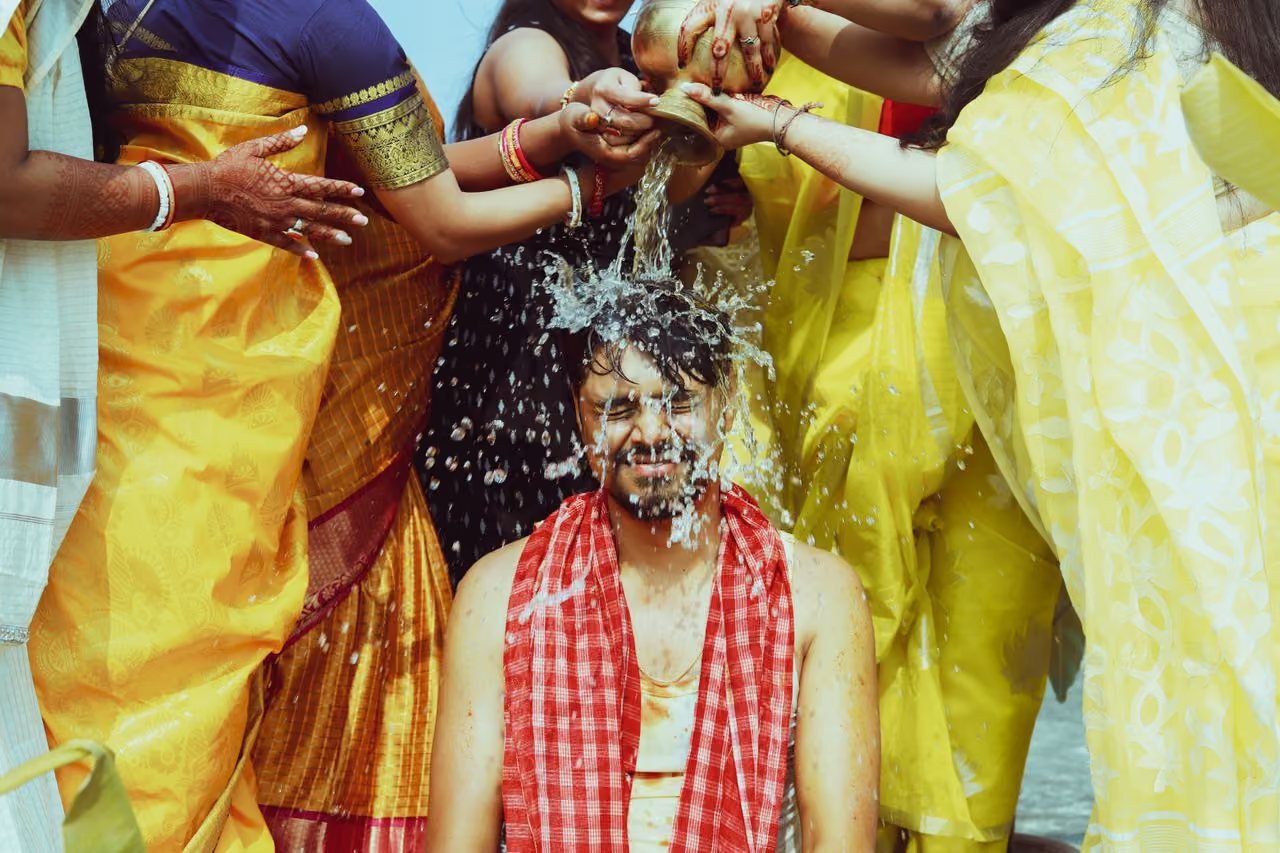
Water's spiritual power is available in practice — not just as metaphor or theological concept but as a working tool for energy clearing, intention-setting, and ritual work.
Leaving water in a clear vessel under the light of the full moon charges it with lunar energy. Full moon water is considered particularly potent for cleansing, releasing, and amplifying intentions. New moon water is used for new beginnings and setting intentions. Moon water can be added to a bath, used to cleanse crystals or altar objects, sprinkled around a space for energetic clearing, or used in ritual as a consecrated element.
Salt water is one of the most traditional and universally recognized cleansing agents across spiritual traditions. Sea salt dissolved in water creates a solution that clears negative or stagnant energy from spaces, objects, and the body. A salt water bath with intentional focus is among the simplest and most effective energy cleansing practices available.
The sound and sight of moving water has documented effects on the nervous system — reducing cortisol, inducing alpha wave states associated with relaxed alertness, supporting the kind of receptive awareness that meditation cultivates. Meditating near water or with water sounds as an anchor is not mysticism — it's using water's physical properties to create conditions for deeper inner access.
Across traditions — from the mikveh to the limpia to the ritual bath — bathing with intention is one of the most accessible spiritual practices. Adding specific herbs, salts, essential oils, or flower petals to bathwater with a clear intention transforms an ordinary act of hygiene into a cleansing and renewal ritual. The key is the intention more than the ingredients — though ingredients carry their own energetic properties that amplify the work.
Water can be charged with intention — held in the hands, focused on with a specific prayer or intention, and then consumed as a way of embodying that intention physically. This practice exists in various forms across many traditions and is fundamentally about the understanding that water carries energy and that ingesting intentionally charged water makes that energy part of your physical body in a literal, not just symbolic, way.
Dreaming about water is among the most consistent and interpretable dream symbols across cultures and psychological frameworks. But it's not a one-size-fits-all interpretation. Water has many different forms, so the quality, behavior, and your relationship to water in a dream all carry meaning.
Clear, calm water — emotional clarity, peace, transparency with yourself about your own feelings. If you're moving through it easily, things are flowing well in your emotional life.
Turbulent or stormy water — overwhelm, anxiety, emotional turbulence. Something beneath the surface is churning. The storm is usually an emotional one.
Flooding water — feeling overwhelmed by emotion, or by circumstances that trigger emotion. Something that has been contained is no longer contained. This can be frightening in the dream but the image often signals that what's flooding in needs to be felt rather than held back further.
Stagnant or murky water — stuck emotional energy, things that haven't been processed or released, situations that have grown toxic through lack of movement.
Drowning or being pulled under — feeling overwhelmed to the point of losing yourself. The unconscious is asking for attention. Something below the surface is demanding more acknowledgment than it's getting.
Swimming freely — ease and competence in your emotional life, comfort with depth, the ability to move through feeling without being threatened by it.
Being at the edge of water without entering — standing at an emotional threshold, aware of depth but not yet ready or willing to enter it. The edge is the most interesting place — what are you watching? What are you waiting for?
A body of water you've never seen before — something new in your emotional or unconscious life. An undiscovered interior space. Worth approaching with curiosity rather than fear.
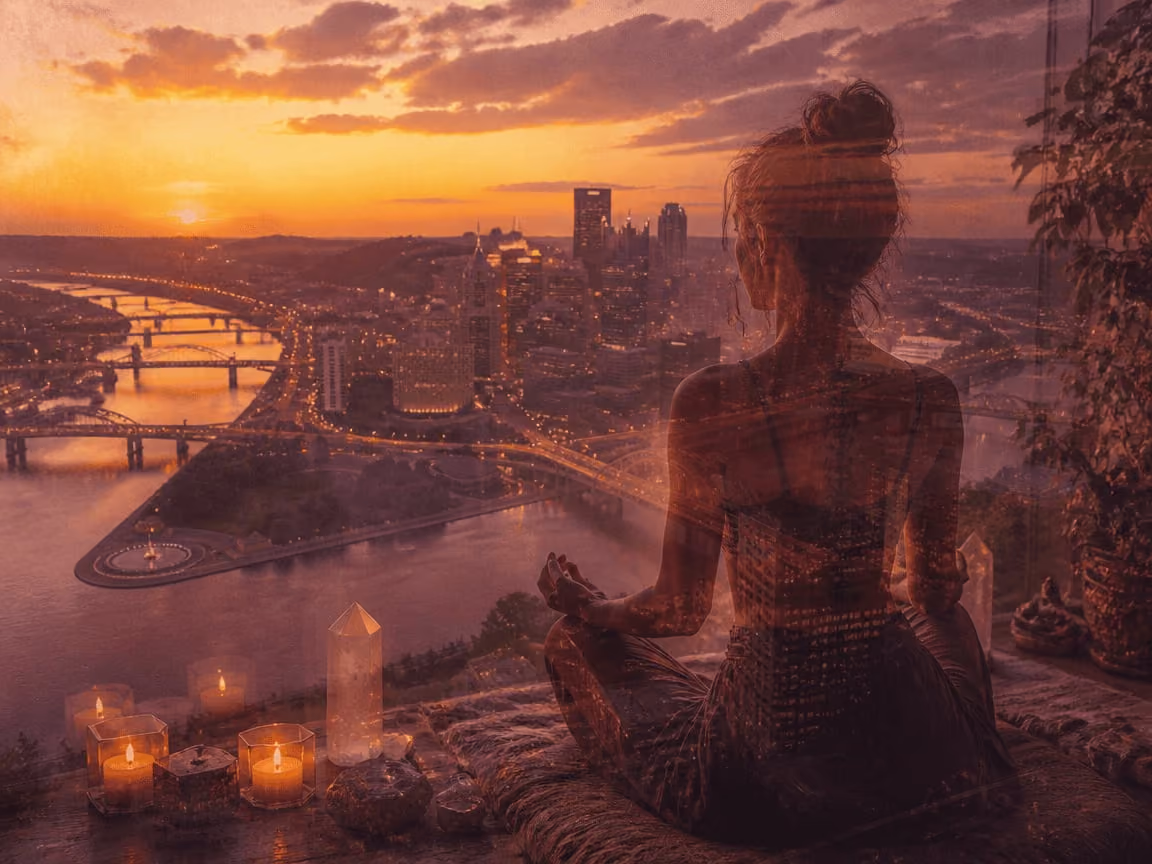
Water has always defined Pittsburgh. The city sits at the confluence of three rivers — the Allegheny, the Monongahela, and the Ohio — in one of the most physically distinctive geographic formations in North America. The Point, where the three rivers meet and the Ohio begins, has been considered spiritually significant by the indigenous peoples who lived here long before European settlement. The Seneca, Lenape, and Shawnee all understood this confluence as a place of power, a threshold space where the meeting of waters created something more than the sum of its parts.
The rivers shaped the city's industrial history — they were transportation corridors, power sources, and, for too long, dumping grounds. The environmental recovery of Pittsburgh's rivers over the past several decades is itself a kind of collective cleansing, a reclamation of the sacred nature of the water that runs through the heart of the city.
For anyone practicing water-based spiritual work in Pittsburgh, the rivers are not abstract. They're here. The practice of standing at a riverbank with intention, of offering gratitude to the water that has carried so much, of acknowledging the Allegheny and the Mon and the Ohio as living beings with their own presence — this is available to anyone in the city willing to make their way to the water's edge.
If you want to start working with water spiritually and don't know where to begin, start with what you already do every day.
The next time you wash your hands, pause for a moment before you begin. Feel the water on your skin — its temperature, its movement, the sound of it. As you wash, hold a simple intention: that you're releasing whatever you're carrying that doesn't need to come with you into the next part of your day. When you're done, pause again before you dry your hands. Notice if anything feels different.
This is not a complex practice. It takes fifteen extra seconds. What it does is make intentional what usually happens automatically — it brings conscious awareness to a moment of literal cleansing and uses water's natural purifying quality with direction rather than unconsciously.
From there, a full salt water bath with intention, a meditation near moving water, or moon water practice are natural next steps. But they begin here, in the ordinary daily encounter with water that most of us have many times every day without noticing.
Water is already doing its work. Paying attention to it is how you start working with it.
Don’t forget to follow Kellee for the latest news and music:
add soundcloud, IG





Sign up to get our latest news and stay connected.
Thank you! Your submission has been received!
Oops! Something went wrong while submitting the form

.avif)

.avif)