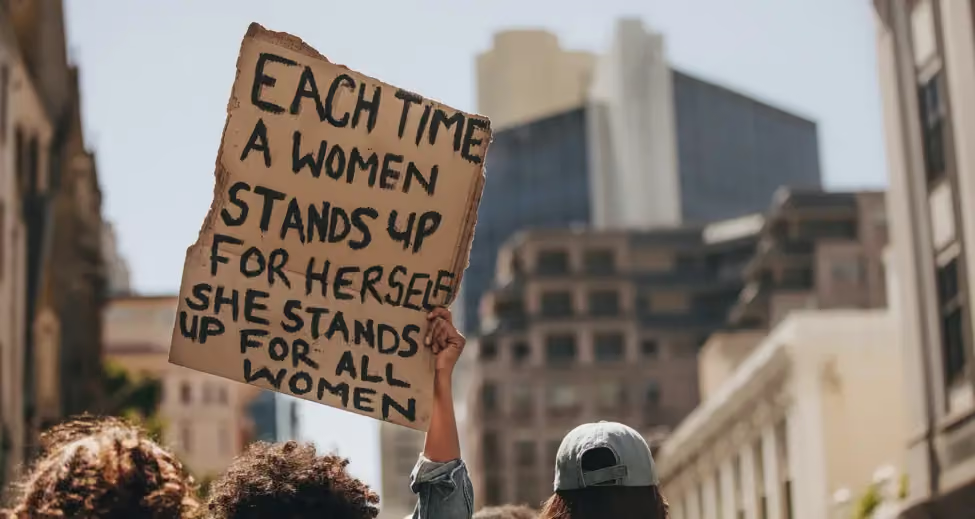

The oldest spiritual traditions we have evidence of center the feminine.
Not as a secondary figure. Not as consort or helper. As the primary force — the one who creates, destroys, and regenerates. The great mother. The dark goddess. The weaver. The crone. In nearly every early human culture we have archaeological record of, the divine was understood as feminine before it was understood as anything else.
What happened to those traditions —and why reclaiming them is one of the most politically meaningful acts available to women right now — is the story this piece tells.
The evidence for widespread goddess veneration in the ancient world is extensive and spans every inhabited continent. This isn't fringe archaeology — it's mainstream scholarship that popular culture has been slow to absorb.
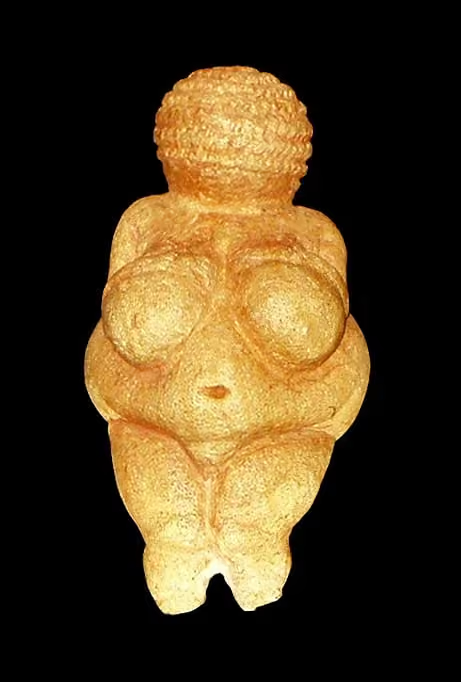
The Venus figurines — small carved female forms found across Europe and dating back as far as 35,000 years — are among the oldest known human artifacts of any kind. Whatever their precise function, they represent a sustained, continent-wide preoccupation with feminine form and power that predates the major patriarchal religions by tens of thousands of years.

In ancient Mesopotamia, the Sumerian goddess Inanna was the most important deity in one of the world's earliest civilizations. Her mythology — the descent into the underworld, the stripping away of power and identity, the resurrection and return — is one of the oldest written stories in human history and a template that echoes through every subsequent feminine spiritual tradition. Her Babylonian counterpart Ishtar and the later Isis of Egypt carry the same essential story: the feminine divine as a force that moves through death and darkness and comes back.
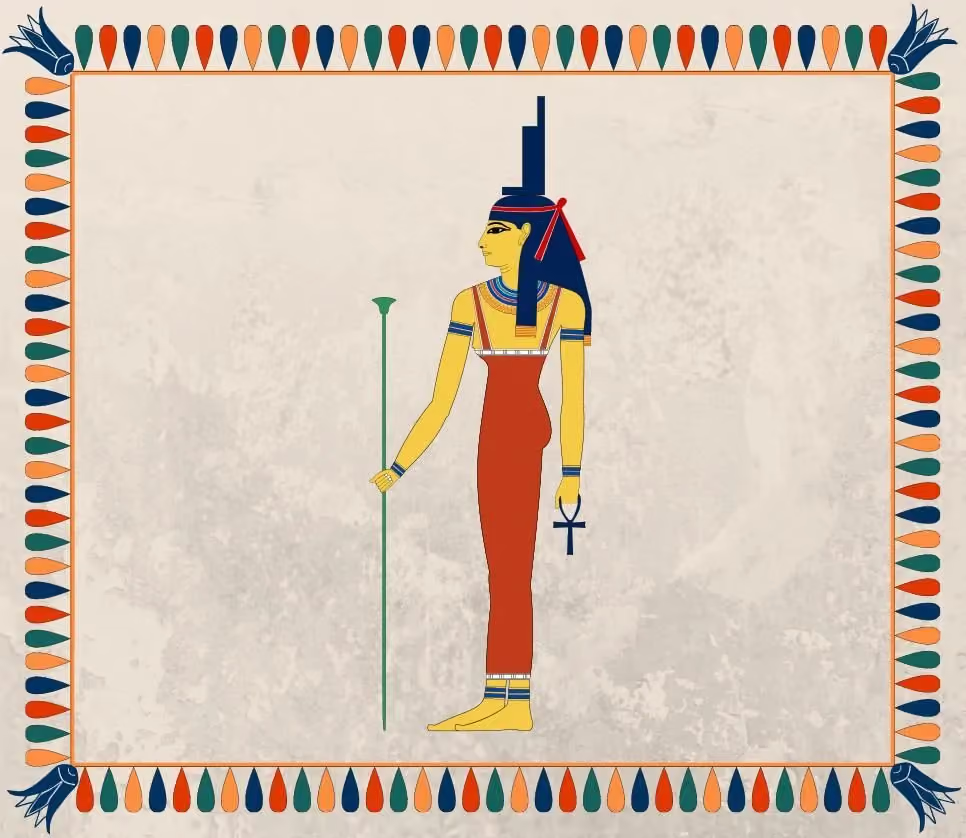
Egypt gave us Isis and Hathor and Sekhmet and Nut — a full pantheon of feminine divine figures governing love, war, the sky, magic, and the underworld. The cult of Isis spread throughout the Roman world and was one of the most widespread religious movements in the ancient Mediterranean before Christianity displaced it. Isis was worshipped from Britain to Afghanistan. Her temples were everywhere.

In ancient Greece, the tradition of the mystery schools offered women initiatory spiritual experiences that operated outside the official state religion. The Eleusinian Mysteries centered on Demeter and Persephone — the mother-daughter cycle of descent, loss, and return — and were practiced for nearly two thousand years.
Women's religious life in the ancient world was not marginal. It was foundational to Greek culture.
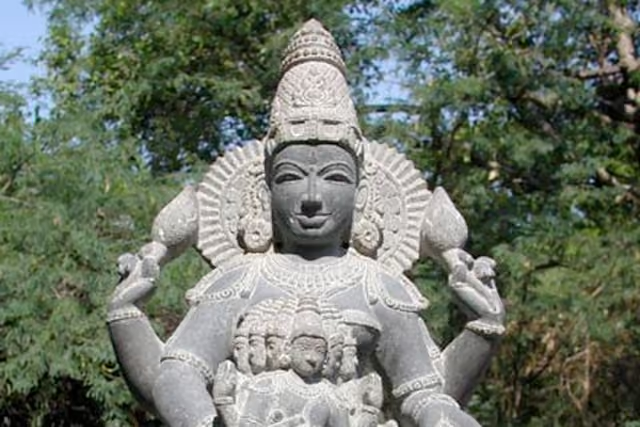
In India, the Shakti traditions — understanding divine power as fundamentally feminine — have survived continuous practice through to the present day.
The goddess in her many forms — Durga, Kali, Lakshmi, Saraswati — remains central to Hindu practice in ways that have no equivalent in the Abrahamic traditions. The tantric recognition that feminine energy is the animating force of the universe is one of the most sophisticated spiritual frameworks ever developed.
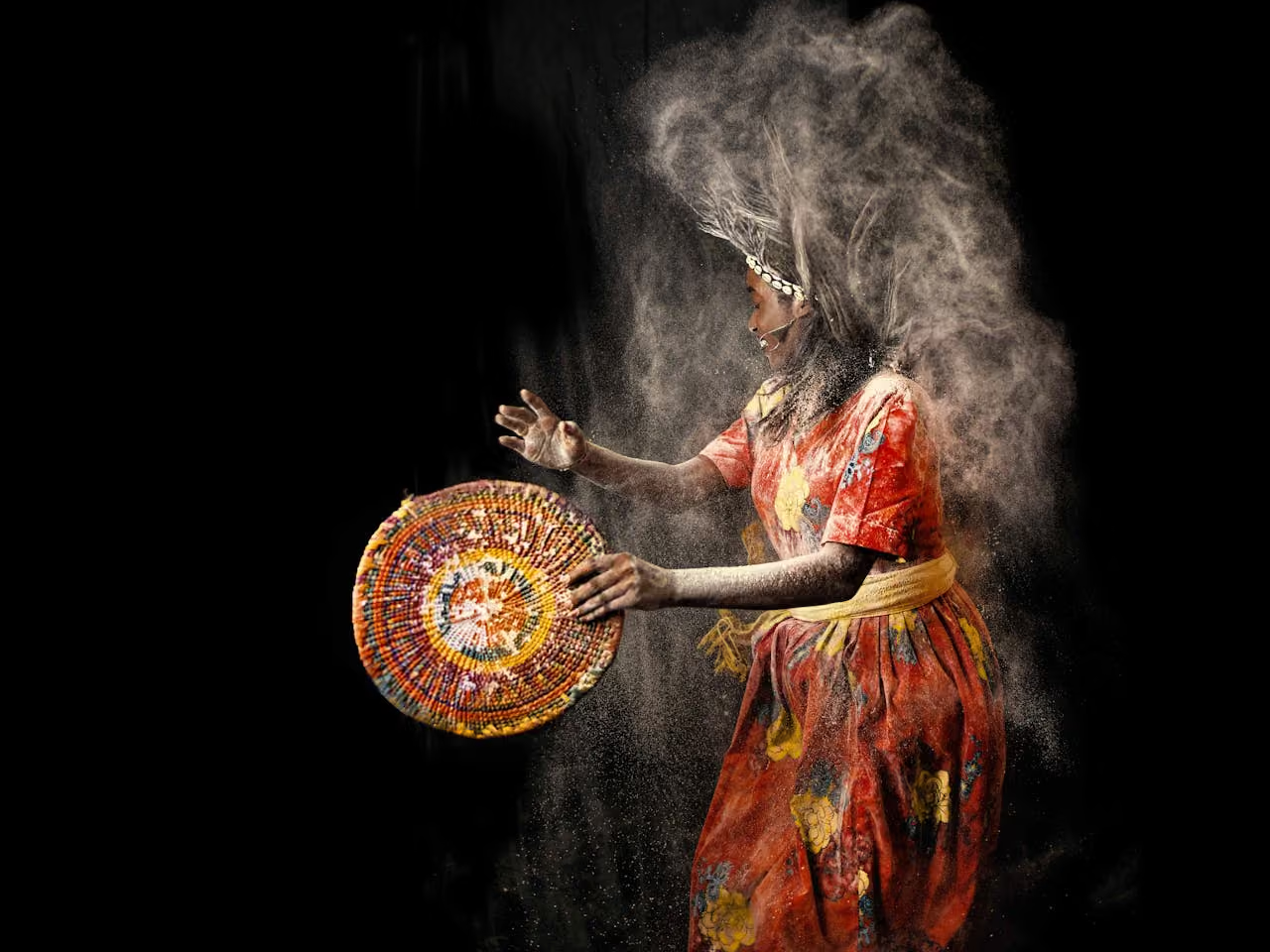
In West Africa and throughout the African diaspora, feminine divine figures remain central. Oshun, Yemoja, Oya — Yoruba orishas whose worship traveled through the Middle Passage and survived in Candomblé, Santería, and related traditions — represent an unbroken feminine spiritual lineage of extraordinary resilience. These traditions didn't just survive colonialism and slavery. They flourished underneath it, hidden in plain sight, adapting and enduring when overt practice was forbidden.
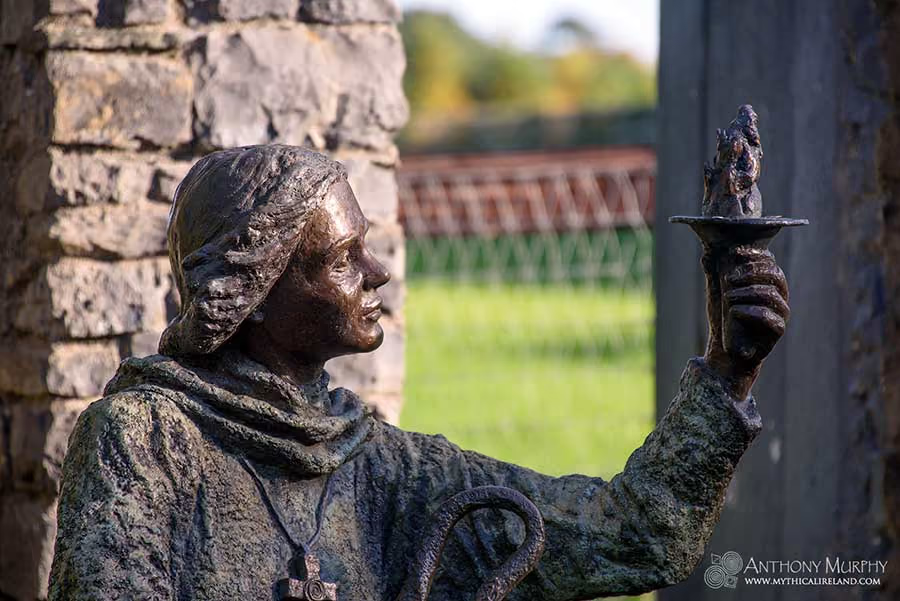
The Celtic tradition offered the triple goddess — maiden, mother, crone — a framework for understanding the feminine divine as cyclical and complete rather than fixed in a single aspect. Brigid, the goddess of fire and healing and poetry, was so beloved that the Catholic church transformed her into a saint rather than attempting to erase her. Her sacred flame at Kildare, which her priestesses tended for centuries, was eventually tended by nuns. The tradition continued. The name changed.
The shift from goddess-centered traditions to patriarchal religion was not a natural evolution. It was a political process, and it was often violent.
The historical record shows consistent patterns across cultures: the rise of centralizing political power coinciding with the subordination of feminine divine figures, the demonization of women's religious and healing practices, and the systematic reframing of the divine as exclusively or primarily masculine. This process played out differently in different places and over different timescales, but the directional movement was consistent.
In Europe, the most visible and brutal expression of this suppression was the witch trials of the 15th through 17th centuries. Conservative estimates put the number of people executed for witchcraft across Europe at around 50,000. The overwhelming majority were women. The behaviors that constituted witchcraft in legal and ecclesiastical definitions overlapped significantly with traditional feminine spiritual and healing practices: herbalism, midwifery, knowledge of the body, communal women's ritual, and relationship with the natural world. The witch trials were not primarily about superstition. They were about the control of women's knowledge, autonomy, and community.
The colonial project extended this suppression globally. Indigenous spiritual traditions that centered feminine divine figures, women's ceremonial roles, or earth-based practice were targeted for elimination alongside other aspects of indigenous culture. The specific tactics varied — mission schools, legal prohibition, forced conversion — but the outcome was the same: deliberate, systematic disruption of living spiritual lineages.
What's remarkable is not how much was lost. It's how much survived.
The modern revival of feminine spiritual traditions began in earnest in the mid-20th century and accelerated dramatically alongside second-wave feminism in the 1970s.

Marija Gimbutas, a Lithuanian-American archaeologist, spent decades documenting goddess civilization in prehistoric Europe and arguing that a goddess-centered, matrifocal culture had preceded the patriarchal Indo-European cultures that supplanted it. Her work was controversial among some archaeologists but enormously influential in the feminist spirituality movement — it gave women a historical framework for understanding goddess traditions as original rather than derivative.
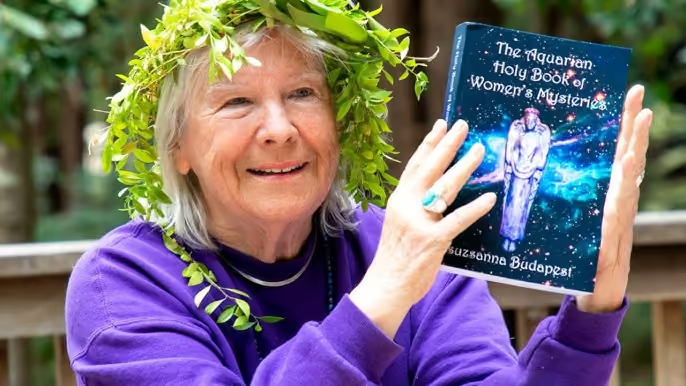
Zsuzsanna Budapest founded the Susan B. Anthony Coven Number 1 in Los Angeles in 1971 and began articulating a specifically feminist witchcraft tradition that understood spiritual practice as inseparable from political liberation. Her work directly influenced Starhawk, whose 1979 book The Spiral Dance became one of the most influential texts in the modern goddess spirituality movement and remains in print today.
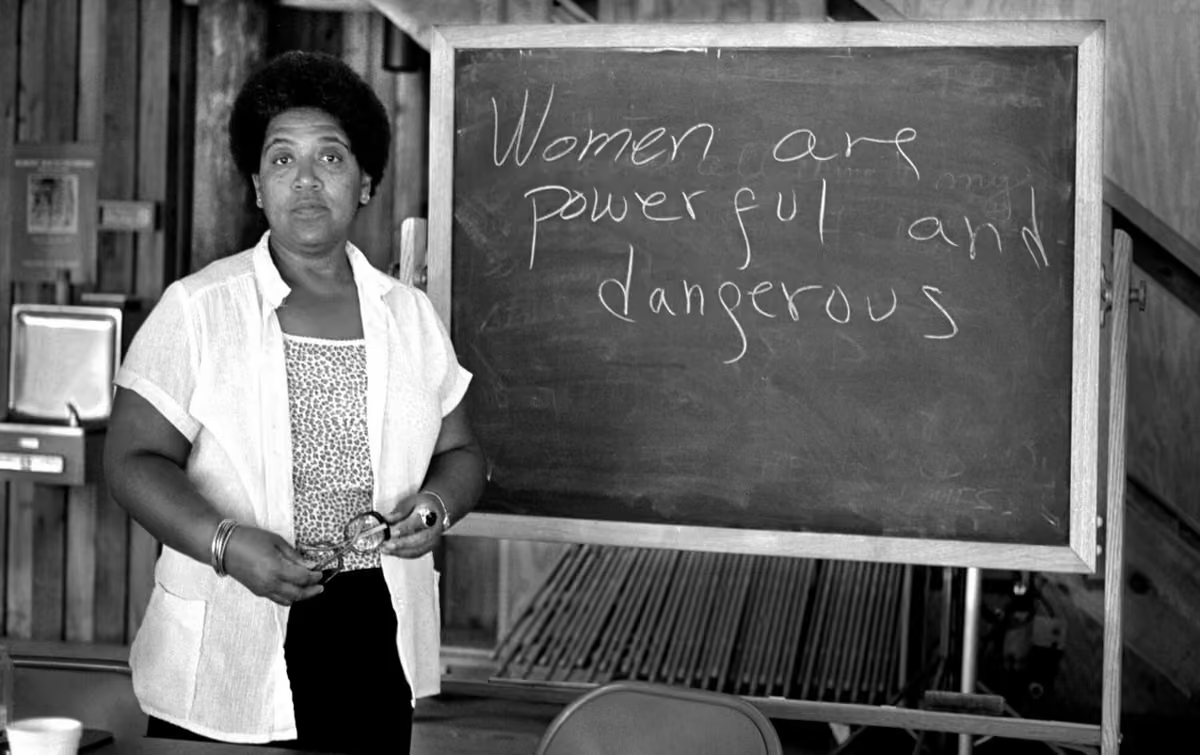
Audre Lorde brought an explicitly Black feminist perspective to the reclamation of feminine spiritual power. Her essay The Erotic as Power — arguing that the erotic, long demonized as a source of feminine weakness, is actually a source of knowledge and transformative energy — is one of the most theologically interesting feminist texts of the 20th century. Her poetry drew on African diasporic traditions and articulated a vision of feminine spiritual power that was simultaneously personal, political, and cosmic.
The women's spirituality movement that emerged from this period understood clearly what is sometimes softened in contemporary discussions: that the suppression of feminine spiritual traditions was not an accident or a misunderstanding. It was a form of power. And reclaiming those traditions was a form of resistance.
Feminine spiritual traditions today are not a unified movement. They're a constellation of practices, lineages, and communities that share certain common orientations — toward the cyclical, the embodied, the relational, the earth — without requiring adherence to any single doctrine or tradition.
What they share is a recognition that the spiritual frameworks dominant in Western culture have systematically undervalued or excluded feminine ways of knowing, and that recovering and practicing those frameworks is both personally nourishing and politically meaningful. In a historical moment that continues to contest women's bodily autonomy, reproductive rights, and political representation, the reclamation of spiritual traditions that center feminine power and wisdom is not a retreat from politics. It is a form of it.
These are the primary streams of contemporary feminine spiritual practice:
Working with the moon's cycles is one of the most accessible and ancient expressions of feminine spirituality. The lunar calendar — with its 29.5-day cycle of new moon, waxing, full, and waning — mirrors the menstrual cycle and has been understood across cultures as a mapping of feminine time. New moon rituals for intention-setting, full moon rituals for release and gratitude, and awareness of how energy shifts across the cycle are entry points that require no initiation, no tradition, and no community — though all three deepen the practice.
The moon's phases are not metaphors. They're a real, visible, cyclical phenomenon that human beings tracked for tens of thousands of years before clock time flattened our experience of time into something linear and mechanical. Returning to lunar awareness is a return to a way of experiencing time that is older than civilization.
Engaging with goddess figures — through study, meditation, altar work, prayer, or ritual — is a practice available across traditions and cultural backgrounds. The question of which deity or tradition to work with is worth approaching seriously: cultural context matters, and the difference between genuine engagement with a tradition and appropriation of its symbols is worth understanding. For most practitioners, beginning with a tradition ancestrally or geographically connected to your own heritage is a reasonable starting point.
Deity work doesn't require literal belief in the goddess as an external being. For many practitioners, working with a goddess archetype is a way of accessing and developing qualities associated with that figure — Kali's capacity to cut through illusion, Brigid's creative fire, Oshun's erotic joy, Hecate's comfort with darkness and liminality. The question of literal versus archetypal isn't one that most serious practitioners spend much time on. The practice works regardless of metaphysics.
The Wheel of the Year — the cycle of solstices, equinoxes, and cross-quarter days that mark the turning of the seasons — gives practitioners a framework for living in rhythm with the earth rather than against it. Each point on the wheel has associated qualities, deities, practices, and themes. Moving through the year with awareness of these rhythms is one of the oldest forms of spiritual practice available, and one of the most grounding.
In a culture organized almost entirely around productivity and linear progress, living seasonally is a quiet form of resistance. Honoring the dark half of the year as a time of rest rather than a time to catch up on work. Treating the spring equinox as a real new year rather than an arbitrary date on a corporate calendar. Taking the harvest season seriously as a time for gratitude and completion rather than just moving on to the next thing.
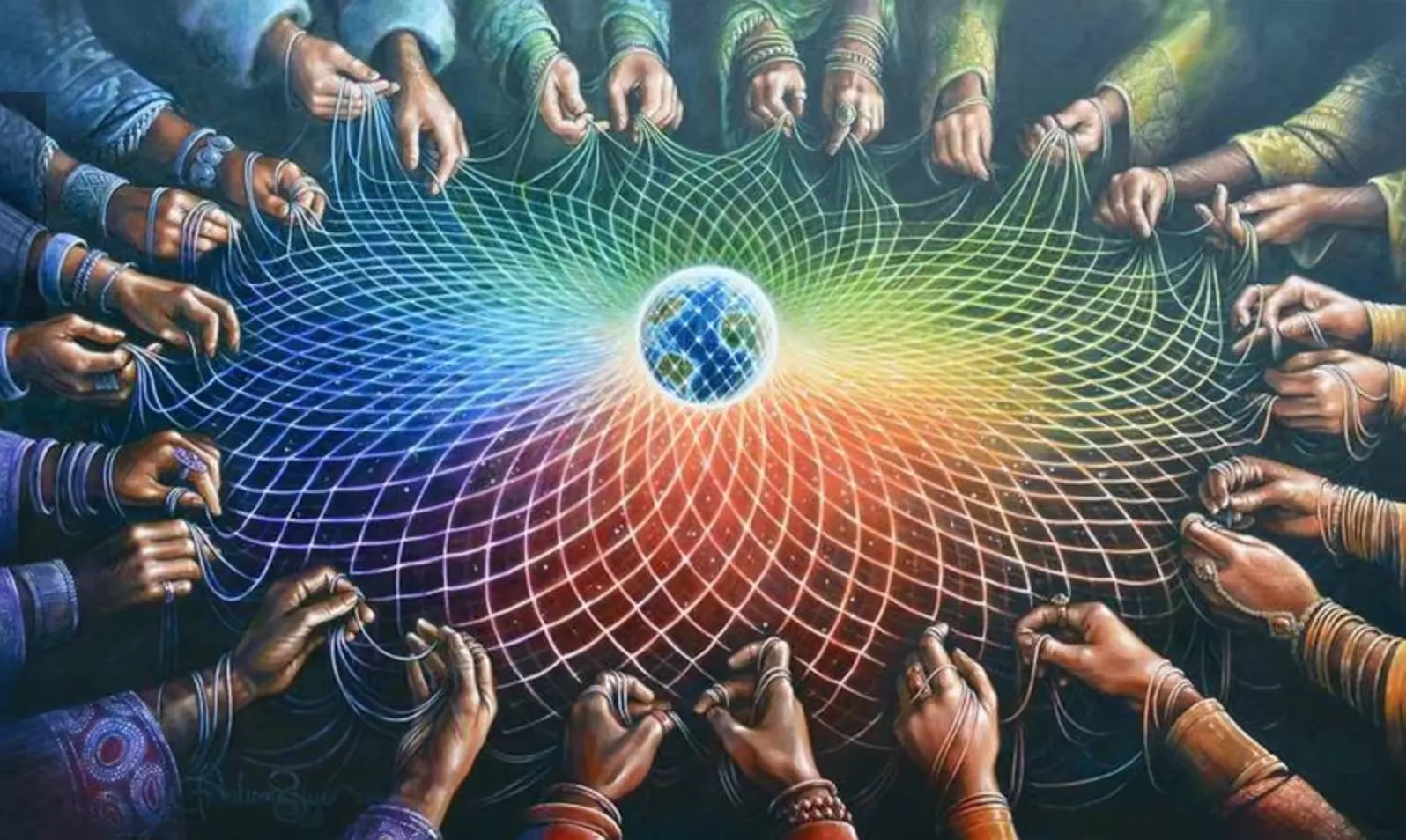
The women's circle — a group of women gathering in a container of mutual support, spiritual practice, and honest witness — is one of the oldest forms of community available to women. It predates any specific tradition and appears in some form in virtually every culture. The contemporary resurgence of women's circles as a spiritual and community practice is part of the broader reclamation of feminine traditions.
A circle creates conditions that most other community forms don't: genuine equality of voice, the prioritization of depth over productivity, and the understanding that what happens in the container of the circle is held in confidence. These are not incidental features. They're why circles work and why they've always worked.
Feminine spiritual traditions have consistently understood the body — particularly the female body — as sacred rather than as an obstacle to spiritual development. This stands in direct contrast to traditions that locate the spiritual in transcendence of the body rather than in deep inhabitation of it.
Embodied spiritual practice takes many forms: yoga, dance, breathwork, somatic work, menstrual cycle awareness, sacred sexuality, and movement practices of all kinds. What unifies them is the understanding that the body is not separate from spiritual experience. It is the site of spiritual experience. You don't access the divine by leaving your body. You access it by going deeper in.
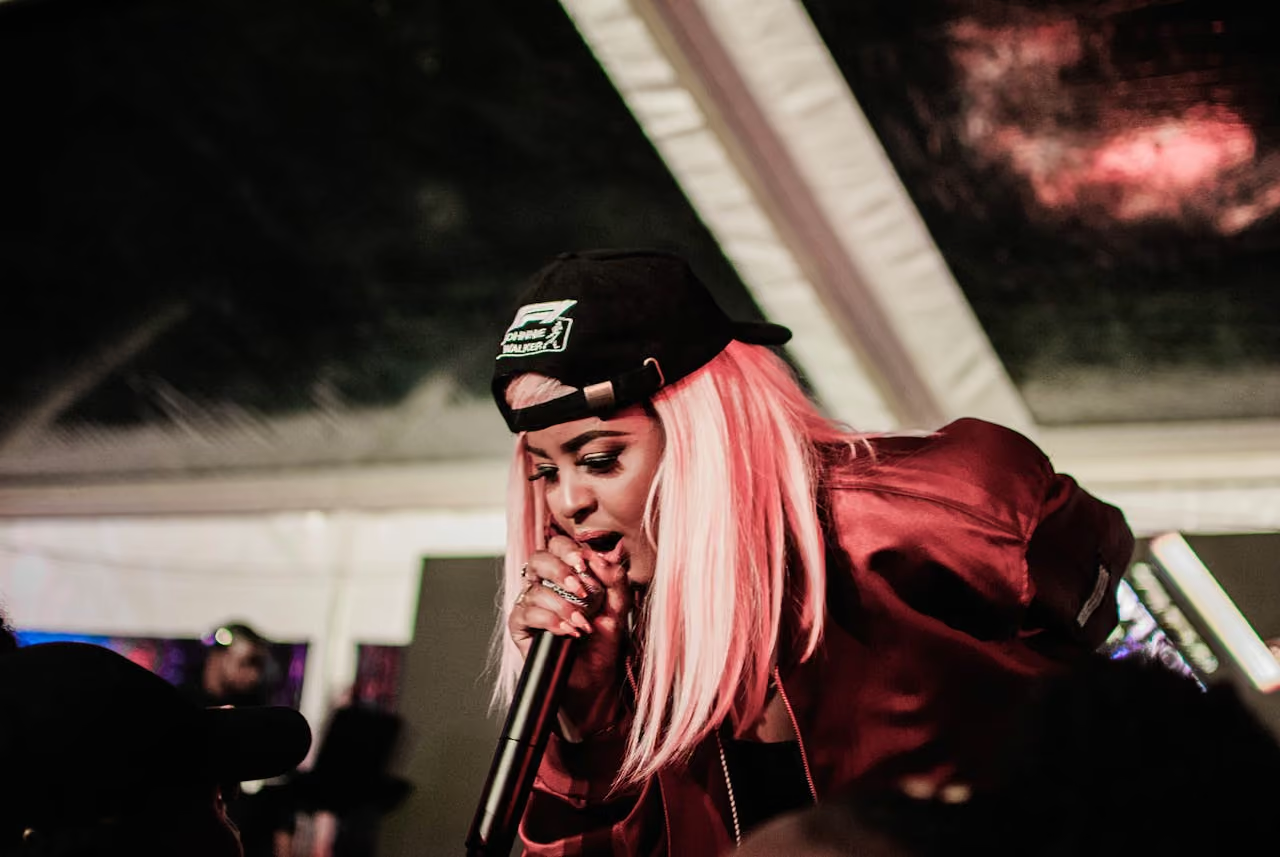
Sound has been central to feminine spiritual traditions across cultures — from the chanting of Vedic priestesses to the sacred songs of indigenous women's ceremonies to the gospel tradition to the contemporary sound healing movement and feminist rap anthems. Music is not merely accompaniment to feminine spiritual practice. For many traditions it is the practice itself. The voice, as the most immediate and personal instrument, carries particular significance — singing as prayer, as invocation, as a way of moving energy through the body and into the world.
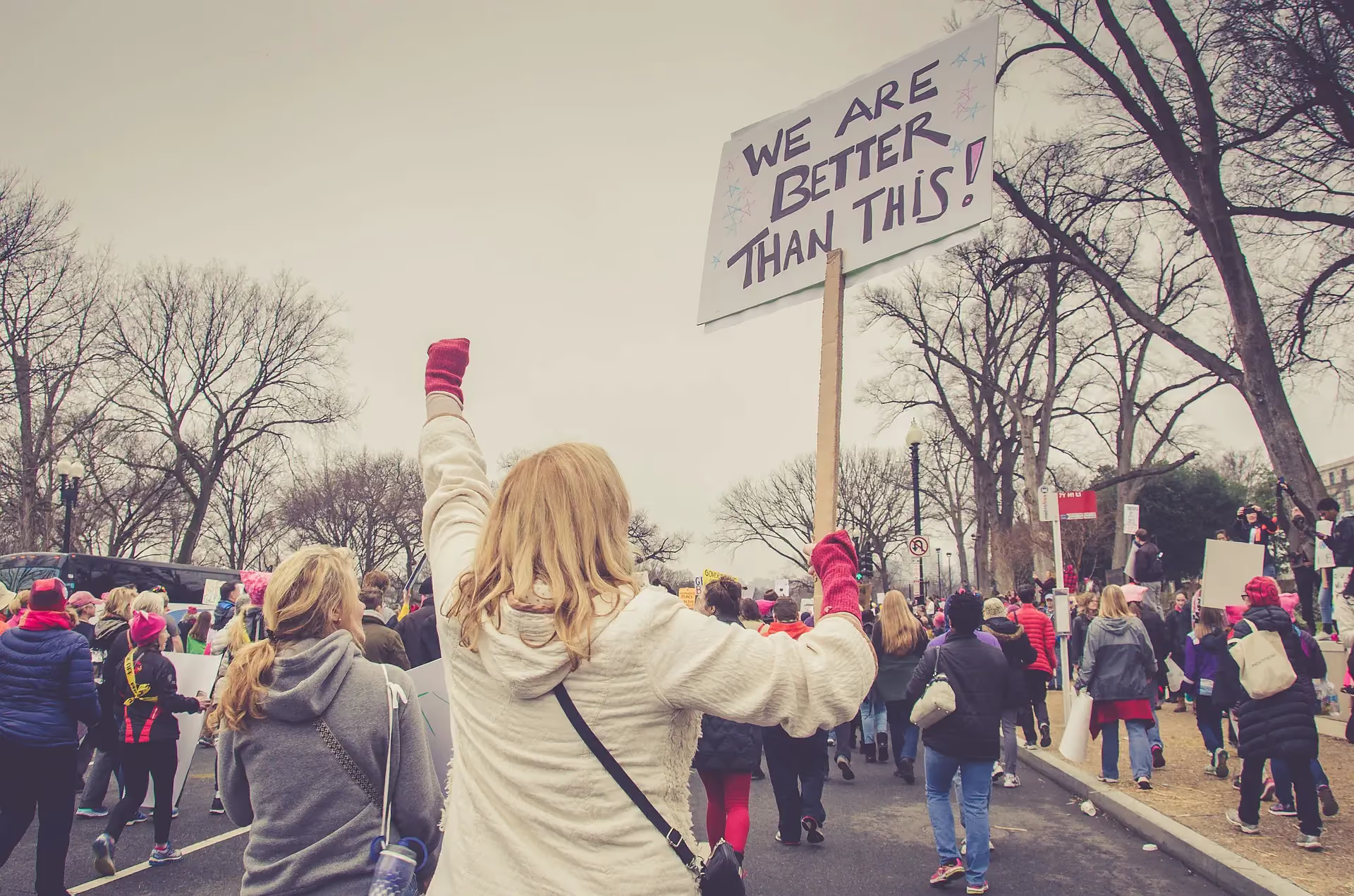
We are living in a political moment in which the question of women's bodily autonomy, reproductive rights, and social power is actively contested in ways that most people alive today have never experienced. The institutions and traditions that have historically constrained women's freedom have not disappeared. They have regrouped.
In this context, the reclamation of feminine spiritual traditions is not escapism. It's continuity. Women have always found ways to maintain their wisdom, their community, and their spiritual power in the face of systems designed to limit all three. The circle that meets on the full moon, the altar on the windowsill, the knowledge of plants and cycles and the body's own intelligence — these are not hobbies. They are a lineage. They are the things that survived.
Practicing feminine spirituality today means joining a tradition that is older than the institutions trying to contain it. That's not a small thing. That's the whole thing.
If you're new to feminine spiritual traditions and don't know where to start, these are the entry points that require the least infrastructure and offer the most immediate return.
Track the moon for one full cycle. Notice the new moon, the full moon, and the two points between. Notice how your energy, creativity, and emotional state shift across the month. Don't do anything with the information yet. Just notice.
Choose one goddess figure to learn about. Pick a tradition that feels connected to your heritage or your interests and read about its primary feminine divine figures. Not to worship — just to understand. See what resonates.
Find one other woman to practice with. The community dimension of feminine spirituality is not optional — it's the point. One trusted person to meet with once a month is enough to begin.
Build one small altar. A surface, a candle, one object that feels meaningful. Tend it. Let it change with the seasons. And see how it grows, evolves, and blooms.
Don’t forget to follow Kellee for the latest news and music:
add soundcloud, IG





Sign up to get our latest news and stay connected.
Thank you! Your submission has been received!
Oops! Something went wrong while submitting the form