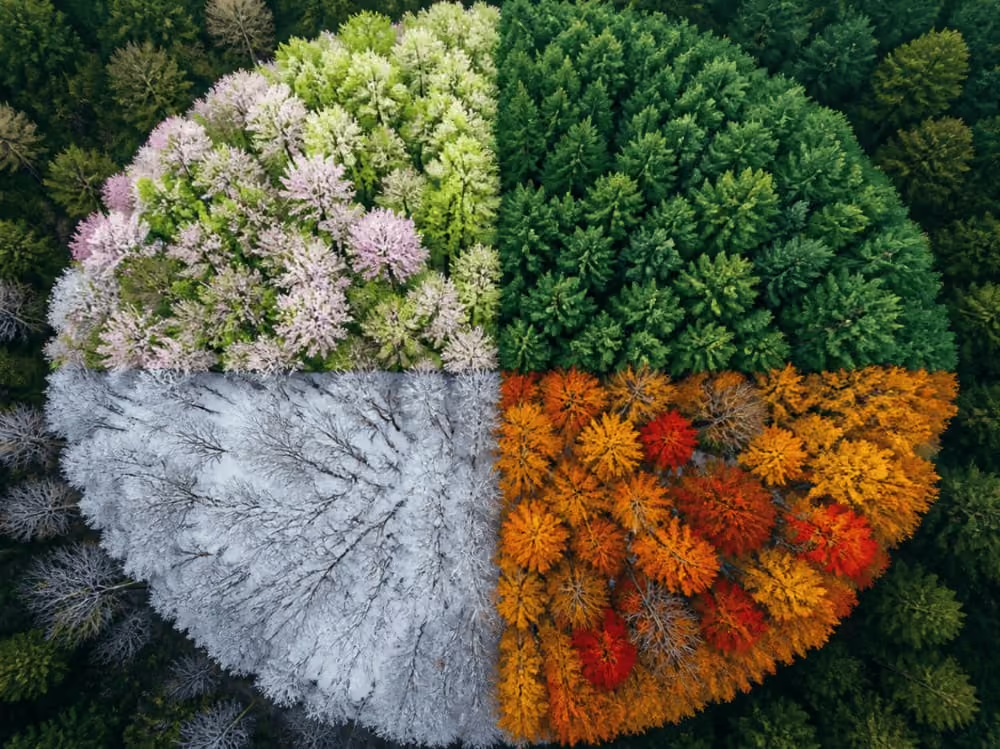
Most of us were handed a calendar that tells us the year begins in January and ends in December, that time moves in a straight line from one number to the next, and that the seasons are primarily relevant to what you wear and whether school is in session.
The Wheel of the Year offers a different relationship with time entirely.
It's a calendar organized around the actual turning of the earth — the solstices and equinoxes that mark the solar year, and the cross-quarter days between them that mark the agricultural and energetic transitions. Eight points in the year, eight moments of threshold and celebration, eight opportunities to orient your life around something older and more real than a corporate fiscal quarter.
Modern practitioners use the Wheel of the Year as a framework for spiritual practice, ritual timing, and living in rhythm with the earth. It doesn't require membership in any specific tradition — the underlying calendar is drawn from pre-Christian seasonal celebrations across multiple cultures, and it belongs to everyone who wants to live with more intentional awareness of the world they're actually in.
This is a complete guide to all eight sabbats — what they mean, when they fall, and how to observe them whether you're new to earth-based practice or have been working with the Wheel for years.
The Wheel has two kinds of spokes.
The four solar events -- the summer and winter solstices and the spring and fall equinoxes -- mark the astronomical turning points of the year. The solstices are the longest and shortest days. The equinoxes are the points of balance, when day and night are roughly equal. These are measurable, observable, universal. They happen regardless of what any tradition says about them.
The four cross-quarter days fall between the solar events, roughly halfway between each solstice and equinox. These are Imbolc, Beltane, Lammas, and Samhain -- celebrations that tend to mark energetic and agricultural transitions rather than astronomical ones. Their dates are more variable across traditions, though they're conventionally placed at the beginning of February, May, August, and November.
Together the eight sabbats create a complete narrative arc: the death and rebirth of the sun, the cycle of planting and harvest, the movement from light to dark and dark back to light. It's a story that human beings have been telling about the year for as long as we've been paying attention.
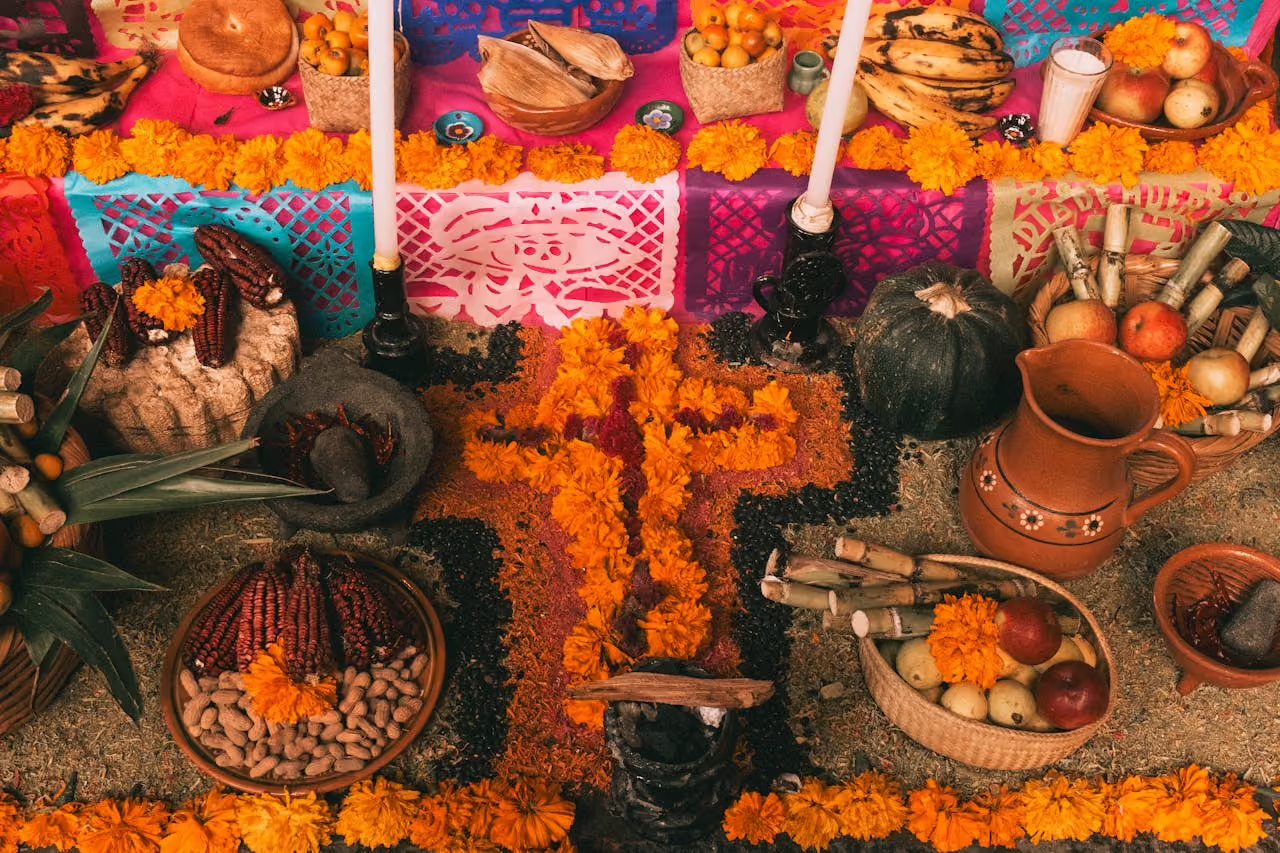
Samhain is the most widely recognized sabbat and the one most embedded in mainstream culture -- though Halloween has largely severed the holiday from its spiritual roots.
In Celtic tradition, Samhain marked the end of the harvest season and thhe beginning of the dark half of the year. It was understood as a time when the veil between the living and the dead was at its thinnest — when ancestors and spirits could move between worlds more freely than at any other point in the year. This wasn't frightening in the original understanding. It was an opportunity for communication, honoring, and receiving guidance from those who had gone before.
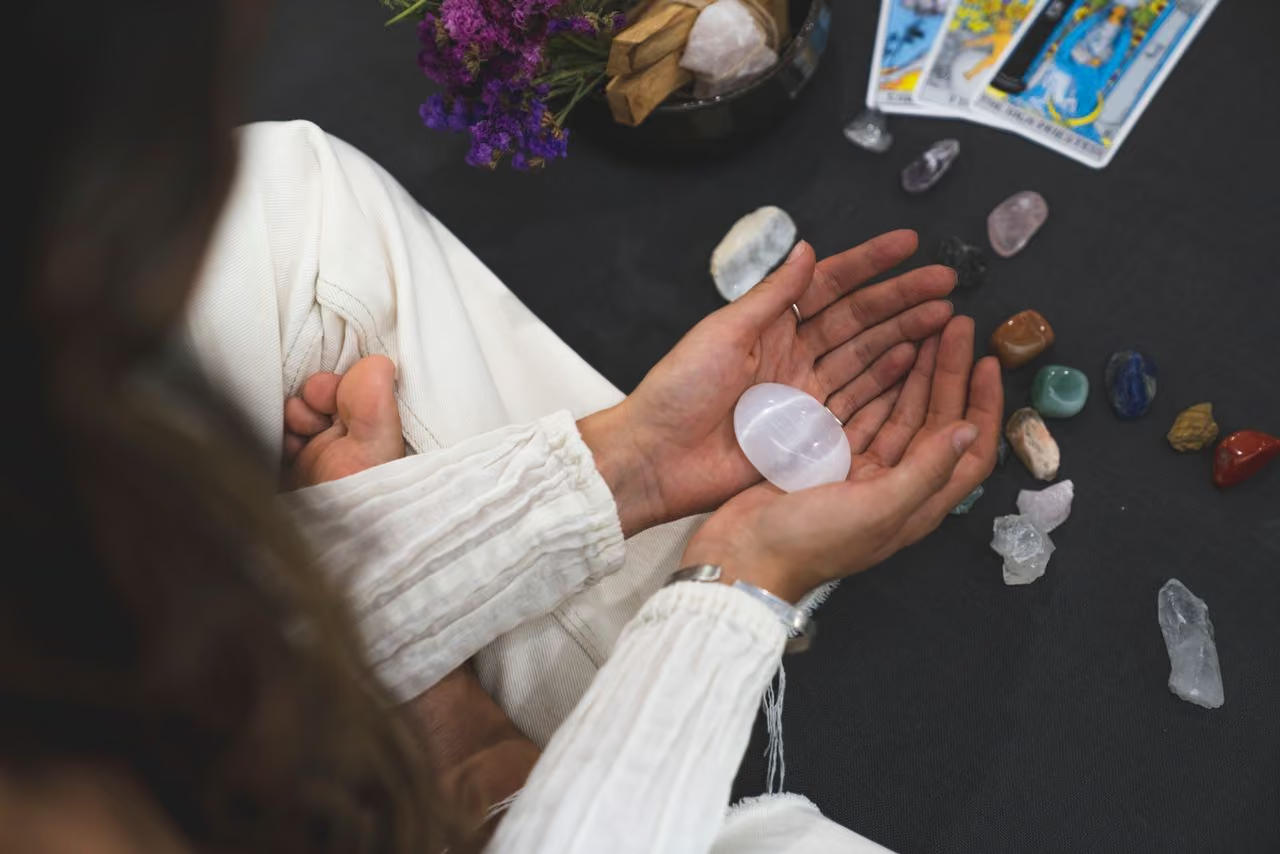
In modern practice, Samhain is observed as a time to honor the dead, release what no longer serves, and sit with the truth that death is not an ending but a transition. Altars featuring photographs and mementos of deceased loved ones, divination (the thinning veil makes this a particularly potent time for tarot and oracle work), and honest reckoning with what needs to die in your own life are all traditional practices.
It's also the pagan new year -- the year ends here, in darkness, before the rebirth that comes at Yule. There's something right about that. A new year that begins in darkness and rest rather than in the frantic energy of January resolutions is a new year that understands how growth actually works.
How to observe: Build an ancestor altar with photos of people you've lost. Light a candle for each one. Pull tarot cards with the question of what needs to be released before the new year begins. Spend time outdoors after dark. Cook a meal with foods your ancestors would have eaten.
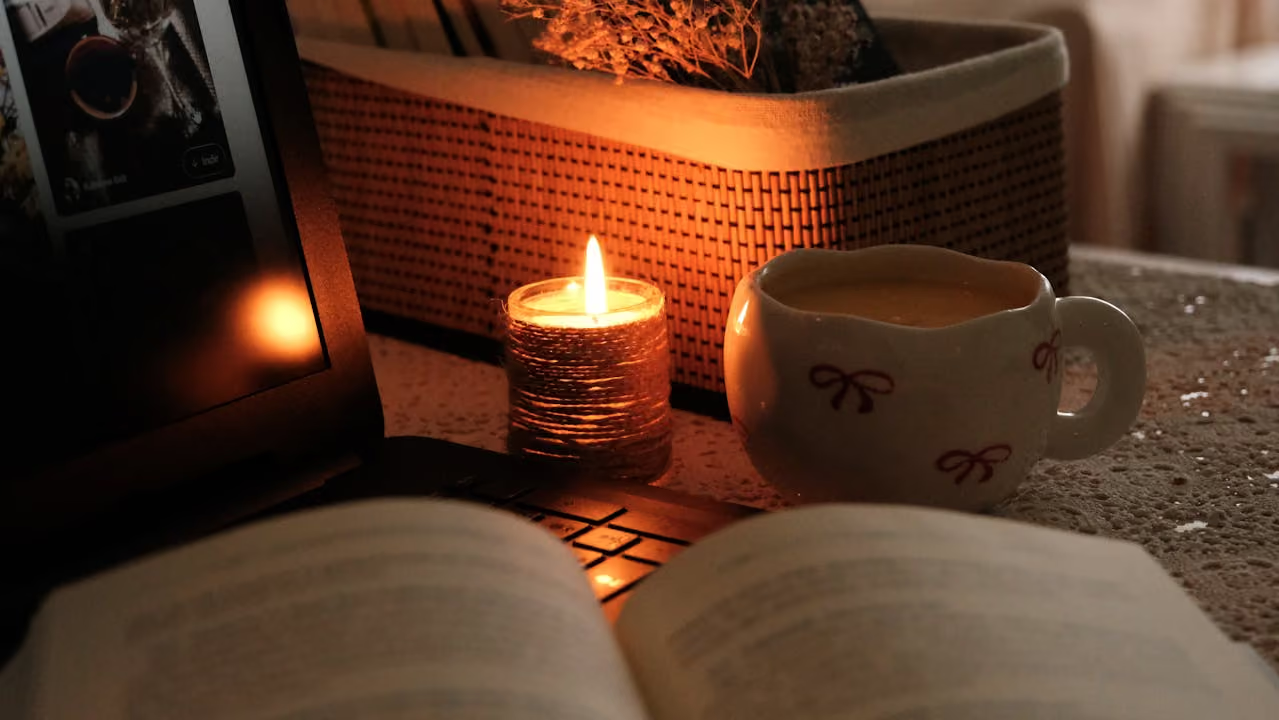
Yule marks the winter solstice, the longest night of the year and the moment when the sun begins its return. After Yule, the days start getting longer. The light is being reborn even in the deepest dark.
The resonance with Christmas is not coincidental. Many Christmas traditions -- the decorated evergreen tree, the Yule log, candles and lights, the exchange of gifts, the emphasis on warmth and gathering -- are directly descended from pre-Christian winter solstice celebrations. The church absorbed these traditions because it couldn't eliminate them. People needed to mark the return of the light.
In spiritual practice, Yule is a time for quiet, for rest, for tending the inner fire when the outer world is cold and dark. It's a sabbat of hope -- the acknowledgment that even at the darkest point, the light is turning. The sun will return. The year will turn again.
How to observe: Light as many candles as you can. Bring evergreen plants into your home -- pine, holly, mistletoe -- as symbols of life persisting through the dark. Write down what you're carrying into the new cycle of light. Burn a Yule log, or simply sit with a fire. Rest more than you think you need to.

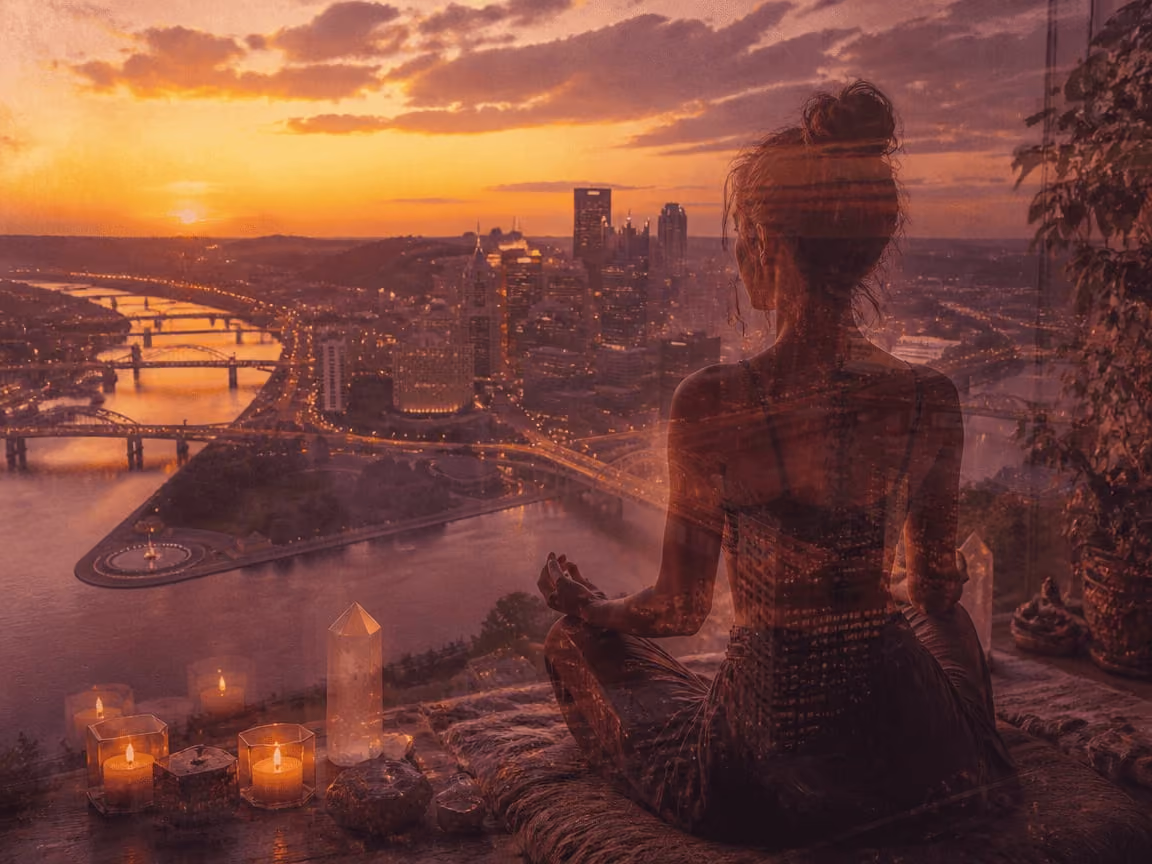
Imbolc is the sabbat that gets the least attention in mainstream culture and deserves considerably more. It falls at the first stirrings of spring -- the moment when the light has been returning for six weeks and you can finally, faintly, feel it. In Pittsburgh winters, this is the point when you start to believe, barely, that warmth is coming (even if it takes a couple false starts + surprise April snowstorms, lol!)
The holiday is associated with Brigid -- the Celtic goddess of fire, healing, creativity, and poetry whose sacred flame we discussed in the feminine spiritual traditions piece. Imbolc is Brigid's day, and her themes are the themes of the sabbat: the return of creative fire, purification after the long winter, the first tender beginnings of new life before spring has fully arrived.
It's a sabbat for tending your own inner flame. What creative projects were seeded in the dark half of the year? What ideas have been gestating that are almost ready to emerge? Imbolc is not the time to launch -- it's the time to nurture, to clear, to make ready.
In the folk tradition, Imbolc is associated with Groundhog Day -- the cultural echo of the original question: is winter over yet? Is the light really coming back? The answer at Imbolc is almost always: yes, but not yet. Hold on a little longer.
How to observe: Make a Brigid's cross from rushes or paper and hang it in your home. Light a candle and sit with the question of what creative work is asking to be born this year. Purify your space — clean, clear, declutter, let the winter heaviness go. Plant seeds indoors, literally or metaphorically.
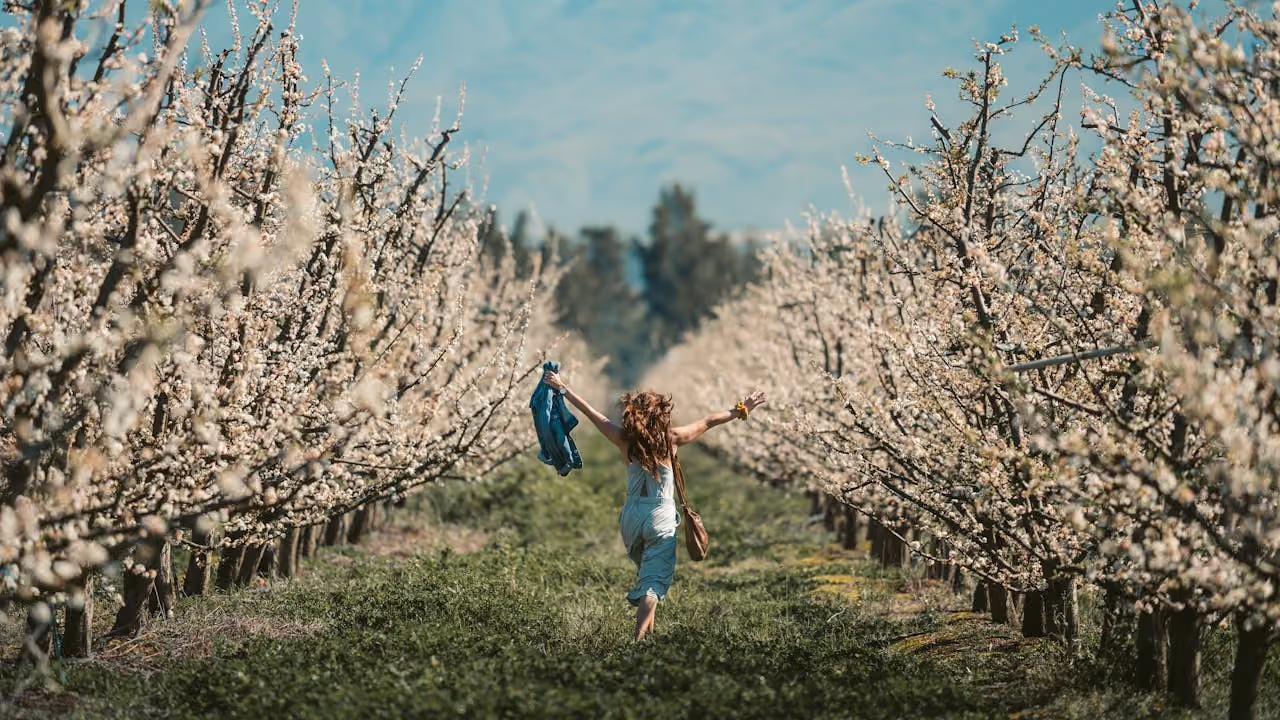
Ostara is the spring equinox, the moment of balance when day and night are equal and the light has officially taken the lead. Spring is here. Everything is beginning.
The goddess Ostara -- a Germanic figure associated with the dawn, with hares, with eggs -- is the etymological origin of Easter. Again, not coincidental. The church placed Easter near the spring equinokx because spring rebirth is a universal human spiritual theme that no tradition can claim exclusively.
Ostara's energy is active, optimistic, and expansive after the long contraction of winter. It's a sabbat for new beginnings -- planting seeds both literal and metaphorical, setting intentions for the growth season ahead, clearing away what was released at Samhain and Yule that still lingers. That's why you'll notice so many Ostara rituals have to do with growth or starting something new.
The symbols of Easter -- eggs, rabbits, flowers, pastels -- are Ostara symbols, representing fertility, new life, and the return of the sun's generative power. Reclaiming their original spiritual context doesn't take away from the modern Christian celebration. In fact, I'd argue that appreciating the history makes it possible to have an even stronger personal connection with the holiday.
How to observe: Plant something: seeds in soil, an intention in a journal. Decorate eggs with symbols of what you're calling in. Spend time outdoors in the morning light. Set your intentions for the waxing year. Clean your home deeply. Build an altar with fresh flowers, green things, and symbols of new beginnings.
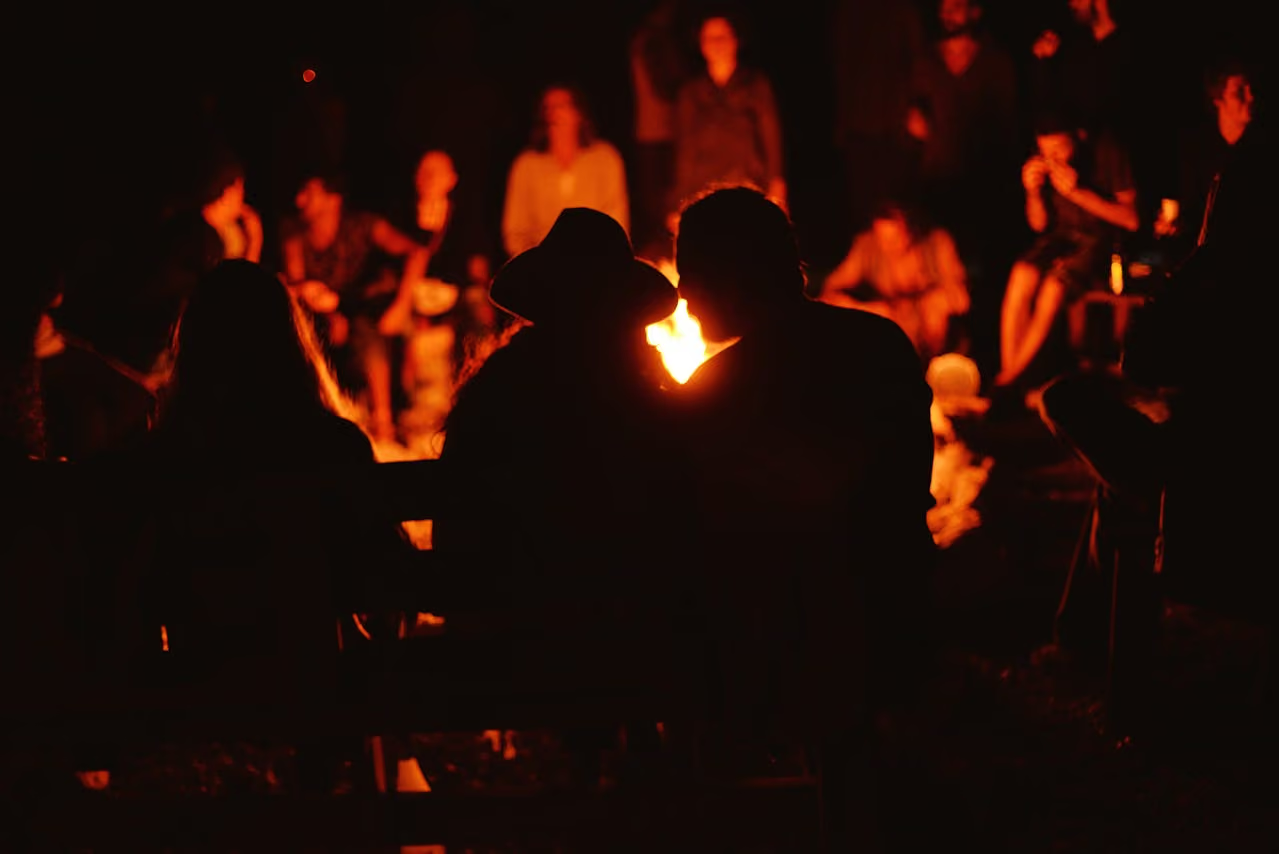
Beltane is the fire festival that sits opposite Samhain on the Wheel -- where Samhain honors death and the ancestors, Beltane celebrates life, fertility, and the full flowering of spring. It's one of the most joyful and energetically potent sabbats on the calendar.
In Celtic tradition, Beltane marked the beginning of summer and was celebrated with massive bonfires. Cattle were driven between the fires for purification before being released to summer pastures. People danced around the maypole -- a fertility symbol -- and the holiday had a frankly erotic quality that the church spent centuries trying to suppress with limited success.
The energy of Beltane is creative, sensual, abundant, and alive. It's a sabbat for celebrating your own vitality, your creative power, your capacity for joy. After the long introspective months from Samhain through Ostara, Beltane says: come outside. Let yourself be alive. Dance.
In modern practice, Beltane is a time to celebrate what's flourishing in your life, to tend your creative fire, and to honor the body and its capacity for pleasure and aliveness. The solar plexus and sacral chakras are particularly activated at Beltane -- it's a good time to work with music and movement as spiritual practice. [link to chakra healing music post]
How to observe: Build or tend a fire. Dance -- alone, with friends, in your living room, outside. Celebrate something that's growing in your life. Make an offering of flowers. Spend time in a garden or wild space. Let yourself be joyful without qualifying it.
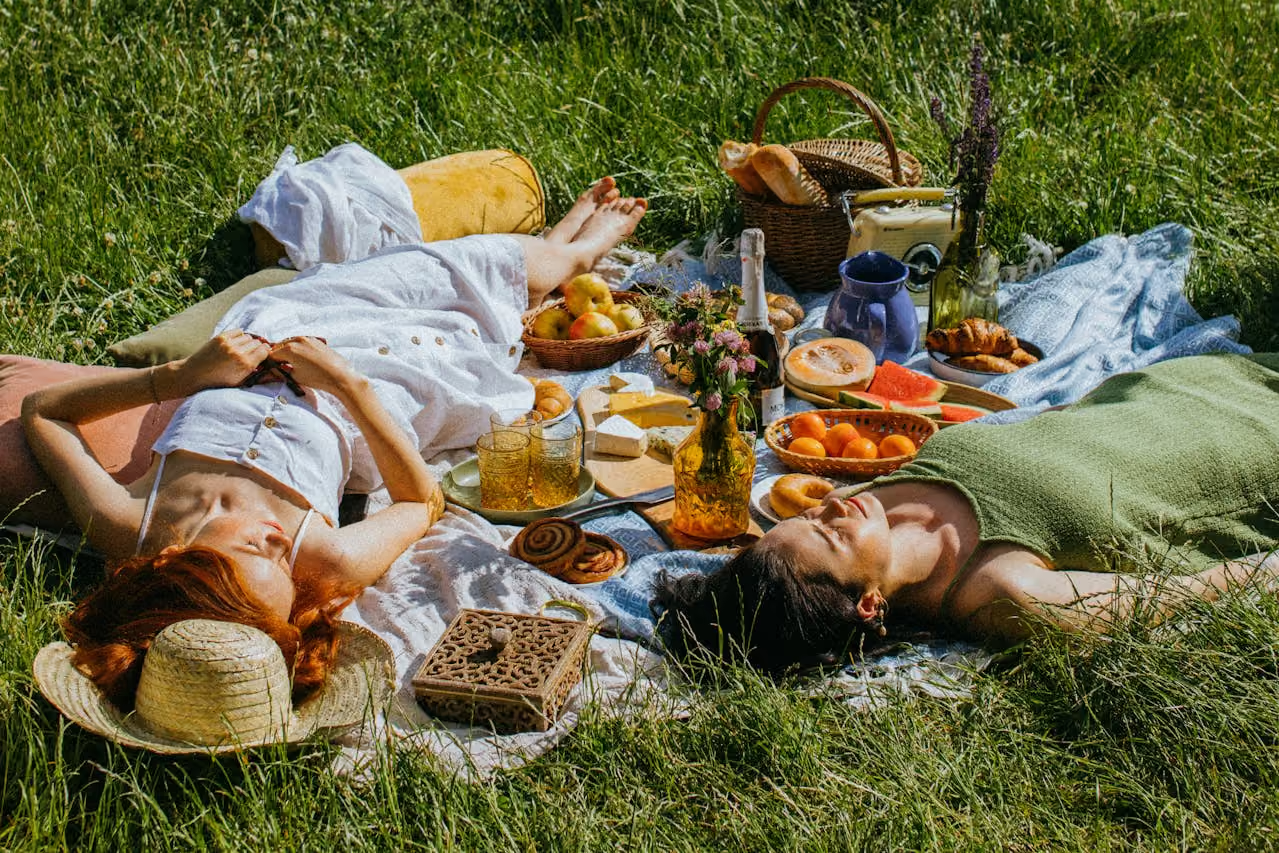
Litha is the summer solstice -- the longest day of the year, the moment when the sun is at the height of its power. Everything is in full bloom. The light is at its maximum. And then, from this point, it begins to wane.
This is the paradox at the heart of Litha: the height of the light is also the turning toward darkness. The moment of maximum flowering is also the beginning of the harvest cycle. This is not a sad thing. It's the Wheel doing what the Wheel does, the reminder that nothing stays at its peak, that fullness and completion are the same moment.
Litha is a sabbat for celebrating what has come into full bloom in your life and for beginning to think about what needs to be harvested -- completed, gathered, expressed -- before the energy begins to contract again. What did you plant at Ostara and Beltane that's now in full growth?
The summer solstice is also, traditionally, a time of heightened magic and a permeable boundary between the human world and the faerie realm. Midsummer Night's Dream didn't invent this association -- it drew on it.
How to observe: Rise with the sun or stay up to watch it set. Spend the longest day outdoors as much as possible. Build a fire or gather with others around light. Make a solar talisman -- an object charged in the sun's light with intention. Identify one thing that's in full bloom in your life and celebrate it specifically. Begin thinking about what you want to harvest before the year turns dark again.

Lammas is the first harvest festival -- the moment when the first crops are brought in and the abundance of the growing season begins to be gathered. It's also the first acknowledgment that summer is ending. The days are noticeably shorter now. The light is changing quality.
The holiday is called both Lammas (a Christian name derived from the Old English for "loaf mass," reflecting the tradition of baking bread from the first harvested grain) and Lughnasadh (the Irish name, honoring the god Lugh). Both names point to the same energy: gratitude for abundance, the sacred act of receiving what the earth has provided, and the bittersweet awareness that the harvest season is finite.
In modern practice, Lammas is a time for gratitude -- a genuine accounting of what has grown and flourished in your life since the year began. It's also a time for first completions: what projects, relationships, or chapters are ready to be harvested, concluded, expressed?
How to observe: Bake bread, even if you've never done it before. The act of transforming grain into food is the ritual. Make a list of everything that has grown or flourished in your life since Samhain, everything you're grateful for. Offer some of it back symbolically. Identify what's ready to be completed or expressed before the year ends.
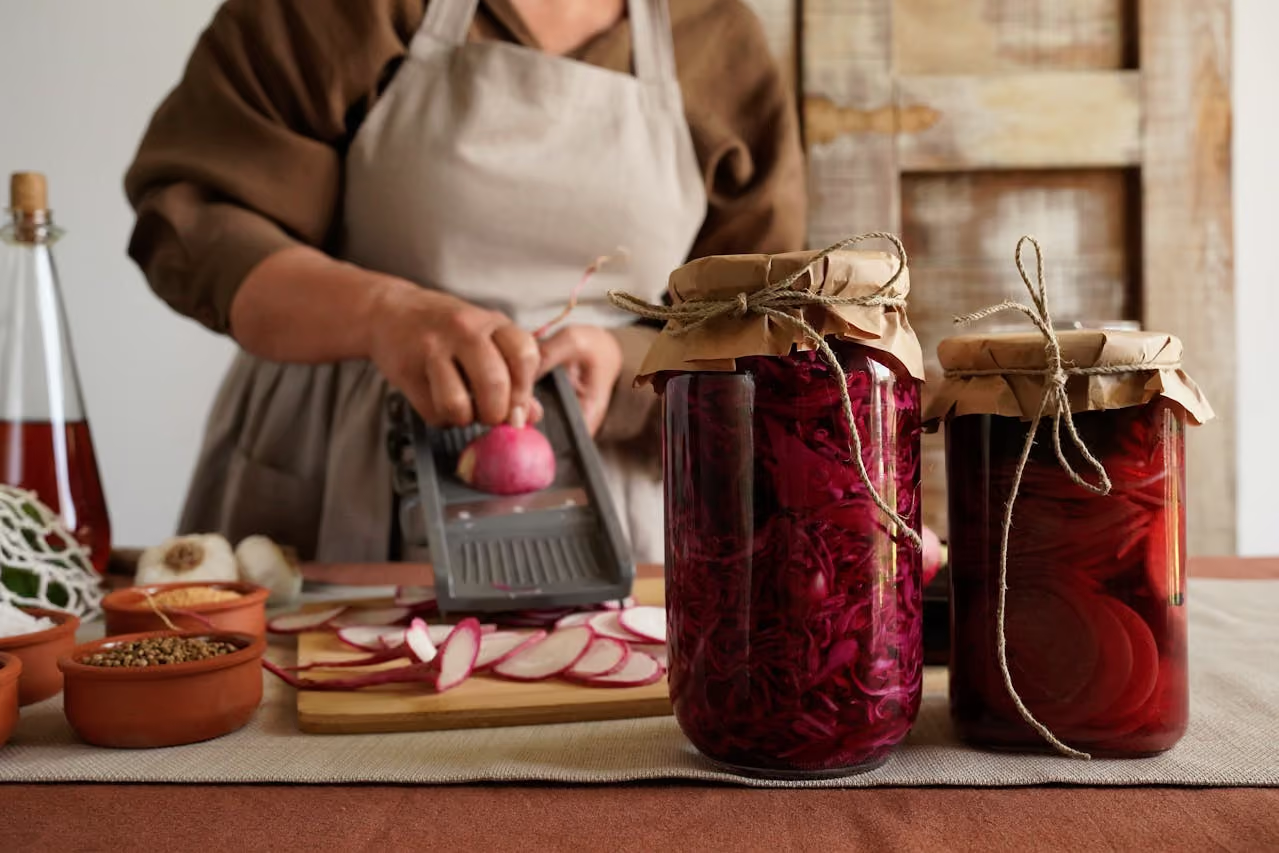
Mabon is the autumn equinox and the second harvest festival -- the moment of balance that mirrors Ostara, but tilting now toward darkness rather than light. Day and night are equal again, briefly, before the dark half of the year takes over.
It's a time of deep gratitude and honest assessment. What was the harvest of this year, really? What grew, what didn't, what surprised you? What are you carrying into the dark half that needs to be acknowledged before it's released at Samhain?
Mabon has a quality of wistfulness that the other sabbats don't quite share. The light is genuinely leaving now. The warmth is going. There's beauty in the dying leaves, real beauty, and also real loss. Both are true at the same time. What will you preserve and carry with you? What will you release from this year's efforts, and how will this knowledge serve you as you begin the process of tending your inner light and incubating new ideas and projects when the next year begins?
This is one of the sabbats where working with shadow material -- the things that were hard this year, the places where intention met reality and reality won -- is most natural and most useful. Mabon doesn't ask you to be positive about difficulty. It asks you to be honest about it before you lay it down.
How to observe: Build an altar with autumn harvests -- apples, gourds, grain, dried herbs, fallen leaves. Write an honest accounting of the year's harvest. Identify what you want to release before Samhain. Spend time outdoors in the changing light. Cook a slow, warming meal with seasonal ingredients.
The Wheel of the Year isn't just a list of celebrations. It's a framework for living in rhythm with actual time rather than against it.
For creative workers -- musicians, writers, artists, anyone whose work depends on energy and inspiration -- the Wheel offers a map of when to push and when to rest, when to plant and when to harvest, when to go inward and when to express outward. This is not mysticism. It's observation. The energy available in February is different from the energy available in July. Working with those differences rather than against them is just intelligence.
For spiritual practitioners, the Wheel creates a container for practice that's bigger than the individual session or the individual moon cycle. The sabbats give the year a shape. They create natural points for reflection, intention, and completion. They make time feel sacred rather than just sequential.
For anyone who has felt increasingly alienated from a culture organized almost entirely around productivity and linear progress -- the Wheel is a counter-philosophy. A year that has a dark half and a light half, a time for rest and a time for growth, a time for releasing and a time for celebrating. A year that moves in a circle rather than a straight line toward an endpoint that keeps receding.
That's not a small thing to offer. In the current moment, it might be one of the most important things available.
Don’t forget to follow Kellee for the latest news and music:
add soundcloud, IG





Sign up to get our latest news and stay connected.
Thank you! Your submission has been received!
Oops! Something went wrong while submitting the form


.avif)

.avif)