
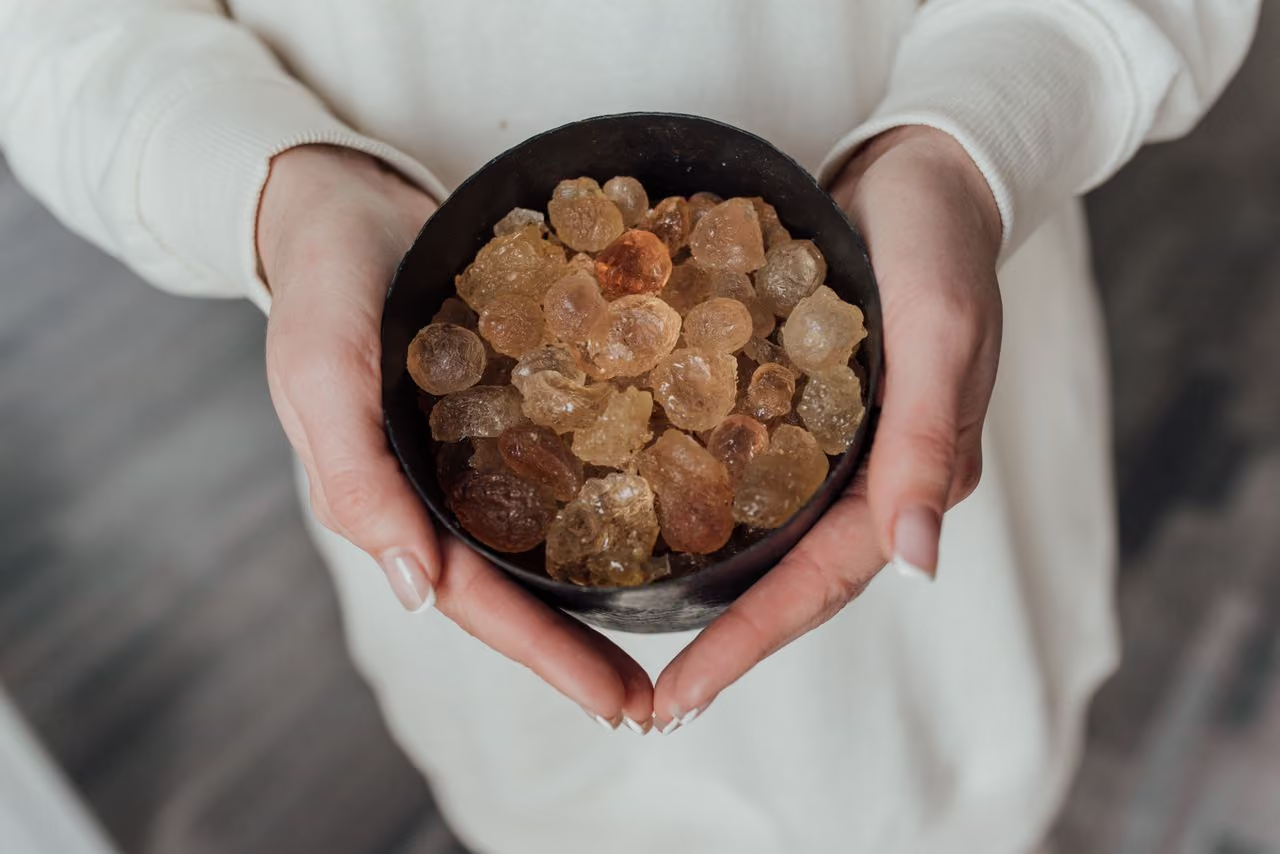
Walk into almost any crystal shop and you'll spot citrine immediately — that warm, golden-yellow stone catching light from across the room like a small piece of sun someone decided to put on a shelf.
It has a reputation as the prosperity stone, the money magnet, the one you put in your wallet or your cash register to attract abundance. And while there's a real tradition behind that use, it's a bit like knowing someone only by their job title. Citrine is interesting for a lot of reasons beyond what it can allegedly do for your bank account.
What actually makes citrine worth understanding is its relationship to the energy of the sun — warmth, clarity, optimism, and the kind of confidence that comes not from arrogance but from genuinely believing in what you're doing. That's the real gift this stone carries. Let's dig into it.
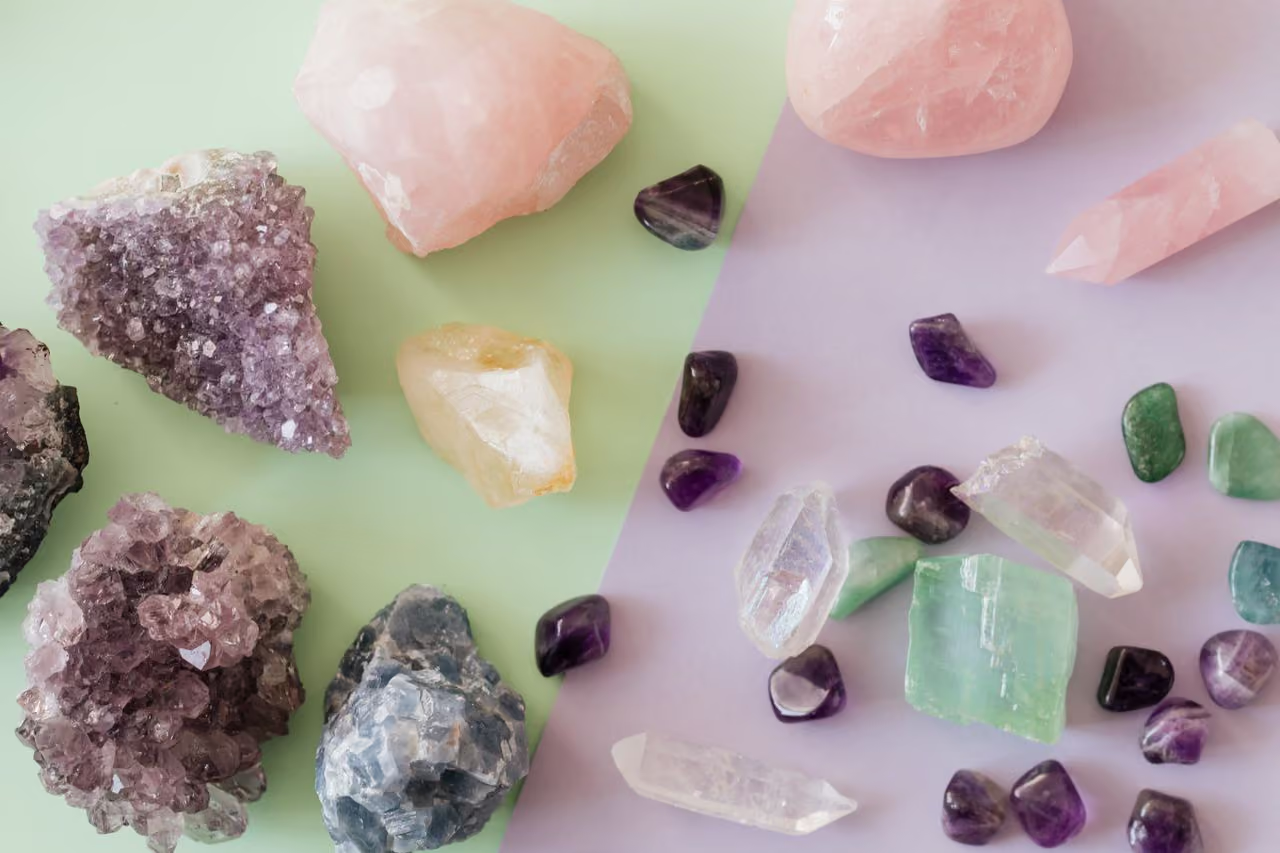
Citrine is a variety of quartz — the same mineral family as rose quartz and clear quartz — colored yellow to orange-brown by iron impurities within the crystal structure. Natural citrine is relatively rare, which means a significant portion of citrine sold commercially is actually heat-treated amethyst or smoky quartz that has been transformed through high temperatures. Heat-treated citrine tends to be a deeper, more saturated orange-amber; natural citrine is usually a paler, more translucent yellow.
Both are considered energetically valid by most practitioners, though some prefer natural citrine for its more subtle, sustained energy versus the more intense heat-treated variety. If you want to know what you're getting, ask your crystal supplier — a reputable source will be upfront about it.
The name comes from the French word for lemon — citron — and the stone has been used in jewelry and ornamentation since at least 300 BCE. The ancient Greeks and Romans used it as a protective talisman and decorative gem. It was particularly popular during the Victorian era and the Art Deco period, when its warm golden tones were prized in jewelry design. Scottish men traditionally used it to decorate the handles of daggers and swords — an interesting association with the stone of personal power.
Its longstanding nickname as the merchant's stone comes from a tradition of shopkeepers and merchants keeping citrine in their cash drawers to attract prosperity and protect against loss. That tradition is still practiced widely.
Citrine's energy is solar — warm, generative, outward-facing, and energizing. Where some stones pull you inward, citrine pushes energy outward into the world. Its spiritual meanings all orbit this central quality.
☀️ Abundance and manifestation. Citrine's most famous spiritual association is with abundance — not just financial, but in the broader sense of fullness and flow. It's associated with the belief that what you focus on expands, and that a clear, energized solar plexus makes the connection between intention and action stronger. Practitioners working with manifestation keep citrine on altars, in workspaces, or in purses and wallets as a continuous energetic signal of openness to abundance.
☀️ Personal power and confidence. The solar plexus chakra — citrine's primary home — governs personal power, self-esteem, and the will to act. When that energy center is activated and clear, there's a quality of groundedness in your own authority that doesn't need external validation to feel real. Citrine supports that quality. It's particularly useful during periods when self-doubt is louder than it needs to be, or when fear of failure is getting in the way of starting something.
☀️ Joy and optimism. There is something genuinely mood-lifting about spending time with citrine. Its warm energy doesn't manufacture happiness artificially — it dissolves the energetic heaviness that can make ordinary joy harder to access. Think of it less as a happiness switch and more as a fog-lifter. Many practitioners reach for it specifically when they've been spending too much time in their head and need to feel more alive in the world.
☀️ Creativity and momentum. Citrine activates both the solar plexus and the sacral chakra — the energy center governing creativity, imagination, and emotional flow. That dual activation makes it particularly valuable for creative workers experiencing blocks, stagnation, or the particular paralysis that comes from knowing what you want to make but not being able to start. It won't write the song or paint the canvas for you. But it tends to loosen what's stuck.
☀️ Clarity and mental focus. Citrine has historically been associated with mental clarity and clear thinking. It's been called the stone of the mind by some traditions, and many practitioners find it useful when they need to think through a problem, make a decision, or sustain focused work over an extended period.
Citrine's primary chakra is Manipura — the solar plexus, the third chakra, located between the navel and the sternum. Its Sanskrit name means "city of gems," which gives some sense of its energetic richness.
The solar plexus chakra governs personal power, will, identity, self-esteem, and the capacity to take directed action in the world. When it's balanced, there's a quality of purposeful confidence — you know who you are, you trust your own judgment, and you can move toward what you want without being derailed by others' opinions or your own inner critic.
When it's blocked or depleted — which chronic stress, criticism, and sustained self-doubt all contribute to — the symptoms are recognizable: difficulty making decisions, low self-esteem, a feeling of being at the mercy of external circumstances, and a disconnect between what you want and your ability to pursue it. The overactive version produces its own problems: rigidity, control issues, the need to dominate.
Citrine's warmth and energizing quality is particularly suited to a depleted or sluggish solar plexus — it restores rather than activates further. For healing a solar plexus that's already running hot, gentler stones may be more appropriate.
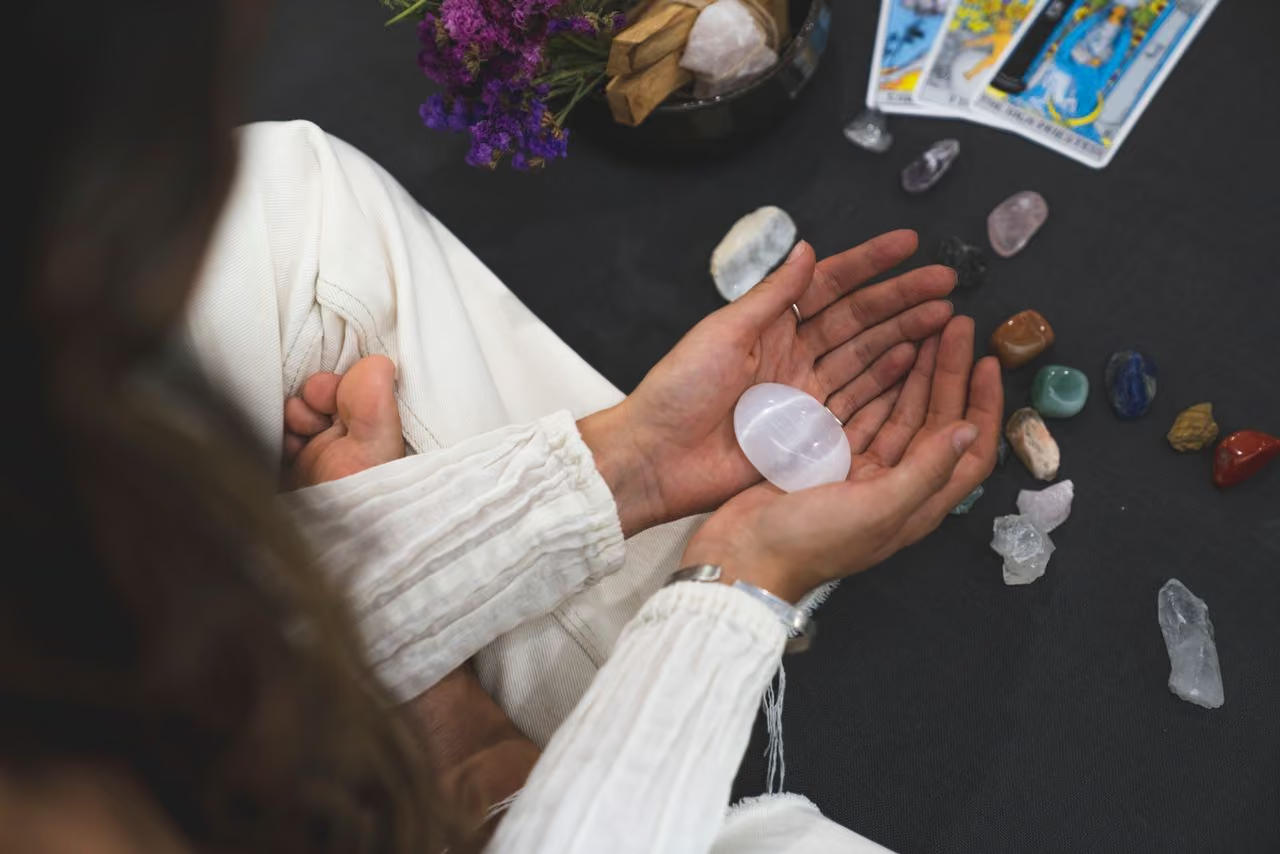
In meditation. Hold citrine in your dominant hand or place it on your solar plexus — just below the sternum — during seated meditation. Set an intention related to confidence, clarity, abundance, or a specific goal you're working toward. Visualize warm golden light radiating from the stone through your core, filling the solar plexus and spreading outward. Citrine meditation pairs well with music at 528hz — the frequency associated with transformation and DNA repair, often connected to solar plexus work.
On your altar or workspace. Citrine as a workspace companion is one of its most practical uses. A piece on your desk or near your creative tools serves as a constant energetic reminder of momentum, purpose, and openness to what you're working to create. Many writers, artists, and musicians keep it near where they work for exactly this reason.
In your wallet or purse. The merchant's stone tradition is simple to maintain: keep a small tumbled citrine in your wallet, purse, or wherever you manage money. The intention is less about magic and more about orientation — keeping your relationship to abundance open rather than closed, expectant rather than anxious.
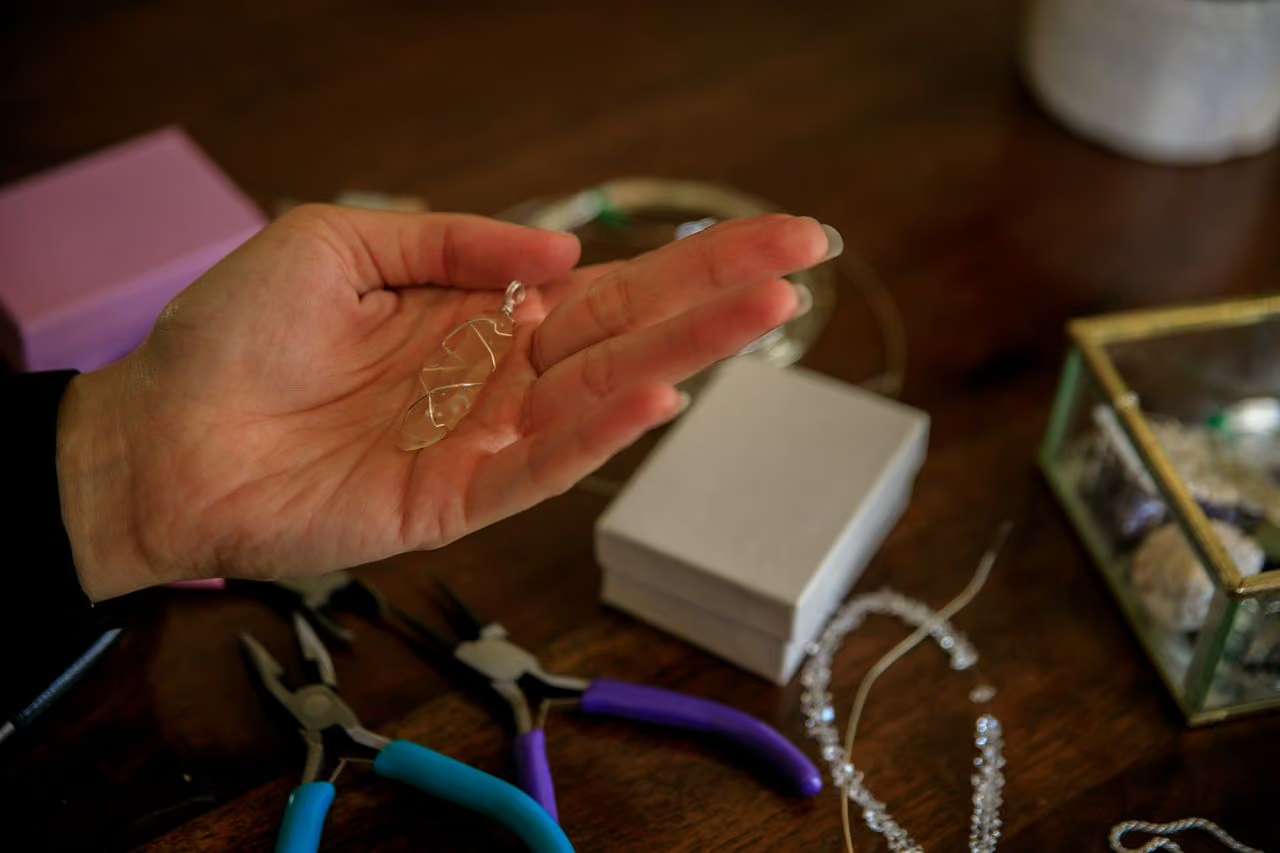
Worn as jewelry. Citrine jewelry worn near the solar plexus — a long pendant, a layered necklace — keeps its energy in sustained contact with the chakra it activates. Yellow gold settings amplify its solar quality; silver softens it slightly for those who find its energy intense.
At the new moon. Citrine is a natural companion to new moon intention-setting practice. Its manifestation energy aligns with the new moon's quality of planting seeds and setting direction for the cycle ahead. Place it on your altar during new moon ritual and hold it while writing your intentions.
Carnelian — both stones activate the lower chakras — citrine in the solar plexus, carnelian in the sacral — making this a particularly powerful combination for creative work. Together they build both the courage to begin and the creative flow to sustain. Artists, musicians, and anyone starting a new project will find this pairing useful.
Amethyst — the combination of citrine's energizing solar energy and amethyst's calming spiritual clarity creates balance between drive and wisdom. Particularly useful when big decisions need to be made from a grounded place rather than an anxious or overconfident one.
Pyrite — both stones carry abundance and prosperity associations, and their energies are complementary rather than redundant. Citrine opens the energetic field to abundance; pyrite provides the grounding and practical action energy to build it. The two together are a popular prosperity pairing.
Clear quartz — amplifies citrine's energy across all its dimensions. Useful when you want more intensity — more clarity, more confidence, more energetic lift. Use thoughtfully if citrine already feels like a lot.
Black tourmaline — citrine's outward, expansive energy balanced by tourmaline's protective, grounding quality. Particularly useful if you're doing manifestation work and want to stay grounded rather than scattered as things start to move.

Citrine is one of the few crystals widely considered self-cleansing — it's said to transmute rather than accumulate negative energy, which means it theoretically never needs cleansing the way most stones do.
That said, many practitioners cleanse it periodically anyway — particularly when starting fresh with a new intention or after a period of intensive use. Brief morning sunlight is actually a recommended method for citrine specifically, unlike rose quartz. Its solar energy is amplified rather than damaged by sun exposure, though extended direct sunlight can eventually fade some specimens. Moonlight and smudging both work well too.
One important note: citrine is generally not water-safe. Its iron content makes it susceptible to surface damage with prolonged water exposure. Skip the running water method for this one and use dry cleansing methods instead.
If you're drawn to citrine but not sure where to start, begin with the simplest possible version of what it does.
Find a moment before you start your workday — or before you begin something you've been putting off. Hold the stone in your dominant hand. Take a breath and let yourself feel the warmth of it.
Ask yourself: what would I do today if I trusted myself more? Let whatever comes up be the thing you hold in mind while you work.
Set the stone somewhere visible at your desk or workspace. Not as decoration — as a reminder. Something you made a small agreement with at the start of the day. Check in with it when the doubt gets loud.
That's the practice. Citrine doesn't ask for elaborate ritual. It asks for the small, consistent choice to show up for what you're building.
Don’t forget to follow Kellee for the latest news and music:
add soundcloud, IG





Sign up to get our latest news and stay connected.
Thank you! Your submission has been received!
Oops! Something went wrong while submitting the form





.avif)