
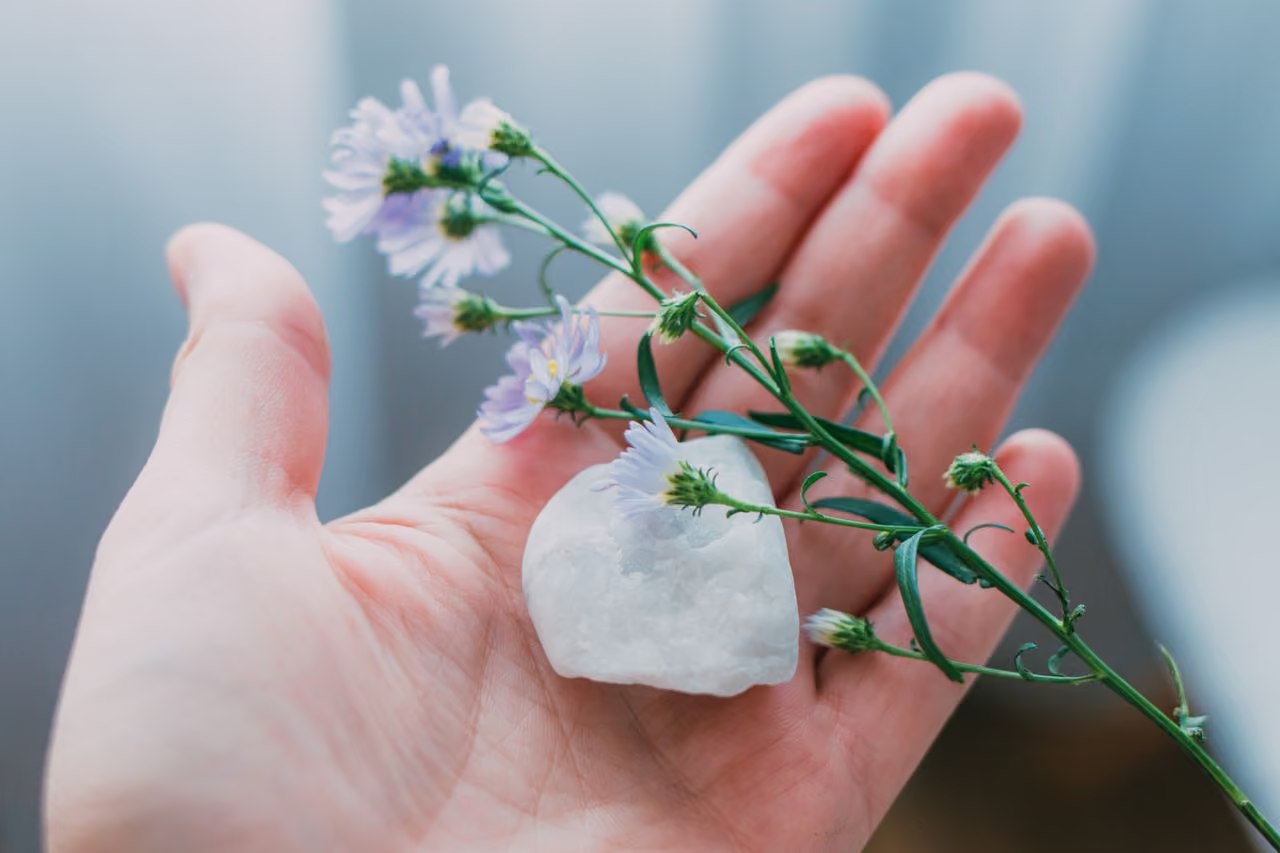
Hold a piece of moonstone up to the light and something happens that doesn't happen with most stones. The light doesn't reflect off the surface — it seems to move beneath it, a soft blue-white glow that shifts as you turn the stone. Gemologists call this adularescence. Most people just call it beautiful.
That inner light is part of why moonstone has been considered magical for as long as humans have been paying attention to stones. It looks like it has a moon inside it. And for thousands of years across cultures that never spoke to each other, people looked at moonstone and thought the same thing: this stone carries something of the moon.
The common shorthand for moonstone is that it's a feminine stone — a stone for intuition, for cycles, for the emotional and mysterious. That's true, but it's also a starting point rather than the whole story. Moonstone works at the intersection of emotion, creativity, and cyclical wisdom in a way that's genuinely useful regardless of where you are in your practice — and its connection to the lunar rhythms that run through so much of the spiritual work on this blog makes it one of the most naturally integrated stones in the collection.
Moonstone is a variety of feldspar —m specifically orthoclase or albite feldspar — and its distinctive visual quality comes from a phenomenon called adularescence: light scattering between microscopic layers of feldspar within the stone, producing that signature floating glow. The best specimens show a strong blue sheen against a nearly colorless or white body. Other varieties display peach, gray, or rainbow sheens depending on their specific mineral composition.
The name has ancient roots — it was called adularia in early mineralogy, after the Adula mountains in Switzerland where European specimens were first documented. But the stone itself has been worked and revered far longer than any European classification system. Ancient Romans believed moonstone was formed from solidified moonlight. Hindu tradition holds that moonstone is made from the crystallized rays of the moon. Both cultures used it in jewelry, amulets, and ceremonial objects connected to their lunar deities.
Sri Lanka and India have historically produced the finest specimens — the blue-sheened stones that fetch premium prices among collectors and practitioners. More recently significant deposits have been found in Madagascar, Australia, and the United States.
At Mohs hardness 6 to 6.5, moonstone is moderately durable but should be protected from hard impacts and abrasive surfaces, which can damage the delicate internal layering responsible for its sheen. It's generally water-safe for brief contact but prolonged soaking isn't recommended.
Moonstone's energy is receptive rather than projective — where citrine pushes outward and lapis lazuli cuts through, moonstone draws inward, deepens, and reveals. Its spiritual meanings all carry this quality of soft illumination: not the harsh light that exposes, but the gentle light that allows you to see in the dark.
🌕 Intuition and inner knowing. Moonstone is one of the most consistently recommended stones for developing and trusting intuition — the form of knowing that arrives through feeling, image, and bodily sensation rather than linear reasoning. For people who have learned to distrust or override their intuitive responses, moonstone creates a sustained environment of permission: the quiet beneath the noise where intuitive signals can actually be heard. It doesn't generate intuition so much as clear the interference that drowns it out.
🌕 New beginnings and transitions. Moonstone carries a specific energy of beginnings — not the explosive launch energy of wands or the solar confidence of citrine, but the more tender energy of something new that hasn't yet proven itself. It supports the willingness to begin without certainty, to trust the process before you can see the outcome. This makes it particularly useful at life thresholds — new relationships, new creative projects, new phases of spiritual practice, the aftermath of endings that require something new to grow in their place.
🌕 Emotional intelligence and fluidity. Working with moonstone tends to increase emotional awareness — not in the sense of amplifying emotional reactivity, but in the sense of being able to feel more precisely what is actually present. Emotions that have been compressed or bypassed often become more accessible with moonstone. This can initially feel like more emotion, but what's actually happening is less suppression — which over time produces more stability rather than less.
🌕 Feminine energy and cyclical wisdom. Moonstone's connection to the feminine principle — and specifically to the cyclical intelligence that the feminine principle embodies — makes it one of the most aligned stones for lunar practice. It understands that things move in cycles, that rest is part of the cycle rather than a failure of momentum, that the dark phase of any cycle is not an absence of something good but a necessary part of the whole. For anyone working with the Wheel of the Year, lunar ritual, or any practice that honors natural rhythms, moonstone is a natural companion.
🌕 Psychic sensitivity and dream work. Moonstone is strongly associated with psychic awareness — the ability to receive impressions, images, and knowing that go beyond ordinary sensory experience. It's been used for scrying, for dream interpretation, and for deepening the quality of intuitive work in tarot and other divination practices. For practitioners who want to develop these capacities, moonstone supports the receptive open state in which psychic information arrives most clearly.
Moonstone's primary chakra is Svadhisthana — the sacral, the second chakra, located just below the navel. The sacral governs creativity, emotion, sensuality, pleasure, and the body's native intelligence — the knowledge that lives in feeling rather than thinking.
When the sacral chakra is balanced, emotional experience flows: feelings arise, move through, and complete without getting stuck. Creative energy is available and accessible. Pleasure is not complicated by guilt or suppression. The body feels inhabited rather than managed.
When the sacral is blocked — which emotional suppression, creative disconnection, and long periods of living primarily from the neck up all contribute to — the effects register both emotionally and creatively. The freeze that creative workers sometimes experience, the flatness that can settle in when emotional life has been systematically dampened, the disconnection from instinct and desire — these are often sacral expressions. Moonstone's resonance with water and with emotional flow makes it particularly effective for this kind of blockage.
Its secondary chakra, the third eye, connects moonstone's emotional intelligence to perceptual clarity — the ability to not just feel what is present but to understand what it means. This is what distinguishes emotional reactivity from emotional wisdom: not whether you feel things deeply, but whether you can see clearly while you're feeling them.

During lunar rituals. Moonstone's most natural home is in lunar practice — new moon intention-setting, full moon release, and the waxing and waning work in between. Place it on your altar during lunar rituals, hold it while setting intentions, or charge your intentions by holding the stone under the moon itself. Its energy is most potent when working in direct alignment with lunar phases rather than against them.
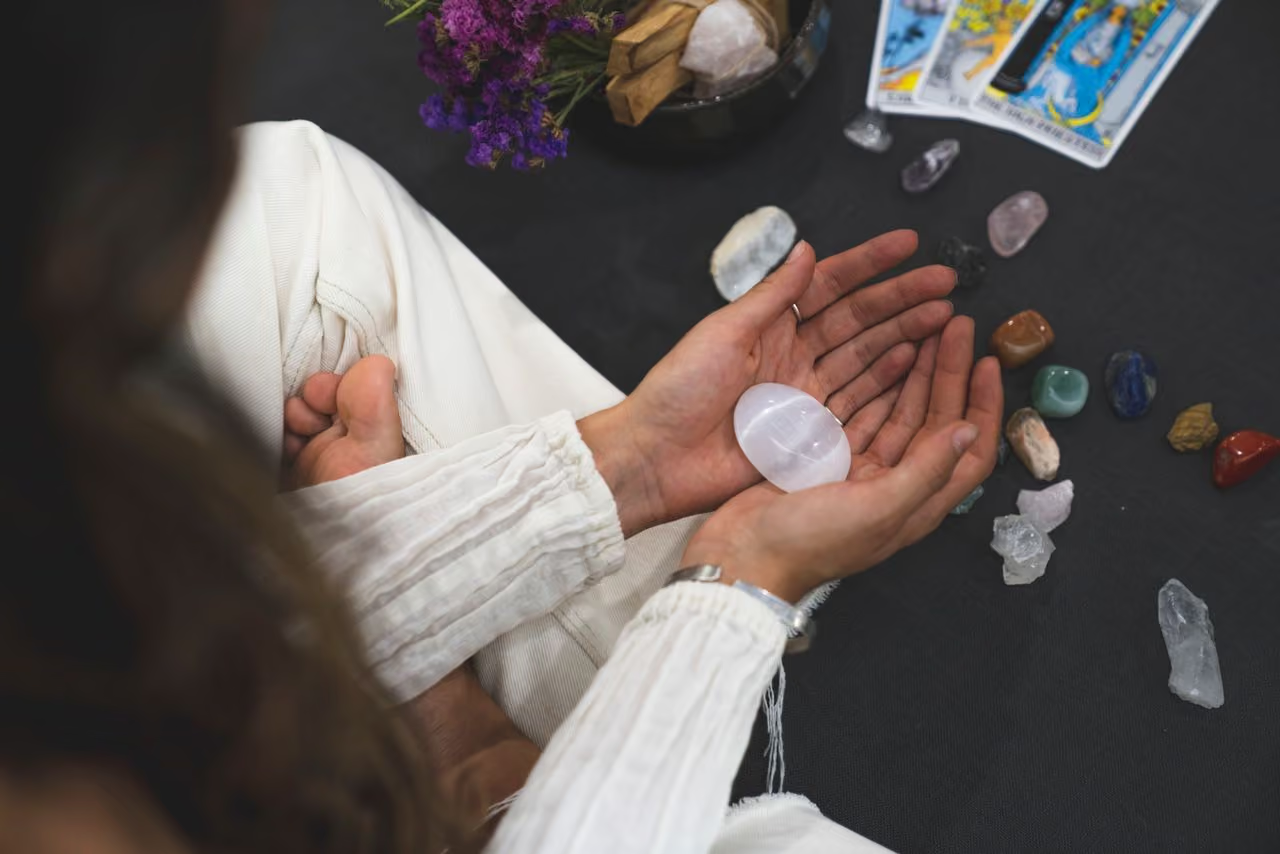
In meditation. Hold moonstone in both hands or place it on the sacral — just below the navel — during meditation. The entry point into moonstone meditation is receptivity rather than direction: instead of setting a focused intention, open the question. What wants to be felt? What wants to surface? Let the stone's gentle energy do the work of revealing rather than trying to force insight. This approach suits the stone's nature far better than directive, goal-oriented practice.
For creative work. Moonstone on or near your creative workspace supports the receptive, associative, non-linear thinking that creative work requires at the ideation stage. It's less useful for the focused execution phase — citrine or tiger's eye may serve better there — but for the dreaming, exploring, and following-what-feels-alive phase of creative projects, moonstone is a natural fit.
Under the pillow or beside the bed. Moonstone is one of the most consistently recommended stones for dream work — enhancing dream recall, supporting more vivid and meaningful dreaming, and improving the ability to interpret what dreams are communicating. Place it under your pillow or on your nightstand. Keep a journal nearby — moonstone tends to produce the kind of dreams worth writing down before they dissolve.
Worn during transitions. Moonstone worn as jewelry during a significant life transition — a new beginning, an ending, a period of uncertainty — provides sustained energetic support for the emotional navigation that transitions require. It's particularly useful when you know something is changing but the new thing hasn't fully arrived yet.
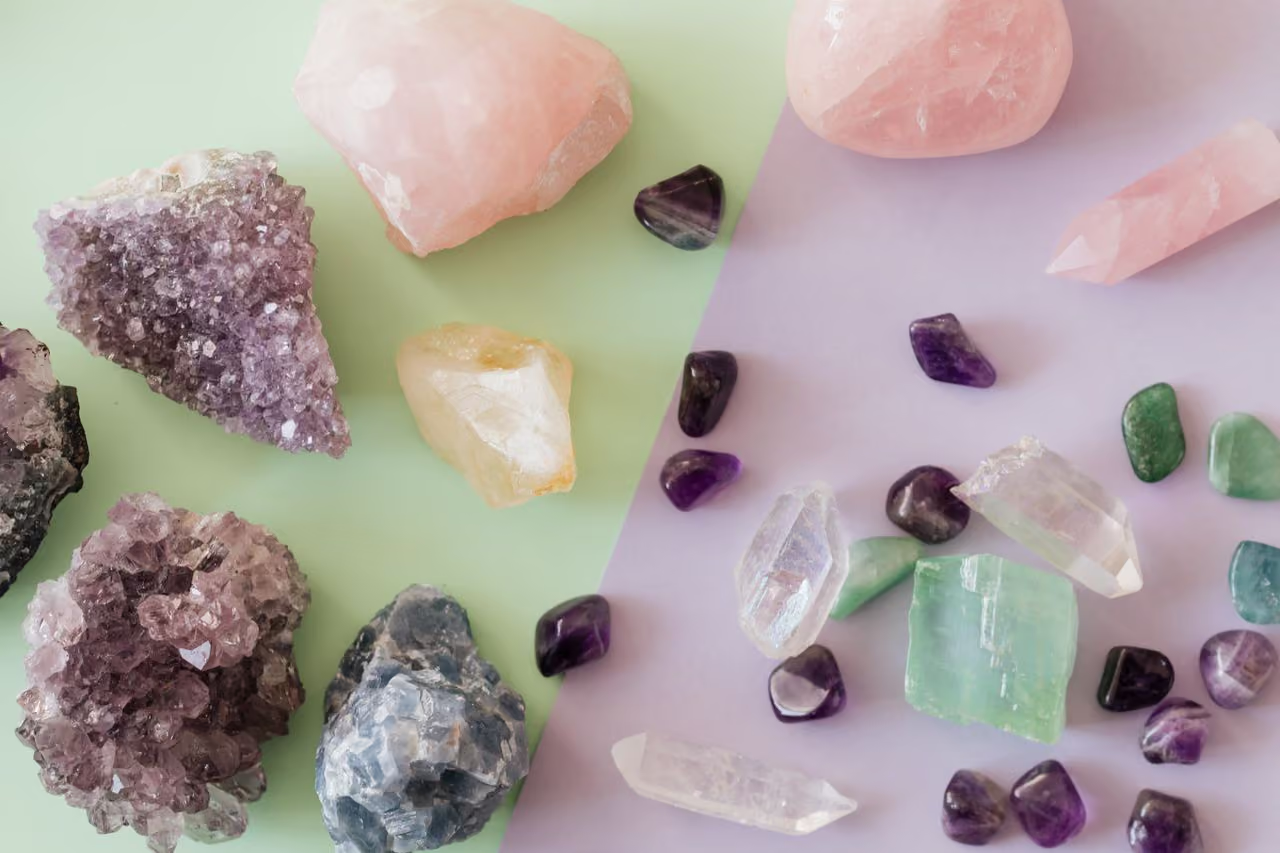
Moonstone has several natural crystal partners, each bringing something distinct to the pairing.
Labradorite shares moonstone's iridescent quality and its connection to the mystical and the psychic, but from a more protective and grounding angle. Where moonstone opens and receives, labradorite shields the aura during that opening — a particularly useful combination for anyone doing psychic development work or working in environments where energetic protection matters.
Rose quartz pairs with moonstone to create a deeply feminine, heart-centered combination. Rose quartz opens the heart to love; moonstone deepens emotional intelligence and intuitive awareness. Together they support the kind of relationship work — with oneself and with others — that requires both an open heart and clear emotional perception.
Lapis lazuli combines moonstone's emotional and intuitive depth with lapis lazuli's truth-seeking and expressive clarity. The combination supports bringing what the intuition reveals into clear, honest communication — feeling something fully and then being able to say it accurately.
Amethyst and moonstone together create a complete upper energy system — sacral emotional intelligence, third eye clarity, and crown spiritual connection working in concert. For meditation oriented toward spiritual development and deepening intuition, this is one of the most effective three-stone combinations.
Citrine offers something moonstone doesn't naturally provide: forward momentum and solar confidence. The combination of moonstone's receptive intuitive awareness with citrine's activating confidence energy is particularly useful when insight has arrived — you know what you want to do — but taking action feels uncertain.

Moonlight is both the obvious and the most effective method for moonstone specifically — the stone's whole identity is lunar, and placing it outside or on a windowsill during the full moon is the most aligned practice in both symbolic and energetic terms. New moon cleansing works too, though full moon tends to produce more thorough results.
Moonstone is generally water-safe for brief contact — a short rinse under cool running water is fine. Avoid prolonged soaking, salt water, and direct extended sunlight. Some moonstone varieties can lose their adularescence — that characteristic inner glow — with sustained UV exposure, and that sheen is the whole point.
Smudging with sage, palo santo, or frankincense works well for regular maintenance. Sound cleansing — a singing bowl or soft tones near the stone — suits moonstone's gentle energy particularly well.
Moonstone doesn't require elaborate ritual — it asks for something simpler and arguably harder: genuine receptivity.
The next time you're at a threshold — the start of a new month, a new moon, the beginning of something that feels uncertain — hold the stone in both hands. Don't set a specific intention. Instead, ask a single open question: what do I need to know right now?
Sit with it. Breathe. Let whatever comes arise without judging whether it's significant enough. Write it down afterward — moonstone's gifts often come as images, feelings, or fragments rather than complete thoughts, and writing captures them before they slip.
Then place the stone somewhere you'll encounter it as you move through whatever is beginning. Let it be a reminder that you don't need to have it all figured out before you start.
Don’t forget to follow Kellee for the latest news and music:
add soundcloud, IG





Sign up to get our latest news and stay connected.
Thank you! Your submission has been received!
Oops! Something went wrong while submitting the form




.avif)