Have you ever finished a tarot reading feeling scattered, drained, or just disconnected from the cards? You’re not alone, and as a reader you already understand why energy matters when it comes to the cards. Tarot is often described as a tool for intuition, but intuition doesn't operate in a vacuum. It is shaped by your focus, your mood, the space you read in, and the state you’re in.
Reiki offers a gentle, structured way to better nurture all of that. As a practice of channeling universal life energy through the hands, it can help you ground before a reading, clear your deck between sessions, hold a calmer space for the person you're reading for, and close each reading feeling restored rather than depleted.
Ready to learn more? Keep reading because we’re discussing:
Useful info about energy work in general
How Reiki fits naturally alongside tarot
And a step-by-step guide to infusing your readings with Reiki
Quick Facts
Reiki and Tarot at a Glance
What Reiki is
A Japanese energy practice developed by Mikao Usui in the early 1920s
Meaning
Rei (universal) + ki (life energy)
Training levels
Level One, Level Two, and Master, each opened through an attunement
Key symbols for tarot
Cho Ku Rei (power and protection), Sei He Ki (emotional clarity), Hon Sha Ze Sho Nen (distance)
Shared skills
Intention, receptivity, presence, and symbolic thinking
Ways to use it
Clearing your space, centering yourself, charging your deck, scanning spreads, closing readings
Time added
About 5 minutes per reading
Attunement needed?
Not for grounding, intention, and hand-scanning; yes for Reiki symbols and client work
Keep in mind
A complementary practice, not a substitute for medical or mental health care
Understanding Energy Work
Learning why energy work is so important
Bringing Reiki to your tarot readings can help bring calm and clarity. Image courtesy of Practical Life Guide.
Energy work is a broad term for practices built on the idea that a subtle life force flows through and around every living being. When that flow is balanced, the thinking goes, we feel clear, centered, and well. When it is blocked or depleted, we feel foggy, anxious, or out of sorts.
The idea is ancient and nearly universal. Chinese medicine calls this force qi and works with it through acupuncture, tai chi, and qigong. Indian yogic traditions speak of prana moving through channels called nadis and gathering in the chakras. Japanese traditions use the word ki, the root of the word Reiki itself. Many Indigenous and folk healing traditions around the world describe similar forces in their own language.
Modern energy practices draw on these roots in different ways. Some use touch or hovering hands, some use breath and movement, and others rely on visualization, sound, or crystals. What they share is a focus on three things that will feel familiar to any tarot reader:
Intention. Energy work begins with a clear purpose, much as a reading begins with a clear question.
Attention. Practitioners learn to notice subtle sensations such as warmth, tingling, heaviness, or a shift in mood.
Presence. The practitioner aims to be a calm, open channel rather than forcing an outcome.
You don't need to adopt any particular belief system to benefit from these principles. Even readers who think of energy work as a form of mindfulness or ritual often find that it helps them slow down, focus, and read with more care.
How Does Reiki Fit In?
Reiki is a Japanese energy practice developed by Mikao Usui in the early 1920s. The word combines rei, often translated as "universal" or "spiritual," with ki, "life energy." Practitioners place their hands lightly on or just above the body and allow energy to flow where it is needed. The idea is the energy will go exactly where it is needed, and it is always for the highest good of the patient.
A key idea in Reiki is that the practitioner doesn't use their own energy. They act as a conduit for universal energy, which is why many people say a Reiki session leaves the giver feeling refreshed rather than tired. That quality alone makes it appealing to tarot readers who often feel drained after a long day of readings.
Reiki is traditionally taught in levels, with each level opened through an attunement given by a Reiki Master:
Level One focuses on self-healing and hands-on treatment of others.
Level Two introduces more symbols and the concept of distance healing, letting practitioners send Reiki across time and space.
Level Three/ART deepens the practice and qualifies the practitioner to teach and attune others.
Why Reiki and Tarot Work So Well Together
These two practices aren’t as far apart as you might think
At first glance, Reiki and tarot look like very different practices. One is a hands-on healing modality; the other is a symbolic system for reflection and divination. Look closer, though, and they share the same core skills.
Both depend on receptivity. A good tarot reader doesn't force meaning onto the cards; they let images, feelings, and connections arise. Reiki trains exactly this kind of open, non-grasping attention. Practitioners learn to step aside and let energy move, which mirrors the way intuitive readers learn to step aside and let the cards speak. Adding Reiki before you begin to read can help to focus your mind by slowing down and preparing to be more open. When we’re in a more receptive state, readings may become more clear, and subtle nuances you may not have noticed before, are very obviously calling for your attention.
Both are guided by intention. In Reiki, you set an intention for the highest good before you begin. In tarot, you frame a question with care. Bringing Reiki into a reading sharpens that intention and helps keep your ego, fears, and personal agenda out of the interpretation. Intentionally starting the flow of Reiki also has a calming effect, allowing you to begin to read the cards with your heart, and not with your head.
Both benefit from a clear channel. Readers often talk about "muddy" readings, where cards seem contradictory or the message won't come into focus. Frequently the issue isn't the cards at all, but the reader's own scattered energy. Reiki offers a reliable way to clear and center yourself before you shuffle.
Both are acts of care. Many people come to a reading during a hard moment: a breakup, a loss, a decision they are dreading. Reiki adds a layer of compassion and calm to the session, helping the person feel held rather than simply analyzed. The reader can extend the flow of Reiki to the querent, so both of their energies are more calm, and more centered.
There's also a practical benefit. Readers who see many clients can absorb heavy emotions from the people they read for. Reiki's emphasis on channeling rather than giving away personal energy, combined with regular self-treatment, can help protect against that burnout.
Finally, the two practices share a language of symbols. Tarot speaks through 78 images; Reiki works with sacred symbols that carry specific intentions. Readers who already think symbolically often find Reiki symbols easy to understand and weave into their rituals.
A Step-by-Step Guide to Bringing Reiki to Your Tarot Practice
It’s easier than you might think to infuse your tarot practice with Reiki
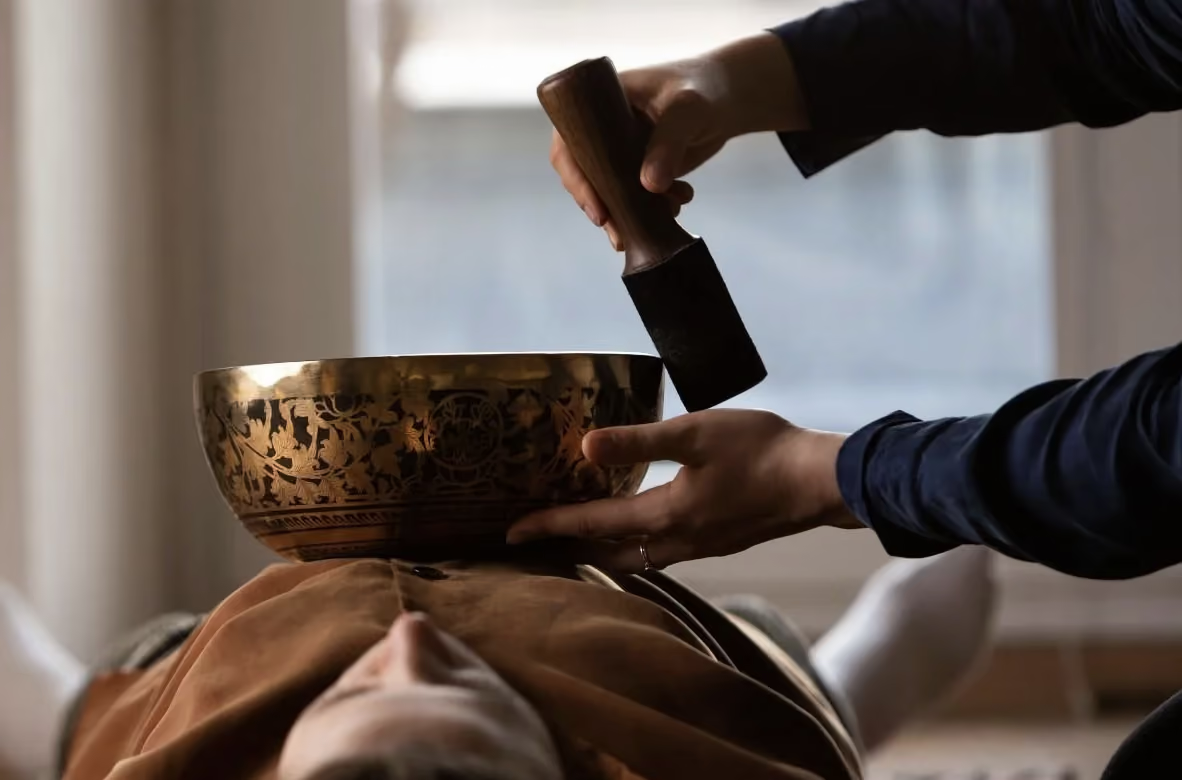
Taking a short amount of time to start the flow of Reiki before your reading can have all kinds of benefits. Image courtesy of Community Cancer Center.
The ritual below moves through a full reading, from preparation to closing. Take what resonates and adapt the rest to your style. A complete Reiki-infused reading can add as little as five extra minutes.
Prepare your space. Choose a quiet spot and clear away clutter. Stand at the center of the room, raise your hands, and invite Reiki to fill the space. If you are Level Two or above, draw symbols in each corner of the room and over your reading table to seal it with protective, focused energy. A candle, a cloth, or a favorite crystal can help mark this as sacred space.
Center yourself. Sit comfortably with your feet on the floor. Place your hands on your heart or lower belly and take several slow breaths. Silently recite the five Reiki principles, or simply say, "Just for today, I am open and clear." Let your hands rest there for two or three minutes as energy settles your mind and body.
Cleanse and charge your deck. Hold the deck between your palms and let Reiki flow into it for one to three minutes. Imagine any residue from previous readings dissolving. You can draw Cho Ku Rei over the deck to charge it, or Sei He Ki to invite emotional clarity. Many readers do this before every session and give the deck a longer treatment once a week or at each new moon.
Set a Reiki intention. Before you shuffle, state your intention aloud or silently: "May this reading be guided for the highest good of everyone involved." This simple phrase, borrowed directly from Reiki practice, shifts the reading away from fortune-telling and toward guidance.
Shuffle with energy flowing. As you shuffle, keep your awareness in your palms and imagine Reiki moving through the cards. If you are reading for someone else, you can ask them to hold the deck for a moment while you hover your hands above theirs, sharing the energy before they shuffle or cut.
Scan the spread. Once the cards are laid out, slowly pass one hand a few inches above each card. Notice warmth, coolness, tingling, or pull. Cards that feel "hot" or magnetic often carry the core message. Cards that feel heavy or blocked may point to where the querent needs the most support.
Read from a calm, receptive state. Interpret the cards as you normally would, but pause whenever you feel stuck. Place a hand over the confusing card, breathe, and let impressions arise before you speak. Readers often find that this pause unlocks a meaning they would have rushed past.
Send Reiki to the situation. If the reading reveals a challenge, end by offering Reiki to it. Hold your hands over the spread and visualize energy flowing to the person and situation. Level Two practitioners can use Hon Sha Ze Sho Nen to send healing to a past event or future outcome shown in the cards. Always ask the querent's permission first.
Close and clear. Gather the cards and hold them between your palms for a final cleanse. Thank the deck, your guides, or the energy itself. Then shake out your hands, wash them, or brush down your arms to release anything you absorbed. Finish with a minute of self-Reiki on your heart or solar plexus.
Going Deeper: Practices, Tips, and Ethics
Setting an intention to bring more focused energy to a tarot reading can be done by anyone, attuned or not. Image courtesy of Life Works.
A simple Reiki chakra spread
Once you're comfortable with the basic ritual, try a spread designed around Reiki's hand positions. Lay seven cards in a vertical line, one for each chakra from root to crown. Before your reading, hover your hand over each position and give it a moment of Reiki. Then read each card as a message about that energy center. Close by sending Reiki to whichever card felt most in need.
Daily practice
Pull a single card each morning, hold it in both hands, and give it a few minutes of Reiki while you reflect on its message. Let the card become the focus for your self-treatment that day. Over weeks, you'll build a personal library of how each card feels, not just what it means.
If you are not attuned
You don't need a Reiki attunement to begin bringing energy awareness into your readings. Grounding breaths, hand-scanning the spread, setting an intention for the highest good, and cleansing your deck with focused attention are all available to anyone. Use them as mindful rituals. If you feel drawn to go further, look for a Reiki Level One class with a teacher whose lineage and approach you trust. Avoid using the Reiki name or symbols in client work until you've been trained.
Ethics at the reading table
Blending Reiki and tarot brings extra responsibility. Keep these guidelines in mind:
Ask permission. Always get consent before offering Reiki to a querent, sending energy to a situation, or touching anyone.
Stay in your lane. Neither tarot nor Reiki replaces medical, psychological, legal, or financial care. Scientific research has not shown that Reiki works beyond relaxation and placebo effects, so present it honestly as a complementary practice. Encourage querents to see qualified professionals for health concerns.
Empower, don't predict. Reiki's focus on the highest good is a reminder to frame readings around choices and growth rather than fixed fate.
Protect your own energy. Treat yourself with Reiki regularly, set limits on how many readings you give in a day, and clear your space often.
FAQ
Common Questions About Reiki and Tarot
Do I need to be Reiki attuned to use Reiki in my tarot readings?
No. Grounding breaths, setting an intention for the highest good, scanning your spread with your hands, and cleansing your deck with focused attention are open to anyone. Formal Reiki techniques and symbols are passed on through attunement, so take a Level One class before using the Reiki name or symbols in client work.
How do I cleanse my tarot deck with Reiki?
Hold the deck between your palms and let Reiki flow into it for one to three minutes, imagining any leftover energy from past readings dissolving. Level Two practitioners can draw Cho Ku Rei over the deck to charge it or Sei He Ki to invite emotional clarity. Many readers do a quick cleanse before each session and a longer one weekly or at the new moon.
Which Reiki symbols are most useful for tarot?
Cho Ku Rei, the power symbol, is used to seal your reading space and charge your deck. Sei He Ki, the mental and emotional symbol, supports clarity and harmony during interpretation. Hon Sha Ze Sho Nen, the distance symbol, lets you send healing to a past event or future outcome shown in the cards.
What does it mean when a card feels warm or heavy during a hand scan?
Cards that feel warm, tingly, or magnetic often carry the core message of the reading. Cards that feel heavy, cool, or blocked may point to the area where the querent needs the most support. Keep a journal of these sensations so you can see how they line up with the messages that emerge over time.
Can Reiki help prevent burnout from giving readings?
Many readers find it does. In Reiki, the practitioner channels universal energy rather than giving away their own, and regular self-treatment helps you release heavy emotions absorbed from clients. Pair it with practical limits, such as capping the number of readings you give in a day.
Is Reiki a substitute for medical or mental health care?
No. Reiki and tarot are complementary practices for relaxation, reflection, and support. Scientific research hasn't shown that Reiki works beyond relaxation and placebo effects, so encourage querents to see qualified professionals for any health, legal, or financial concerns.
Complement Your Tarot Practice with Reiki
Reiki and tarot are both practices of listening: to the body, to the cards, to the quiet voice of intuition beneath everyday noise. When you bring them together, your readings gain a steadier foundation. You arrive at the table grounded, your deck feels clear and responsive, and the people you read for leave with more than an interpretation. They leave feeling cared for.