
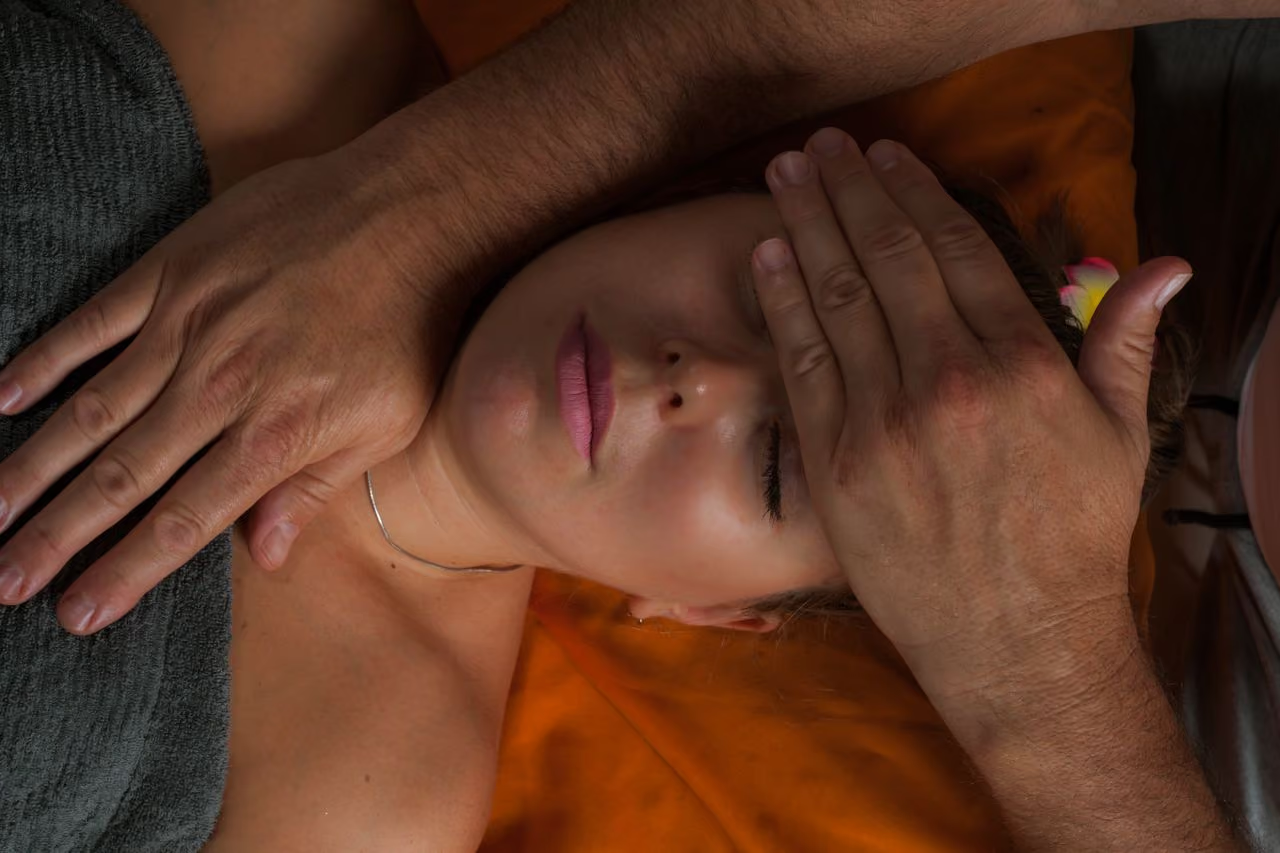
The first time I received reiki I didn't know what was happening and couldn't have described it if I tried.
I lay on a table in a quiet room. A woman I had met twenty minutes earlier placed her hands near my body and held them still. Soft music. Candlelight. And then — about fifteen minutes in — something happened that I can only describe as a wave of heat moving through my chest that had nothing to do with the room temperature, followed by a release that felt like putting down something heavy I hadn't known I was carrying.
I cried. I didn't know why. The practitioner didn't seem surprised at all.
I've been studying and practicing reiki ever since. I hold a Level 2 certification. I've been on both sides of the table more times than I can count. And the question I get most consistently from people curious about reiki is the same one I had before that first session: what is actually going to happen in there?
This is the honest answer.
A reiki session requires almost no preparation -- once you find a local practitioner who resonates with you, you're pretty much able to follow the "come as you are" rule. But while there are no hard requirements for a Reiki sessions, there are a few things you can do ahead of time to make it more productive.
Wear comfortable, loose-fitting clothing. You'll remain fully clothed for the entire session — there's no disrobing — but tight waistbands, structured jackets, or anything restrictive will make it harder to fully relax. Soft layers that feel easy in your body are ideal.
Eat something light beforehand. Arriving very full tends to make relaxation harder; arriving very hungry is distracting. A light meal or snack an hour or two before works well. Avoid alcohol for at least 24 hours before a session — alcohol affects your energetic field in ways that complicate the work.
Drink water. Before and after. Reiki often stimulates the body's natural detoxification processes, and staying hydrated supports that.
Come without strong expectations. This is the most important preparation and the hardest one. If you arrive expecting a specific dramatic experience — the heat, the visions, the transcendence — you're more likely to spend the session monitoring yourself for those things than actually receiving. The most useful posture for a first session is genuine curiosity about what you personally experience, without a template for what that should look like.
Most practitioners begin with a conversation before the hands-on work starts. This typically runs ten to fifteen minutes and covers a few things.
Your intention for the session. What brings you here? What do you want to work with — something physical, something emotional, a general sense of depletion, a specific situation in your life? You don't have to have a clear answer. "I'm not sure, I just felt called to try this" is a completely valid intention and more honest than manufacturing one.
Your health history. Not because reiki is a medical treatment, but because a thoughtful practitioner wants to know if there are areas of the body to approach with particular care. Recent surgery, injury, pregnancy, chronic pain — these are useful to mention.
Any questions or concerns you have. If you're nervous or skeptical, say so. A good practitioner will work with your skepticism rather than around it. Reiki doesn't require belief to work, and your practitioner should be comfortable with that.
This conversation is also your opportunity to notice whether you feel comfortable with this person. The quality of the relationship matters. If something feels off — if you feel judged or pressured or uncomfortable in any way — it's completely appropriate to end the session before it starts or to decide this particular practitioner isn't the right fit.
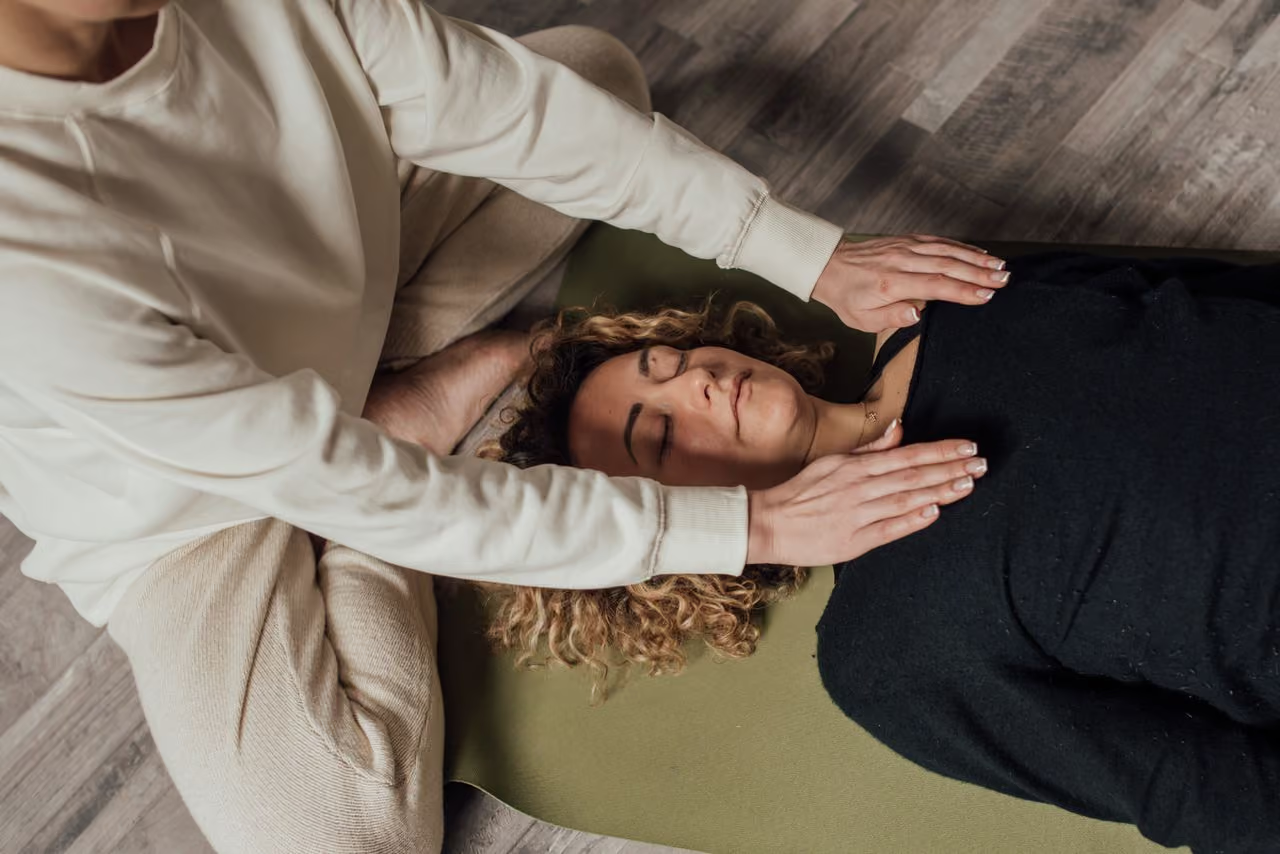
You'll lie fully clothed on a massage table or comfortable surface. Most practitioners dim the light, play soft music, and create a container of quiet and intention before beginning. Some use incense or essential oils — mention during intake if scents are a sensitivity for you.
The practitioner will work through a series of hand positions, typically moving from the head downward through the body. Hands are placed lightly on the body or held a few inches above it, depending on the area and the practitioner's approach. Each position is held for several minutes before moving to the next.
You don't need to do anything during this time except receive. You don't need to focus, visualize, breathe in any particular way, or stay awake. Many people fall asleep during sessions. That's fine — the energy works regardless of whether you're conscious of it.
Here's what you might notice:
Warmth or heat where the hands are placed. This is one of the most commonly reported sensations — a heat that seems to come from somewhere deeper than the surface, distinct from simple body warmth. Some people feel it as intense; others as subtle.
Tingling or a buzzing quality in specific areas. Often in the hands or feet, sometimes more broadly. Associated with energy moving through pathways that are opening.
A pulsing or throbbing sensation. Particularly in areas where energy is blocked or where the body is working to process something.
Deep relaxation that feels different from ordinary rest. A specific quality of stillness that the body doesn't usually access. Some people describe it as the most relaxed they've ever felt.
Emotional material surfacing. Tears, grief, unexpected joy, a memory arising that seems unconnected to anything. As I said in the opening — I cried during my first session without understanding why. This is normal. It's the body releasing something that had been held. Let it move rather than managing it back down.
Nothing you can consciously identify. Some sessions feel quiet. You relax, you rest, the practitioner works, and you don't notice much beyond a general sense of ease. This doesn't mean the session isn't working. Some of the most significant shifts I've witnessed — in myself and in people I've worked with — happened in sessions that felt undramatic during the treatment itself.
An experienced practitioner will notice where energy is moving freely and where it isn't, and may spend additional time in areas that feel blocked or dense. They may ask if a particular area has been relevant for you lately — not as a psychic reading, but as a check-in about what they're sensing.
Common areas where energy tends to accumulate or stagnate: the heart center, particularly if there's unprocessed grief or emotional weight. The solar plexus, where anxiety and stress tend to live physically. The throat, if there's something that needs to be said that hasn't been. The lower back, where fear and adrenal fatigue register.
If a practitioner's hands rest in one area for a long time, it doesn't necessarily mean something is wrong there — it means that's where the energy is most actively working. Trust the process rather than interpreting specific hand placements as diagnoses.
At the end of the session the practitioner will gently signal that the hands-on work is complete. Take your time returning to full waking awareness. Most practitioners allow a few minutes of quiet before beginning the closing conversation.
Drink water immediately. Sit up slowly. Let yourself arrive back in the room before engaging with your phone or the logistics of the rest of your day.
Many practitioners will share brief observations from the session — areas where they noticed significant heat or energetic activity, anything that came up intuitively. This is offered as information rather than diagnosis. Take what's useful and leave what doesn't resonate.
What happens after a reiki session is often as important as what happens during it, and first-time recipients are sometimes surprised that the session didn't end when they got off the table.
Reiki continues to work in the energy field for hours or days after a treatment. This is normal and it's worth knowing about so you're not caught off guard.
You may feel deeply tired. Not the depletion of being unwell, but a heaviness that comes from genuine unwinding. Rest if you can. The body is processing.
You may feel unusually emotional in the day or two following. Old feelings surfacing, a lower threshold for being moved by things, a tenderness that wasn't there before. This is the energy moving. It tends to pass.
You may notice physical shifts — changes in sleep quality, a reduction in pain in an area that's been bothering you, tension releasing from somewhere that's been held for a long time.
You may notice nothing obvious and feel fine. That's also fine.
Drink water. This comes up three times in this piece because it genuinely matters — the body uses hydration to process what's been moved in the session.
hGive yourself space if possible. Jumping straight back into a demanding work day or a stressful social situation immediately after reiki is a waste of a good session. Even thirty minutes of quiet before the next thing helps the work settle.
.avif)
People sometimes expect reiki to feel dramatic and then wonder if it's working when it doesn't.
The effects of reiki are often cumulative and sometimes subtle. A single session can produce a noticeable shift. It can also plant something that takes time to surface. The question isn't whether you felt fireworks during the session — it's whether you feel different in some meaningful way over the days and weeks that follow.
Some questions worth sitting with after your first session, and after subsequent ones: How did I sleep the night after? How do I feel in my body compared to before — is anything softer, looser, less tight? Has anything emotional been more accessible or closer to the surface? Has anything I've been avoiding become easier to approach?
The changes reiki produces are often more visible in retrospect than in the moment. Keeping a brief journal after sessions — just a few sentences about how you're feeling — makes it easier to track the cumulative effect over time.
I can't write this piece without saying something about finding the right person, because the practitioner matters.
Reiki works through the practitioner's energy field as well as the recipient's. A practitioner who is themselves depleted, ungrounded, or not maintaining their own practice and self-care is a less effective channel than one who is. You're allowed to ask about their training, their ongoing practice, and their own self-care. A practitioner who takes their work seriously will have clear answers.
Trust your body's response during the intake conversation. Do you feel relaxed in this person's presence? Does their approach feel aligned with what you're looking for? Do they ask questions about you rather than mostly talking about themselves?
🚩 Red flags: a practitioner who makes medical claims about what reiki can cure or treat. A practitioner who uses the session to tell you things about yourself in an authoritative way that you didn't ask for. A practitioner who seems depleted or distracted. A practitioner who dismisses your questions or your skepticism.
✅ Green flags: warmth, professionalism, clear communication about what the session involves, and a quality of presence that makes you feel safe before they've even begun.
A single session gives you a taste. But reiki as a sustained practice — whether working with a practitioner regularly or developing your own self-practice — is a different thing entirely.
Most practitioners suggest starting with three to four sessions relatively close together to establish a baseline and a relationship with the work. After that, monthly sessions maintain what's been opened. More frequent sessions support deeper ongoing work.
If something in you is genuinely called to this — if that first session produces a recognition rather than just a curiosity — the next natural step is exploring Level 1 training. Level 1 attunement opens your energy channels in a way that changes self-practice fundamentally, and it gives you the tools to work with your own energy on a daily basis.
The practice is patient. It will be there when you're ready to go further.
Don’t forget to follow Kellee for the latest news and music:
add soundcloud, IG





Sign up to get our latest news and stay connected.
Thank you! Your submission has been received!
Oops! Something went wrong while submitting the form
.avif)


.avif)