.avif)
I've been a reiki practitioner for over a decade. I've given sessions, received sessions, incorporated the practice into my music, and watched it do things I couldn't have predicted or fully explained. I've also spent a lot of time figuring out how to talk about it to people who've never heard the word before — and to people who've heard it but aren't sure whether it's something serious or something they should be skeptical of.
Both responses are understandable. Reiki sits in the territory that makes a lot of people uncomfortable: it's not measurable in the way Western medicine demands, it draws on a framework for understanding the body that most Western education doesn't cover, and it asks you to take seriously the idea that there are things happening in and around you that aren't visible to the naked eye.
My experience has been that the best way through that discomfort is just to explain it plainly — what it actually is, where it comes from, what happens in a session, what it can and can't do. So that's what this is.
Reiki was developed by Mikao Usui, a Japanese Buddhist and spiritual teacher, in the early 20th century. The commonly told story is that Usui received the reiki system during an extended fasting and meditation retreat on Mount Kurama in 1922 — a period of intense spiritual practice after which he described having a profound experience of energy and healing that he then spent the rest of his life developing into a transmissible system.
Usui taught reiki to a number of students before his death in 1926. One of those students, Chujiro Hayashi, a naval officer, developed the hand positions and treatment protocols that form the basis of much modern reiki practice. Hawayo Takata, a Japanese-American woman from Hawaii who received healing from Hayashi in the 1930s, is responsible for bringing reiki to the Western world — she trained in Japan, became a master teacher, and spent decades teaching in the United States and Canada.
The reiki practiced widely today — sometimes called Western reiki or traditional Usui reiki — descends from this lineage. Other branches exist, including the original Japanese system as it's been practiced and preserved in Japan. The core principles are consistent across lineages even where specific techniques vary.
The name tells you the essential philosophy. Rei means universal or spiritual — the larger intelligence that animates all things. Ki is life force energy — the same concept as chi in Chinese tradition, prana in Hindu and yogic tradition, the Force if you grew up on Star Wars. Every living thing has it. It flows through us via energy pathways. When it flows freely, health and vitality follow. When it becomes blocked or depleted — through stress, trauma, illness, grief, unresolved emotional conflict — imbalance follows.
A reiki practitioner serves as a channel for universal life force energy. They don't generate the healing energy themselves — they allow it to flow through them and into the recipient, supporting the recipient's own natural healing processes. The practitioner's role is less like a doctor administering a treatment and more like a conduit — someone who has developed the capacity to be a clear, open pathway for energy that wants to flow toward healing anyway.
This is why the practitioner's own energetic health matters. A practitioner who is blocked, depleted, or ungrounded is a less effective channel than one who has done consistent work on their own energy field. The practice includes significant attention to the practitioner's own ongoing clearing and maintenance — not just techniques for others, but practices for sustaining your own capacity to hold and transmit the energy.
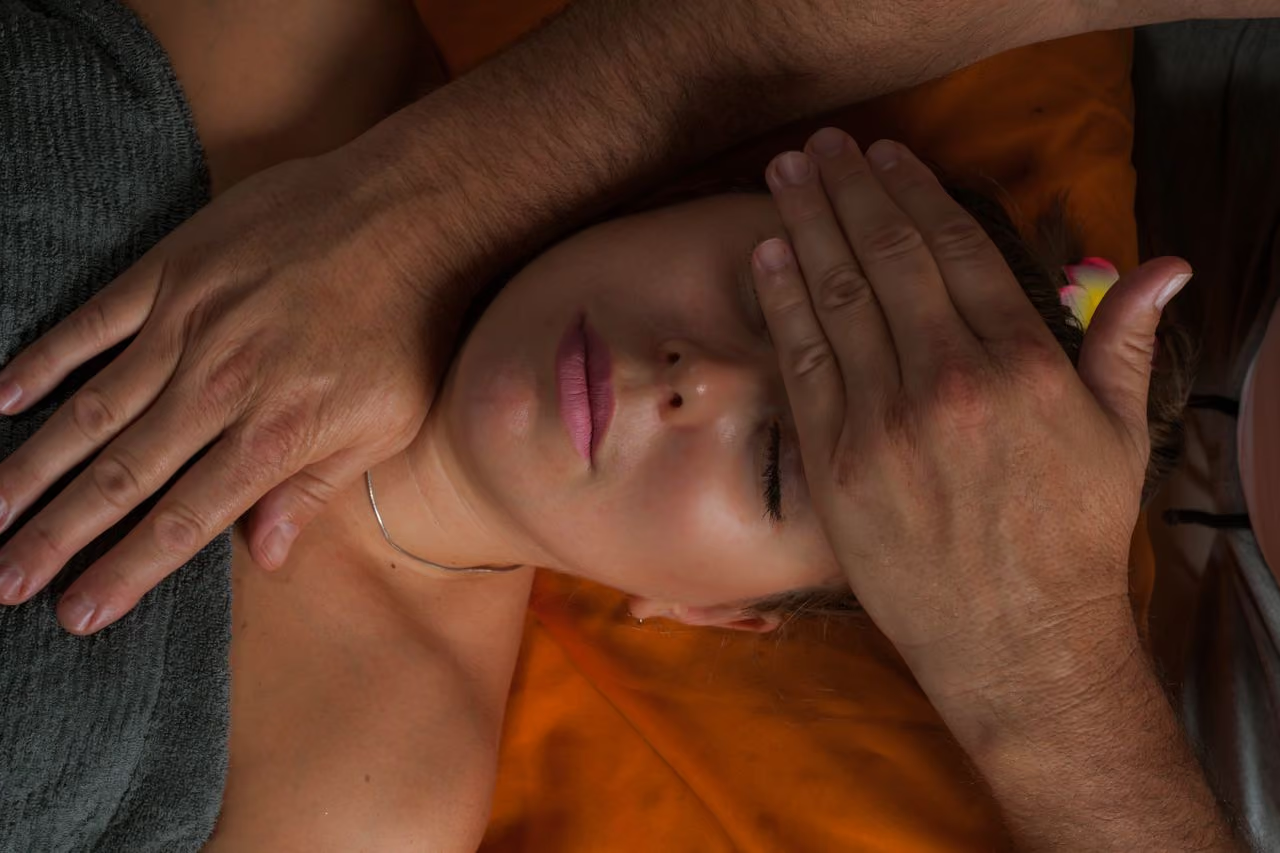
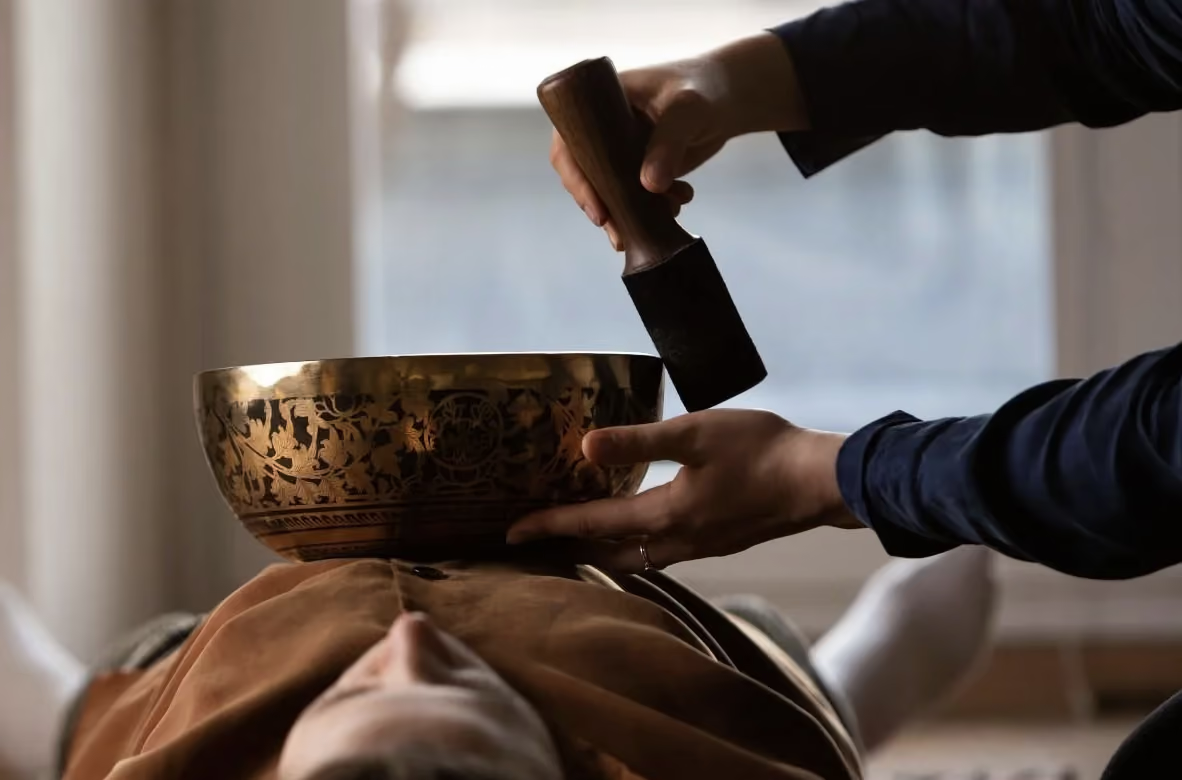
A typical reiki session takes place with the recipient lying fully clothed on a massage table or comfortable surface. The practitioner either places their hands lightly on specific areas of the body or holds them a few inches above the body, working through a series of hand positions that correspond to major energy centers and organs.
Sessions typically last between 60 and 90 minutes. The recipient is usually asked to simply relax and allow — no effort required, no specific state to achieve or maintain. Soft music is common. The space is held quietly and with intention.
What people experience varies enormously. Some people feel intense heat or warmth in areas the practitioner is working with. Some feel tingling, pulsing, or a sense of energy moving. Some experience emotional release — tears arising without a specific identified cause, or a wave of grief or joy that passes through. Some simply feel deeply relaxed, more deeply than they're usually able to access. Some feel very little during the session and notice shifts in mood, sleep quality, pain levels, or emotional state in the days following.
There is no correct experience. Reiki works at the level of the whole person — body, mind, and energy field — and the response is the response that's right for that person at that time.
Distance reiki is also a recognized practice within the tradition. Using specific techniques developed at the Level 2 practitioner level, reiki can be sent to a recipient who is not physically present. Distance sessions are reported to be just as effective as in-person sessions by many practitioners and recipients, which is one of the aspects of reiki that tends to be most surprising to skeptics — and one of the most difficult to explain in conventional terms.
Being clear about this matters to me. Reiki is not a substitute for medical treatment. It doesn't diagnose, treat, or cure specific conditions in the way that pharmaceutical or surgical interventions do. If you have a medical condition that requires treatment, you need that treatment.
What reiki can do is support the whole person alongside whatever else they're dealing with. The research that exists — and it's growing, though not yet at the scale that would satisfy everyone — suggests consistent benefits for stress reduction, relaxation, emotional wellbeing, and quality of life, particularly for people dealing with chronic illness, pain, grief, or the side effects of medical treatment. Many hospitals and hospice programs now offer reiki as a complementary service for exactly these reasons.
In my own experience and practice, reiki tends to be most powerful during periods of transition — significant life changes, grief, recovery from illness or trauma, creative blocks, times when something needs to shift but you can't quite access what or how. It works at the level underneath the level where you can consciously intervene, which is both why it's hard to explain and why it can do things that other approaches can't reach.
Usui developed five principles — sometimes called the five precepts or the Gokai — as the ethical and spiritual foundation of the practice. They're simple and they're worth sitting with.
Just for today, do not anger.
Just for today, do not worry.
Just for today, be grateful.
Just for today, work diligently.
Just for today, be kind to others.
The "just for today" framing is deliberate. These aren't commandments demanding permanent perfection. They're an invitation to begin again, every day, with a single day as the container. The practice is daily. The commitment is renewable. The scope is manageable.
I've found these principles as useful as anything else in the reiki system — not because they're profound philosophical statements but because they're practical and gentle and they redirect attention toward what's actually within your control on any given day.
Reiki and the chakra system are related but distinct traditions — they come from different cultural lineages and have their own independent principles, but they're deeply compatible and are often practiced together.
The chakra system, which comes from Hindu and yogic tradition, maps seven major energy centers along the body's midline, each governing different physical, emotional, and spiritual functions. Reiki practitioners often work with the chakras as a framework for understanding where energy is blocked or imbalanced in a recipient — the crown, third eye, throat, heart, solar plexus, sacral, and root chakras each correspond to different territories of experience that show up in the energy field.
If you've been exploring the chakra content on this blog — the overactive crown chakra, the overactive solar plexus, the chakra healing music guide — you're already working with a framework that maps naturally onto reiki practice.
Reiki is taught and transmitted in levels, each deepening the practice and expanding what the practitioner can do.
The student receives an attunement from a master teacher, which opens and aligns their energy channels for working with reiki. They learn basic hand positions and protocols for self-treatment and treatment of others. This is where the practice begins and where the most fundamental skills are developed.
These symbols are used to amplify the energy, work with specific aspects of the recipient's experience, and — crucially — to send reiki across distance and time. Level 2 is where distance healing becomes part of the practice.
At this level the practitioner receives the master symbol, deepens their relationship with the practice significantly, and develops the ability to attune and teach others. Becoming a reiki master is a commitment to the practice as a long-term path rather than a technique or a certification.
I hold my Level 2 certification. The practice has been part of my life and my work for years — it shows up in how I approach my music, my creative process, and my understanding of what healing actually means.
If you're curious about reiki and want to explore it, the most natural first step is receiving a session from a practitioner. You don't need to know anything before you go. You don't need to believe anything specific. You just need to be willing to lie down, relax, and see what you notice.
Finding the right practitioner matters. Ask about their training, their lineage, how long they've been practicing. A good practitioner will be happy to answer these questions and will prioritize your comfort and consent throughout. Trust your instincts about whether someone feels like the right person to work with — the same intuition that guides other relationship decisions is useful here.
If you're in Pittsburgh, the spiritual community guide has resources for finding local practitioners.
Don’t forget to follow Kellee for the latest news and music:
add soundcloud, IG





Sign up to get our latest news and stay connected.
Thank you! Your submission has been received!
Oops! Something went wrong while submitting the form

.avif)