Creative blocks aren't a mystery. They feel mysterious -- the empty page, the session that goes nowhere, the melody that won't come -- but there's almost always something underneath them. Stress that hasn't moved. Grief that hasn't been named. A fear of being heard that's been sitting in the body so long it's started to feel like personality.
Reiki doesn't fix those things the way talking about them does. It works differently -- at the level of the body's energy rather than the mind's narrative. And for creative people, that difference matters more than most people realize.
I've been a Level 2 Reiki practitioner since 2015, and I've been making music since the early 2000s. I've used energy healing as part of my creative process across six albums. What I'm sharing here isn't theory -- it's what actually happens when you bring a consistent energy practice into a creative life.
Reiki is a Japanese energy healing practice developed by Mikao Usui in the early 20th century. The word combines rei (universal) and ki (life force energy) -- the same concept as chi in Chinese medicine, or prana in Ayurveda. The basic premise is that life force energy flows through the body, and when that flow gets disrupted or blocked, it shows up as physical tension, emotional stagnation, mental fog, or -- for creatives -- a creative drought.
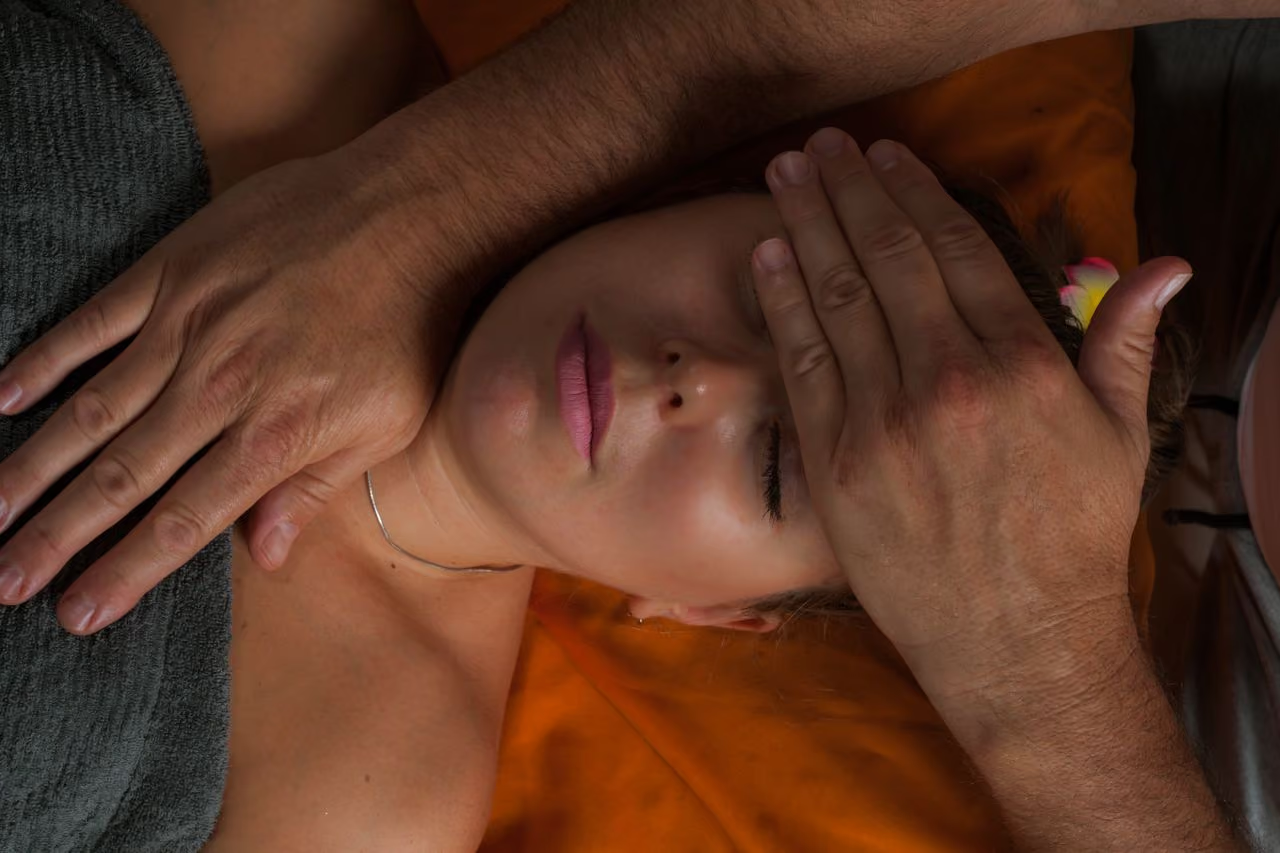
A Reiki practitioner works by placing their hands on or near the body to help clear those disruptions and restore the natural flow of energy. At Level 2, practitioners learn to work remotely, and to use specific symbols that address emotional and mental patterns rather than just physical tension.
What Reiki isn't: it's not a replacement for therapy, medical care, or the actual work of making things. It's an adjunct practice — something that creates the internal conditions for the work to move. Think of it as clearing the channel rather than supplying the content.
Everyone experiences stress. But creatives carry a specific version of it that other forms of stress management don't always address, or at least not address well.
The creative act requires a particular kind of vulnerability -- it's an openness, a willingness to not know, to be in process, to be seen before something is finished.
Sound scary? It is!
Leaving yourself open and vulnerable in a way that is conducive to creativity is energetically expensive. Your nervous system is on alert. It has to feel safe and grounded enough that you can take risks. Your body has to have resources to commit to the creation process, which means it can't be spending those resources trying to brace or protect itself even while inhabiting this open, creative space. That's a lot of mental groundwork that needs laid before you can put pen to paper, work out a melody, or otherwise engage in your craft.
So when my fellow creators tell me they're feeling stuck, I try to gently remind them that most creative blocks aren't really about ideas.
You're not broken. You haven't lost your ability to create or burned through all of your good ideas. The ideas will come.
The "block" feeling almost always has more to do with the body's threat response having decided that making something -- and putting it into the world -- isn't safe.
And that response lives in the body, not the mind. You can think your way around it temporarily, but it comes back because the underlying energy pattern hasn't changed. Unless of course, you learn how to change it.
This is where Reiki becomes particularly useful for creatives.
It addresses the pattern of creative blocks at the energetic level, which means the relief tends to be deeper and more durable than trying to distract yourself from it, rationalize it away, or push through it (which can often lead to getting frustrated, disillustioned, and even make the issue worse).
Reiki works across the whole energy system, but for creative blocks specifically, three chakras tend to need the most attention.
You don't need to be a trained practitioner to begin working with Reiki energy -- though formal training deepens the practice significantly. Here are practical ways you can incorporate Reiki into your creative practice regardless of what kind of experience you have with energy work.
It's not a mystical experience every time. Often it's just the difference between sitting down to work and immediately wanting to leave, versus finding that the resistance has dropped by about 60 percent. That's enough.
Creative work doesn't require perfect conditions -- it requires conditions that are good enough to begin. If you spend all your time and energy waiting for everything to align just right, you'll find that you actually create very little. And that doesn't just deprive you the powerful experience of expression and creation. Art an expression is an ongoing conversation between people and cultures all over the world. It gets richer and more beautiful the more voices that contribute to it. The creative community benefits when you contribute the works that only you -- with your unique skills and history and vision -- can make.
The other thing I've noticed is that Reiki tends to surface what's actually in the way, rather than bypassing it. You might start a self-treatment intending to clear creative block and find yourself thinking about a conversation from three weeks ago that still hasn't resolved, or feeling grief that you'd been moving around rather than through. That's the work. The creative block was downstream of something else, and Reiki found the source.
For musicians specifically, there's also a performance dimension worth naming. Stage anxiety, vocal tension before shows, the particular kind of freeze-up response that happens when you're about to perform vulnerable material in front of people, when you feel their eyeballs lock onto you -- these respond well to Reiki, both in regular maintenance practice and in acute use immediately before a performance.
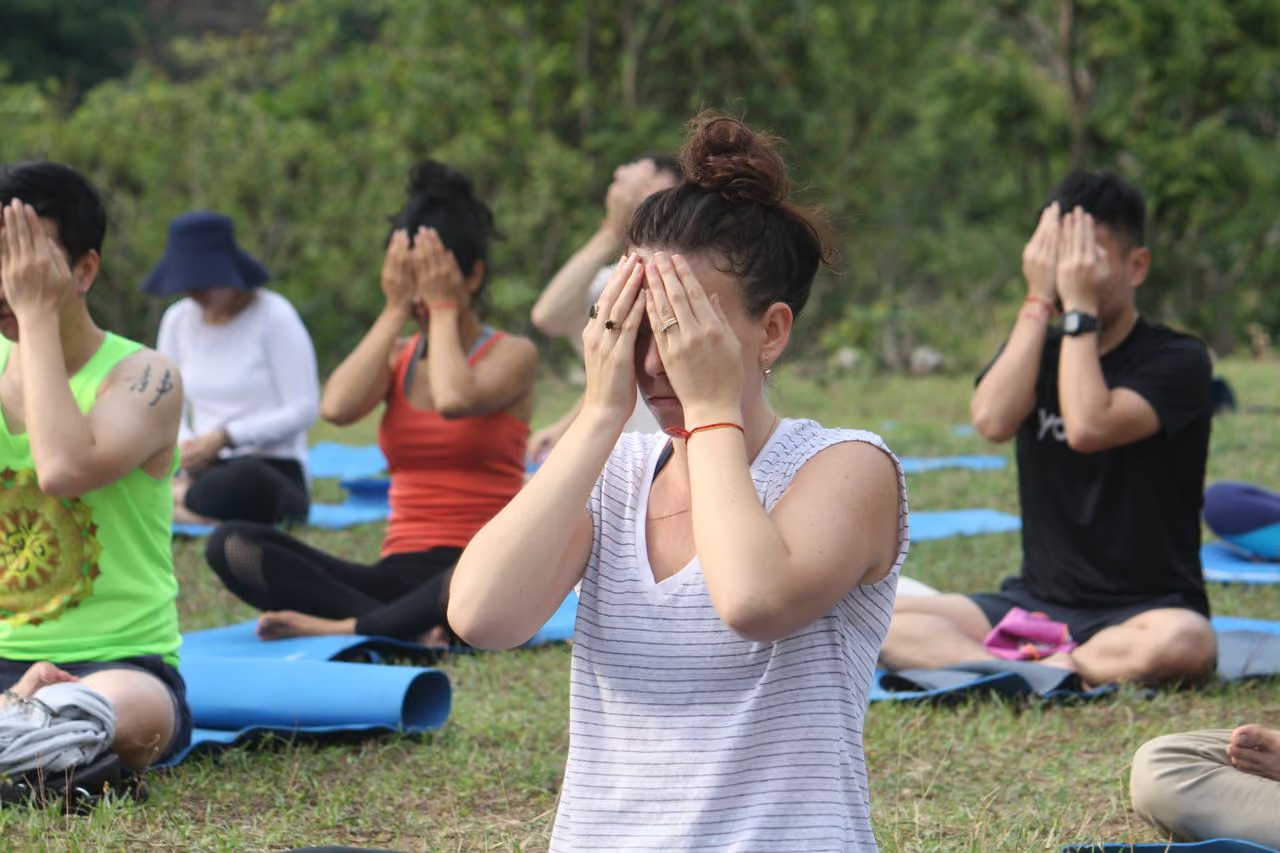
If you want to experiment before committing to formal training or a practitioner session, try this before your next creative session!
This isn't Reiki in the technical sense -- you haven't been attuned, you're not channeling Reiki energy specifically. But it's a body-based grounding practice that works with the same chakras Reiki targets, and it creates a before/after that many people find noticeably different over time.
If you feel drawn to go deeper, that's the moment to look into a formal Level 1 attunement or book a session with a practitioner.
Reiki and creative work share the same underlying requirement: presence. The ability to be in the body, in the moment, with what's actually happening rather than what you wish were happening or fear could happen. A regular energy practice doesn't just help you make better work -- it changes your relationship to the process of creation, which is where most of the suffering in creative life actually comes from.
The point isn't to be unblocked forever.
Life happens, new situations and stresses come up. And that means new creative and energetic blocks will inevitably appear.
The point is to have a practice that knows how to work with blocks when they come -- that treats them as information rather than abject failure, and as something to move through rather than something to fix or be sidelined by.
That's what Reiki has given my creative practice across 15 years and six albums. Not a shortcut, not a magic solution for all my moments of stress or overwhelm or feeling uninspired. But having a consistent practice of returning to the work by returning to my body first is always a step in the right direction.
Don’t forget to follow Kellee for the latest news and music:
add soundcloud, IG





Sign up to get our latest news and stay connected.
Thank you! Your submission has been received!
Oops! Something went wrong while submitting the form
.avif)
.avif)