If masks and wands were your gateway into red light therapy, panels are where things get a little more serious. Red light panels are pushing this whole market to a new level, and once you understand why, it's not hard to see the appeal — instead of treating one small area, you're covering way more ground in a single sitting.
Not that long ago, a full-sized red light panel was strictly clinic territory — physical therapy offices, sports recovery centers, maybe a fancy spa if you were lucky. Bulky, expensive, not something the average person was bringing home. That's changed. LED tech got better and cheaper to make, which meant panel makers could shrink the price without shrinking the power. What used to be a biohacker's secret weapon is now something regular people are adding to their weekly routine, right alongside stretching or a good playlist.
It's a pretty good reminder that a lot of wellness tools start out gatekept — expensive, clinical, out of reach — before someone figures out how to bring them home. Sauna blankets, cupping, even things like acupressure mats went through the same arc. Red light panels are just the latest example of something that used to require an appointment now living quietly in someone's living room.
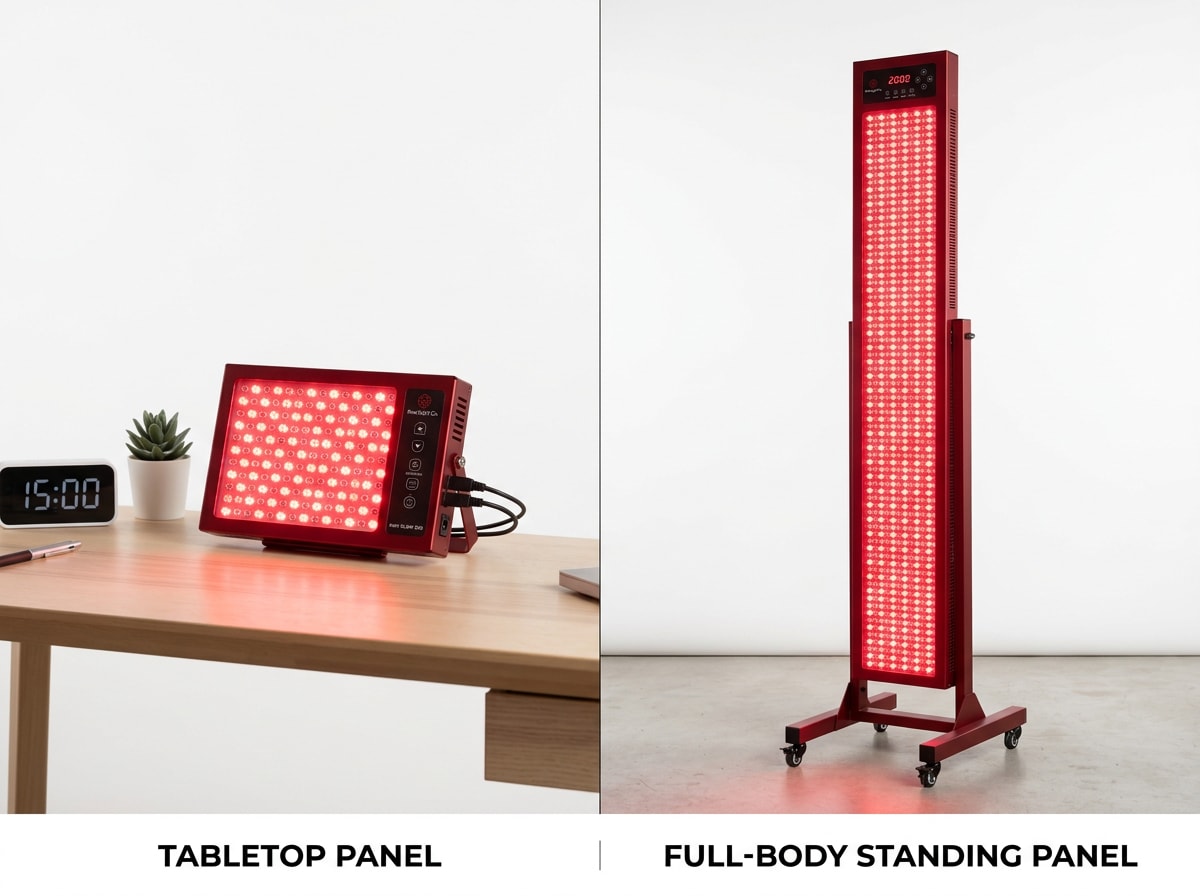
Tabletop panels are small enough to live on a desk or a shelf. If you've got one specific area bothering you — a knee, a shoulder, a patch of skin — this is your entry point. Lower cost, lower commitment, and honestly a smart way to test whether this whole red light thing is actually going to work for you before you invest more.
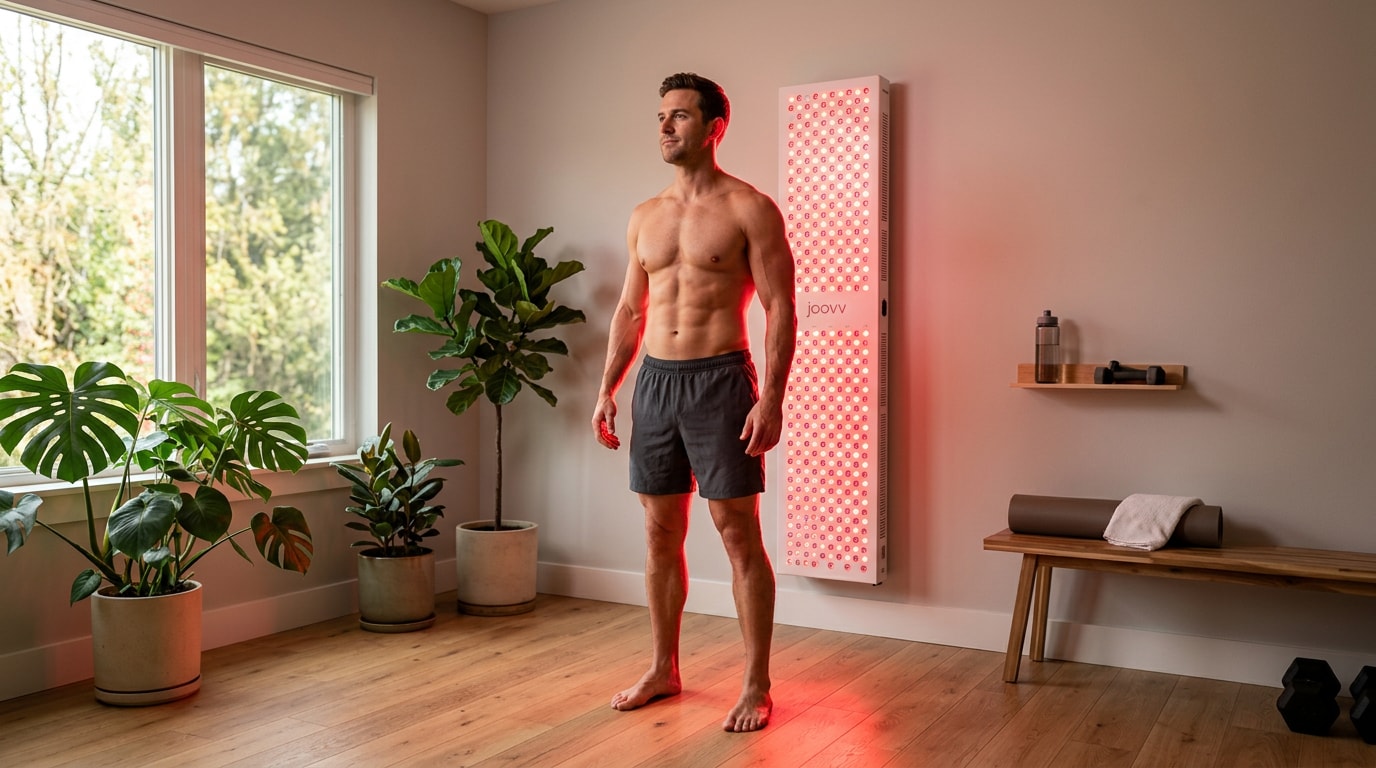
Full-body panels are the real deal — tall standing units meant to bathe your entire body in red and near-infrared light at once. No moving a small device from spot to spot. You just stand there. It takes up real floor space and it's a bigger investment, but the coverage and convenience is genuinely hard to beat.
I think of a full-body panel almost like investing in a good mattress. It's not glamorous, nobody's going to compliment you on it, but you use it every single day and over time that adds up to something real. It's the unsexy investment that quietly pays off.
Here's the thing about efficiency: if you're dealing with soreness in your back and your legs after a workout, or general achiness in a few different spots, one panel session covers what would otherwise take several rounds with a smaller device. That adds up fast, especially if you're trying to build an actual habit and not just a good intention that fizzles out by week two.
And that's really the whole game with red light therapy — it works because you show up for it consistently. A device that's a pain to use is a device that gets used less. Panels cut out a lot of that friction. No repositioning, no awkward angles, just you and the light for however many minutes.
Athletes and active people recovering from workouts. Anyone managing everyday stiffness who'd rather not schedule another appointment somewhere. Skincare people who want more than just their face covered. And honestly, anyone who's building a longer-term self-care practice and wants red light to be a real part of it, not just a phase.
Budget's usually the first thing people think about, and fair enough — tabletop panels are a lot more affordable, which makes them a lower-risk way to see if this actually works for you. Full-body panels are a bigger ask, both upfront and in terms of what you expect to get out of it long-term.
Space matters too. A tabletop unit can disappear into a drawer when you're not using it — great for smaller apartments. A full-body panel needs its own spot, some clearance to actually stand in front of it. If you've got a home gym or a spare room, that's an easier call.
And then there's just — what are you actually trying to do here? If it's one area or mostly facial skin concerns, tabletop (or even a mask) is probably enough. If you're dealing with soreness across multiple parts of your body, or you just want the most efficient possible routine, full-body is going to serve you better.
Watch your distance. Most panels have a recommended range — often 6 to 24 inches — depending on power. Stand too far back and you're just not getting the dose you think you are.
Don't chase longer sessions. Ten to twenty minutes is typical. Consistency across the week beats one marathon session every time.
Rotate if it's full-body. Front for part of the session, back for the rest, so you're not missing coverage.
Protect your eyes. These things can be bright. Closing your eyes or wearing protective eyewear is a smart move, especially with the more powerful full-body units.
Track showing up, not just results. Because change is gradual, count your sessions per week instead of checking the mirror after every single one.
The panels that end up gathering dust in a corner are almost always the ones that never got tied to an existing habit. If you already stretch after a workout, do your panel session right there on the mat. If you wind down with a podcast every night, that's your ten minutes. Attaching it to something you're already doing is a much more reliable path to consistency than relying on willpower alone, especially once the initial excitement of a new purchase wears off.
Generally, red light panels are pretty low-risk compared to anything involving UV or heat or actual invasive procedures. Still — a few things worth keeping in mind. Some medications (certain antibiotics, some acne treatments) can make your skin more sensitive to light, so check with a doctor if that's you. If you're pregnant or managing a medical condition, loop in your provider before adding anything new to your routine, even something this gentle. And more isn't more here — following the recommended time and frequency will get you further than overdoing it. Quality matters too; a well-reviewed device from a brand that's actually transparent about its specs is worth the extra bit of research.
How's this different from a mask? Panels cover way more ground. If your main concern is your face, a mask might be more targeted. Want broader coverage? Panel's your answer.
Do I really need full-body, or is tabletop enough? Depends what you're treating. One area — tabletop's probably fine. Multiple areas — full-body makes life a lot easier.
How often should I actually use it? Most guidance points to three to five times a week for real results over time.
Is it worth it if I already have a smaller device, like a mask? They're not really competing with each other. A mask handles your face, a panel handles everything else. Plenty of people end up owning both once they realize how different the coverage actually is.
Bigger or smaller, the thing that actually matters is showing up consistently — and honestly, a panel (especially a full-body one) just makes that easier to do. This category is proving red light isn't just a face thing anymore. It's becoming a real, whole-body wellness habit that people are building right into their week.
If you're on the fence, I'd say start smaller than you think you need. It's way easier to upgrade from a tabletop panel to a full-body one once you know you'll actually use it, than to have a full-body unit taking up a corner of your bedroom that you walk past feeling guilty twice a day. Build the habit first. The bigger investment can come later, once you know this is actually a ritual you're going to keep.
And if you do end up somewhere in between — using it consistently but not religiously — that's still worth something. Not every wellness habit needs to be perfect to be worthwhile. Showing up most weeks beats showing up zero weeks, every single time.
Don’t forget to follow Kellee for the latest news and music:
add soundcloud, IG


.jpg)
.jpg)