
Main image courtesy of Healthline.
There's a reason we say someone has "good energy" or that a room feels "heavy." Long before science had language for stress hormones and nervous system regulation, people across cultures understood that energy — however you define it — accumulates, shifts, and needs tending. Today, energy cleansing has found a natural home in the self-care and beauty world, where the line between how we feel and how we look has never been more blurred.
This isn't about replacing a solid skincare routine, or disrupting healthy habits you should be focusing on like prioritizing good sleep. It's about recognizing that beauty routines rooted only in products often miss half the equation. Stress shows up on your face before it shows up anywhere else — in dull skin, tension lines, tired eyes, and a general sense of depletion no highlighter can fix. Energy cleansing practices that actually get to the root of the matter offer a complementary layer: rituals that clear mental clutter, release stored tension, and create the calm, grounded state that good skin and good living actually require.
Here we’ll be discussing that and more, including:
Dermatologists have long observed and studies are now indicating what energy practitioners have said for centuries: your internal state is written on your skin. Cortisol, the body's primary stress hormone, breaks down collagen, increases inflammation, and disrupts the skin's barrier function. Chronic stress has been linked to breakouts, eczema flare-ups, premature fine lines, and a sallow, tired complexion. When you address the underlying tension — mental, emotional, environmental — you're not just feeling better, you're giving your skin a chance to do what it does best: repair and regenerate.
Energy cleansing practices work as a form of active stress interruption. Whether it's the ritual of lighting a candle, the physical act of decluttering, or the mindfulness of a breathing exercise, these practices pull you out of fight-or-flight mode and into a parasympathetic state — the "rest and digest" mode where actual healing happens.
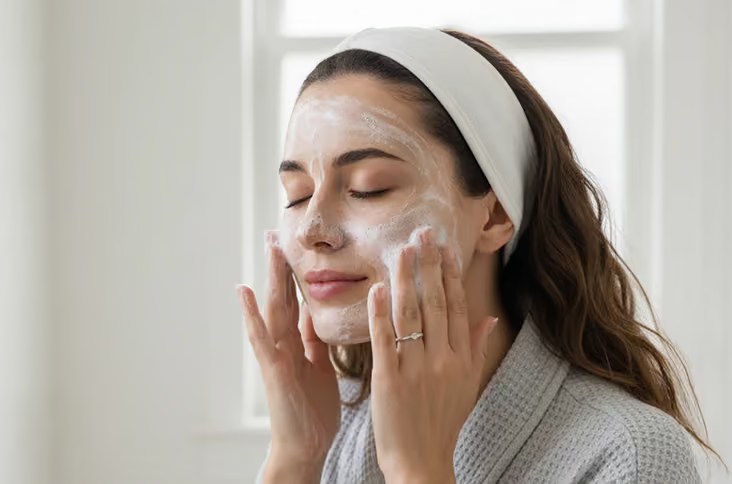
There's a meaningful difference between a routine and a ritual. A routine is something you do on autopilot. A ritual is something you do with intention. When self-care becomes ritualized — when washing your face becomes a moment of presence rather than a box to check — it changes your relationship to your own body. Energy cleansing reintroduces intention into beauty and wellness practices that have become rushed, transactional, and product-obsessed.
This matters because beauty, at its best, isn't about masking how you feel — it's about supporting how you feel. A cleansing ritual before bed does double duty: it removes the physical residue of the day (makeup, pollution, sweat) while also symbolically releasing the emotional residue (arguments, anxiety, overstimulation).
Our environments hold energy too, and this is where energy cleansing extends beyond the body into the spaces we inhabit. A cluttered vanity, an overflowing inbox, a bedroom that hasn't been aired out in weeks — all of these create a subtle, cumulative drag on our mental state. Studies on environmental psychology consistently show that clutter and disorganization increase cortisol levels and impair our ability to focus. Cleansing your space is, in a very literal sense, cleansing your energy.
Perhaps most importantly, energy cleansing gives people a sense of agency over how they feel. In a world where almost everything feels uncontrollable, the ability to light a candle, open a window, or take five intentional breaths and shift your internal state can be very powerful. This sense of control is itself protective against stress and burnout — which loops right back to skin, sleep, and overall vitality.
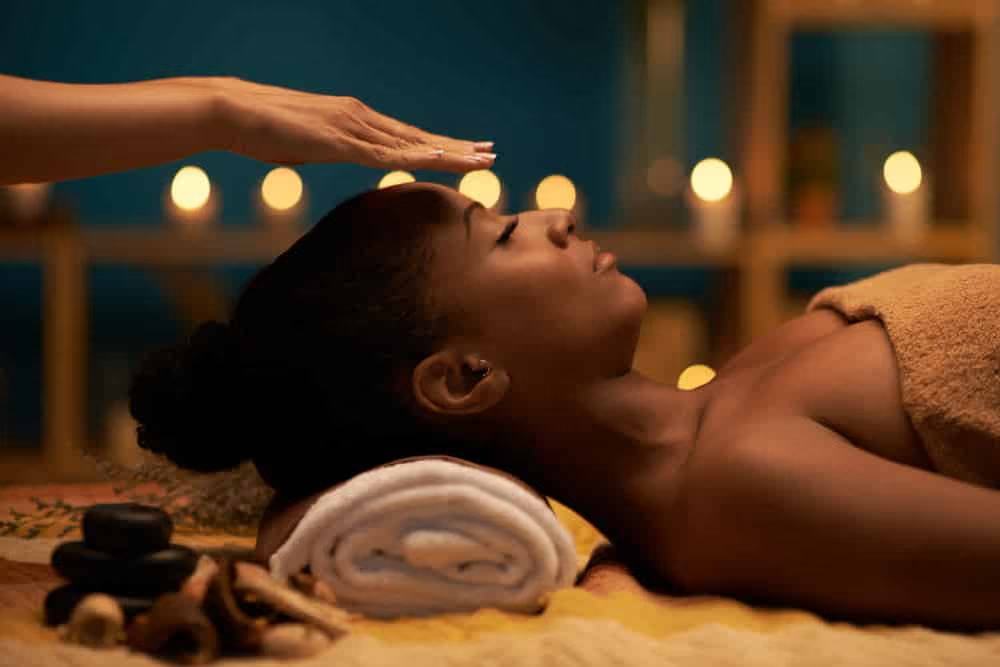
Reiki is a great practice to cleanse your body, mind, and heart. It is done through touch or hovering the hands close to the energy centers of the body (chakras, meridians, etc.) in order to move and release stagnant or blocked energy. We cannot realize our full, flowing, beautiful Selves unless our lifeforce (ki or chi) moves unrestricted. Issues occur and accumulate when it’s blocked, or if we’re holding onto negative energy.
If you are a reiki practitioner, you can make it a point to do reiki on yourself, if only for a few minutes each day. If you’re not, don’t worry, you can still benefit from healing your own energy using the basic techniques and hand positions of reiki! Others may choose to seek out a reiki practitioner and work with them for multiple sessions. Whichever way you choose, reiki can never harm, it never runs out, and it will go exactly where it needs to go in the body for the greatest good.
Sound has a measurable effect on the nervous system. Singing bowls, chimes, bells, or even a simple clap in each corner of a room are used to "break up" stagnant energy. From a practical standpoint, sound therapy has shown promise in reducing anxiety and improving mood by shifting brainwave activity toward calmer states. A two-minute sound ritual — using a singing bowl or a favorite grounding playlist — before a skincare routine can transform it from mechanical to meditative.
Water has been used for purification across nearly every culture on earth. A salt bath, a cold plunge, or even a mindful shower where you visualize the day's tension rinsing away can serve as both a literal and symbolic reset. Magnesium-rich Epsom salts offer genuine muscle-relaxation benefits, while the ritual of setting an intention before you step in adds a psychological layer of release. For a beauty-focused version, try a salt scrub focused on slow, circular motion — physically exfoliating while mentally letting go.
You don't always need incense to clear energy (although it will make your space smell amazing) — sometimes a bag of donations does the job. Decluttering your vanity, your closet, or your bedroom removes visual noise that your brain is unconsciously processing all day. Pair this with opening windows to circulate fresh air, changing your sheets, or rearranging furniture to shift stagnant patterns. Many people report an almost immediate lightness after clearing physical space, which is really the nervous system exhaling.
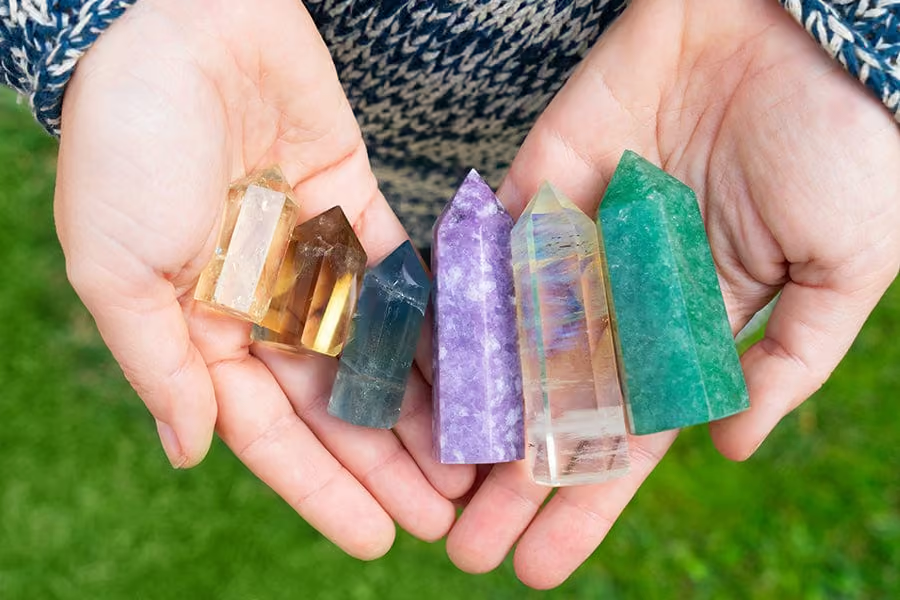
Whether or not you believe crystals carry measurable energy, they function powerfully as anchors for intention. Holding a piece of rose quartz while setting a self-love intention, or keeping black tourmaline on your desk as a visual reminder to stay grounded, works similarly to a vision board — it's a physical touchstone for a mental state you're trying to cultivate. Cleansing the crystals themselves (with moonlight, sound, or smoke) is part of the ritual, reinforcing the idea that maintenance, cleansing, and renewal are ongoing, not one-time fixes.
Breath is the most accessible and evidence-backed energy cleansing tool available. Techniques like box breathing (inhale for four counts, hold for four, exhale for four, hold for four) activate the vagus nerve and shift the body out of stress mode within minutes. Incorporating a short breathwork practice before applying skincare — or before a big event — can visibly reduce facial tension and puffiness, since so much of both is stress-held in the jaw, brow, and shoulders.
Energy that isn't processed tends to get stored — in tense shoulders, clenched jaws, or restless sleep. Journaling offers an outlet for that build-up. A simple nightly practice of writing down what drained you and what restored you creates a habit of emotional processing that prevents stagnation. Many people pair this with a "release and replace" method: writing down a worry, then physically discarding or burning the paper (safely) as a symbolic act of letting go.
Morning sunlight regulates circadian rhythm, which affects everything from sleep quality to cortisol patterns to skin repair cycles. Evening moonlight — or simply stepping outside at night — has long been associated with reflection and release in cleansing traditions. Whether or not you subscribe to lunar energy specifically, the practice of pausing outdoors, away from screens, at the start and end of the day is a grounding ritual with real physiological benefits.
Gua sha, an East Asian practice with roots in traditional Chinese medicine, has become a beauty staple — but it's worth honoring as an energy practice, not just a sculpting tool. The slow, intentional strokes are meant to move stagnant qi (energy) and reduce tension held in the face. Combined with a facial oil, gua sha becomes both a lymphatic drainage technique and a moment of mindful touch, which research shows can lower cortisol and increase feelings of wellbeing.
Cleansing isn't only about removing negative energy — it's also about consciously inviting in the energy you want more of. Mirror work, where you look at your reflection and speak affirmations aloud, can feel awkward at first but has been shown to shift self-perception over time. Pairing this with your morning skincare routine — a few seconds of genuine eye contact with yourself before you start applying product — reframes the entire routine as an act of care rather than correction.
You don't need to overhaul your routine to make it energetically intentional — you just need to slow down enough to notice what you're doing while you do it. The products can stay exactly the same; what changes is how you approach them, everyday.
The goal isn't to adopt every practice at once. Energy cleansing works best when it's personal and sustainable — a five-minute ritual you'll actually do beats an elaborate one you'll abandon after a week. Consider starting with one practice that resonates and pairing it with an existing habit, like breathwork before bed or a sound ritual before your morning skincare.
Over time, you can layer in seasonal resets — a deeper space clearing at the change of each season, a bath ritual after a particularly draining week, or a gua sha practice you turn to whenever tension creeps into your jaw. The goal is responsiveness, not rigidity: energy cleansing should work with what you actually need, not become another rule to follow perfectly.
Don’t forget to follow Kellee for the latest news and music:
add soundcloud, IG





Sign up to get our latest news and stay connected.
Thank you! Your submission has been received!
Oops! Something went wrong while submitting the form
.avif)
.avif)