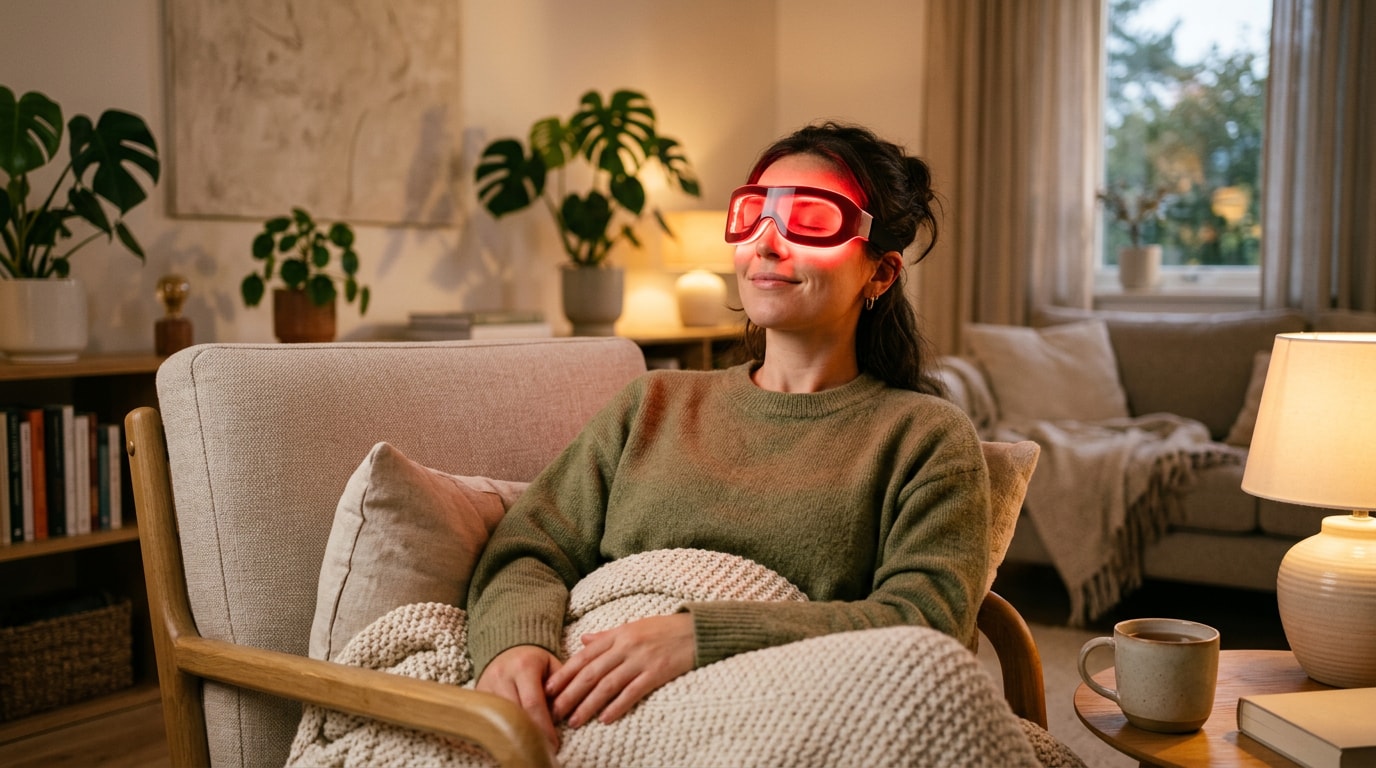
Red light has already claimed our skin and now our scalps — and its next stop is somewhere I really didn't see coming: our eyes. Red light eye therapy is one of the more genuinely interesting places this technology has landed, and the early buzz suggests it could become a real part of how people take care of their vision as they get older.
Out of everywhere red light therapy has shown up, the eyes feel different — they're so directly tied to how independent you feel and how much you enjoy your daily life. Vision changes, whatever's causing them, tend to hit differently than a lot of other health stuff. That's a big part of why interest in a gentle, at-home option for eye health has picked up so quickly.
The underlying idea is similar to what's happening elsewhere: red and near-infrared light get absorbed by your cells and are thought to support your mitochondria — basically your cells' little power plants — helping them run more efficiently. Your retina is one of the most energy-hungry tissues in your whole body, constantly processing everything you see, so researchers have gotten curious about whether supporting that cellular energy production could actually mean something for eye health long-term.
I find this one a little poetic, honestly. Your eyes work so hard, all day, every day, and we rarely think about giving them any kind of rest or support the way we would our skin or our muscles. There's something nice about that finally changing.
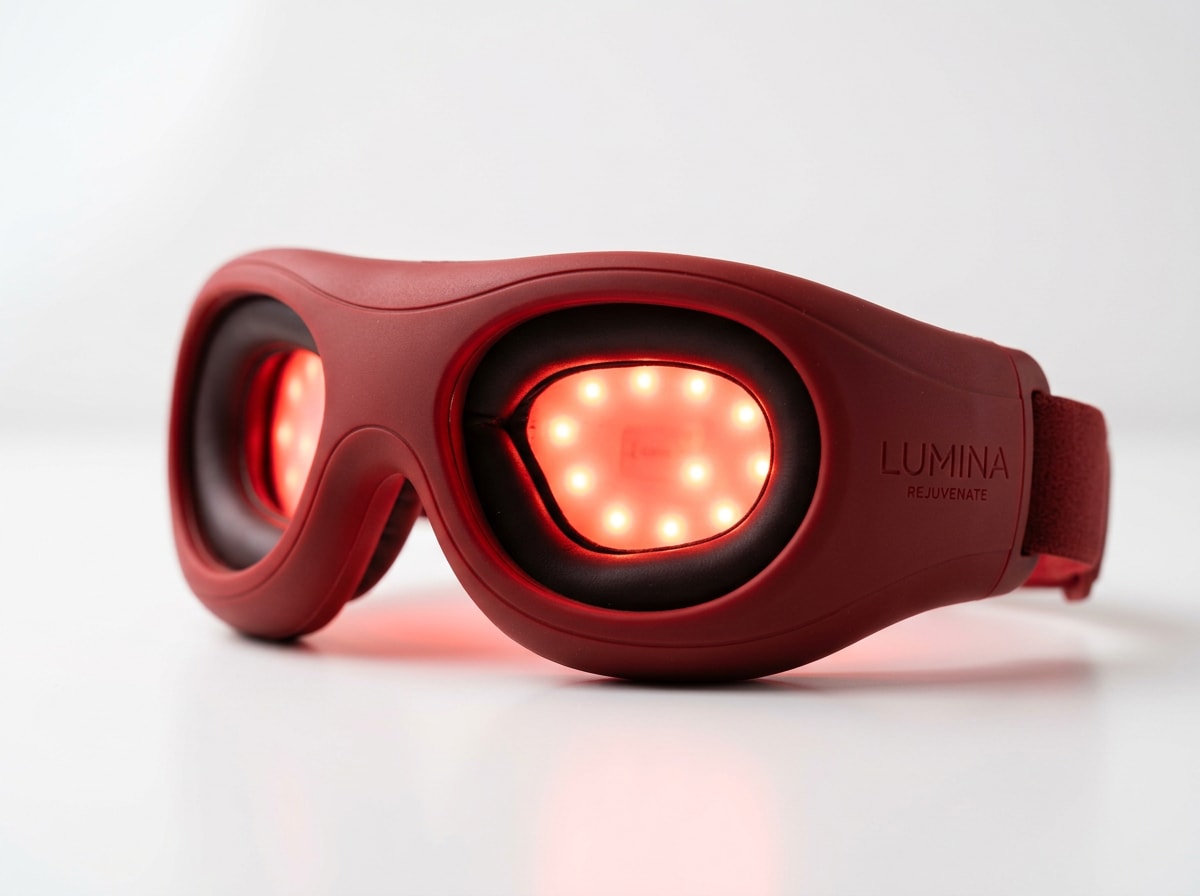
These are usually small handheld devices or goggles, used for short daily sessions, and there are three main things people are hoping for:
Dry eye might be one of the most common complaints out there, and it's only gotten more common as we stare at screens basically all day. Less blinking, dry indoor air, all of it adds up. Red light therapy for dry eye usually targets your meibomian glands — tiny oil-producing glands along your eyelids that help keep your tear film stable. When those glands aren't doing their job, tears evaporate too fast and you end up with that dry, burning feeling. The idea is that warming and stimulating that area might help those glands function better over time.
Age-related macular degeneration is one of the leading causes of vision loss as people get older, affecting the part of your retina responsible for sharp, central vision. Because it's progressive and genuinely impacts quality of life, it makes sense that any tool that might help slow it down gets a lot of attention. Research into red and near-infrared light here is looking at whether supporting mitochondrial function in retinal cells could help slow the disease's progression — and that's genuinely a live area of study right now.
But I want to be really upfront about this one specifically: macular degeneration is a serious, progressive condition, and it needs proper medical monitoring no matter what supportive tools you're also exploring. This isn't the place to go it alone.
Beyond specific conditions, some of the interest here is just about general support as your eyes age. Your retina needs a lot of efficient energy production to do its job, and that efficiency naturally dips over time — which may play into subtle shifts in contrast sensitivity, color perception, that kind of thing. The bigger idea with red light is supporting that underlying cellular efficiency generally, not chasing one specific symptom.
Sessions tend to be short — three to ten minutes — using a handheld device at a set distance, or a pair of goggles for the recommended time. Same theme as everywhere else with red light: one session isn't doing much, consistency over weeks and months is where you'd actually see something. Because your eyes are, well, your eyes, these devices run at lower intensity and shorter times than skin-focused tools, and companies are usually pretty specific about distance and duration here — more specific than you'd see with a face mask, for good reason.
I'll be straight with you: this is an exciting, fast-moving area, but it should be something that complements your eye care, not replaces it. Vision changes can come from a lot of places, some of which need real medical attention, and skipping a proper diagnosis in favor of an at-home device isn't a risk worth taking.
If you already have an eye condition — especially macular degeneration or another retinal issue — please talk to your ophthalmologist before adding any at-home light therapy. Eye conditions can progress in ways you won't necessarily notice without professional monitoring, and that's especially true if you're over 50 or have a family history of eye disease. A device, however promising, doesn't replace your checkups.
Red light here works best alongside things you're probably already doing (or should be):
Actual screen breaks. The 20-20-20 rule — 20 feet away, 20 seconds, every 20 minutes — still holds up as one of the simplest ways to ease strain.
Staying hydrated, using a humidifier if your space is dry. Since dry eye is so tied to your environment, this supports the same goal red light is going for.
Your annual eye exam. Nothing at home replaces this. It catches things early, well before you'd notice them day-to-day — especially important once you're past 40.
Eating for your eyes. Lutein, zeaxanthin, omega-3s — the usual suspects. Red light complements this, it doesn't replace it.
Clear wavelength info, not vague marketing language. Manufacturer guidance that's specific to eye use — not borrowed from a skin device. Something designed specifically for eyes, not repurposed from somewhere else. And a company that's honest about where the research actually stands rather than making big promises.
I get genuinely excited about tools like this, the ones that treat wellness as something proactive instead of something you only think about once there's a problem. But I also think it's easy, in the wellness world, to get so caught up in the next new thing that we forget the boring basics are still doing most of the heavy lifting. If you try this, try it as an addition to a life that already includes real eye care, good sleep, and screen breaks — not as a replacement for any of it.
Is this safe? Devices built specifically for eye use, used as directed, are generally considered low-risk for most people. Still — check with your ophthalmologist if you already have an eye condition.
Can this replace my eye exams? No. This is a complement, never a substitute, especially if you're managing or at risk for an eye condition.
How long until I notice something? Same as everywhere else with red light — weeks to months of consistent use, not overnight.
Who should check with a doctor first? Anyone with an existing retinal condition, a history of eye disease, or real concerns about their vision.
Red light keeps finding new places to show up — skin, scalp, now our eyes — and honestly, that says something about how seriously this technology is being taken outside the beauty world. Eye therapy might be the newest frontier, but given how much vision matters to how we all live, this could end up being one of the most meaningful places red light goes. For now, treat it as one more supportive tool in your corner — used alongside real eye care, never instead of it.
Your eyes carry a lot — literally everything you see, every sunset, every face you love, every word on this page. It's worth protecting that with the same care you'd give anything else that matters this much. Try a new tool if it calls to you, but don't skip the boring, unglamorous parts either — the exams, the check-ins, the professional who actually knows your history. Self-care and real medical care aren't in competition with each other. They work best side by side.
That's really the theme running through all of this, isn't it — new tools, old wisdom, and the two working together instead of one replacing the other.
Don’t forget to follow Kellee for the latest news and music:
add soundcloud, IG


.jpg)
.jpg)