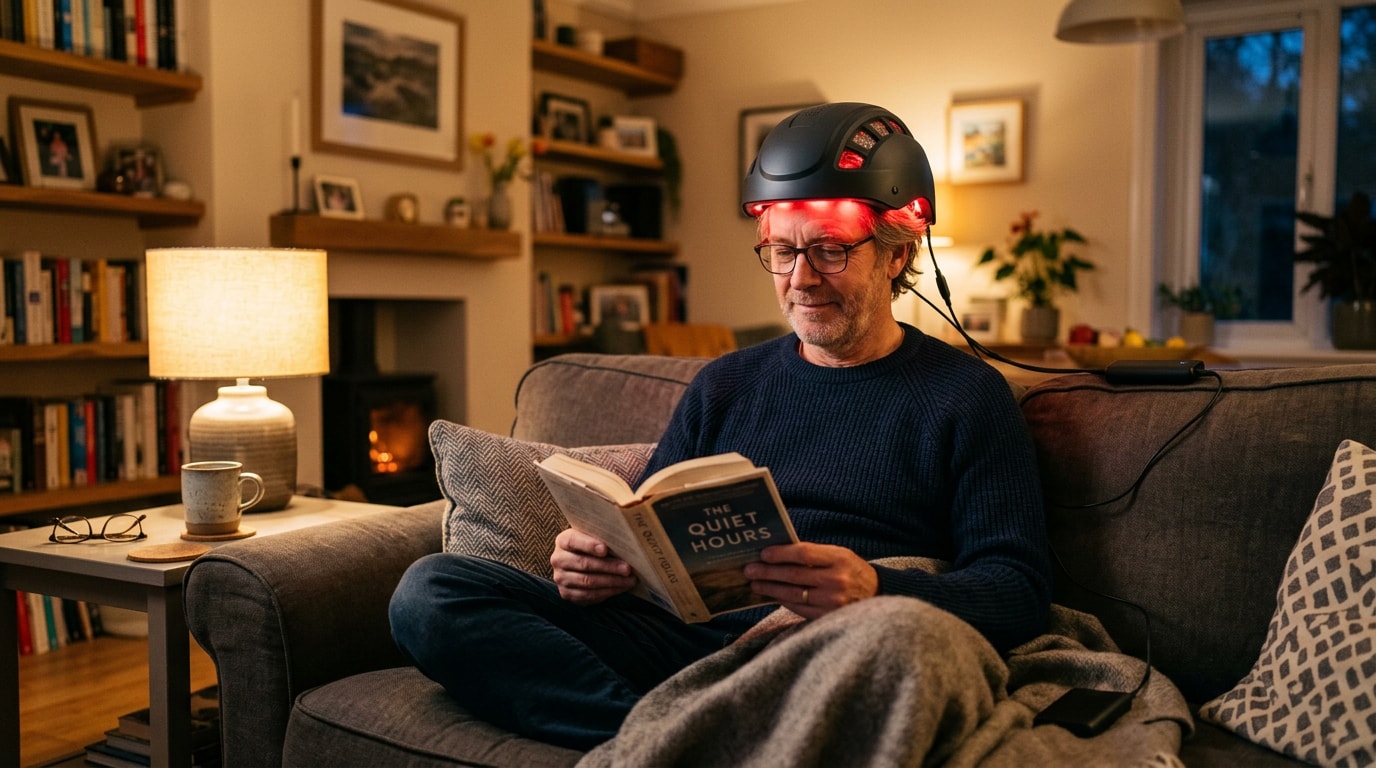
Red light therapy really is showing up everywhere lately, and its latest stop is, of all places, your scalp. People are strapping on red light ball caps and helmets, hoping the same tech reshaping the skincare world can do something for thinning hair too. Honestly, out of everything red light has branched into, this might be the one that surprised me most.
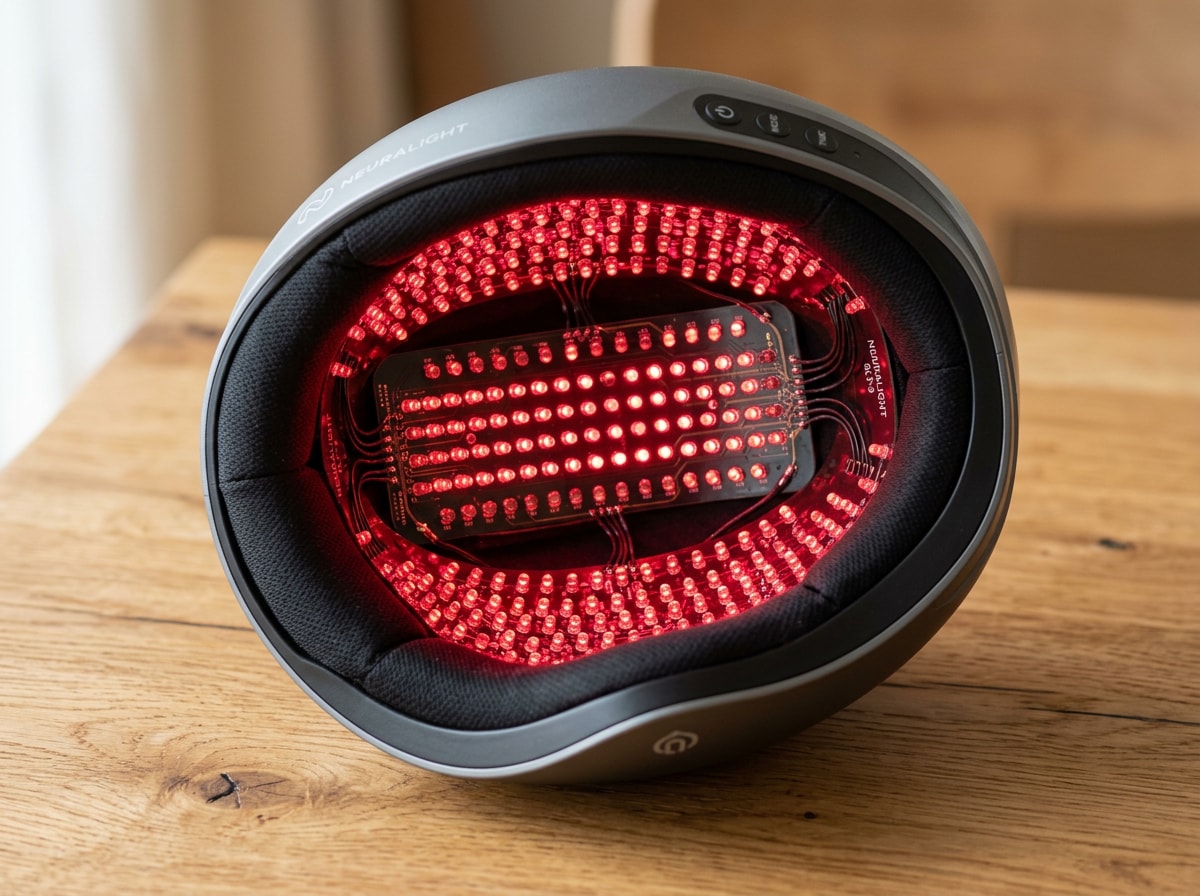
These devices have red light diodes built right in, positioned to shine directly onto your scalp. The idea is that the light stimulates your hair follicles and gets blood flowing to the area — more blood flow means more oxygen and nutrients reaching those follicles, which is thought to support a healthier, more active growth cycle. Hair goes through phases of growth, rest, and shedding, and the theory here is that red light might help stretch out that active growth phase, or even wake up follicles that have gone quiet.
This isn't some brand-new idea pulled out of thin air, either. Low-level laser therapy — a close relative of red light therapy — has been studied for hair-related uses for years, and it's really the foundation for the at-home caps and helmets you're seeing now. Think of these as the more accessible, wear-it-on-the-couch version of something that's been researched for a while.
Caps look like a normal hat but are lined with red light diodes on the inside. Discreet, easy, the kind of thing you throw on while doing chores or working from home and basically forget you're wearing.
Helmets tend to give more even, complete coverage since the light wraps around your whole head rather than just sitting on top. If you're especially focused on your crown or the back of your scalp, a helmet's probably going to reach those spots better than a cap will.
Either way, you're not wearing these all day — just a set amount of time, a few times a week, usually with a built-in timer so you're not stuck watching the clock.
I'll admit, the first time I saw someone wearing one of these caps around the house, I thought it looked a little funny — like a bike helmet had a baby with a beanie. But honestly, that's kind of the beauty of it. Nobody's going to know what it is unless you tell them, and you get to just go about your evening while it does its thing.
People noticing early thinning, a hairline that's crept back a bit, or just wanting thicker-looking hair overall — that's who's curious about this. Since it's non-invasive and doesn't involve medication, it tends to be the thing people try first, before they're ready to consider prescriptions or anything more intensive.
It also tends to attract people who've already tried a topical treatment or a supplement and are looking to add something, not swap it out. Since red light doesn't involve ingesting anything or putting a product on your scalp, it slots in pretty easily without much risk of clashing with whatever else you're doing.
Most of these devices are built to be simple. Wear the cap or helmet for 10 to 25 minutes, a few times a week, on clean, dry hair — since the light needs to reach your actual scalp, not get blocked by product buildup. Sessions are passive, which is honestly the best part — you can wear it while doing literally anything else, unlike treatments that demand your full attention. Some are corded, some are battery-powered, so you can pick based on how much you want to move around during a session.
This is still an emerging area, and results build slowly — we're talking months, not weeks. Hair cycles are just naturally slow like that. Most people who notice something say it took three to six months of actually sticking with it before they saw a real difference, and even then, it varies a lot depending on what's causing the thinning in the first place.
This also works best as one piece of a bigger picture. Nutrition, stress, scalp care, your overall health — all of that plays into hair growth, and no device is going to fully cancel out a nutrient deficiency or a stressful year. Think of red light as a supportive tool, not a magic fix on its own.
And if you're dealing with sudden or significant hair loss — not gradual thinning but something that feels off — please go see a dermatologist first. Thyroid stuff, autoimmune conditions, other medical causes — those need to be ruled out before you lean on a device alone.
Worth knowing where red light actually sits compared to everything else out there. Topical treatments like over-the-counter minoxidil work differently and have more research behind them at this point — plenty of people use red light alongside a topical, not instead of it. Prescription medications work more systemically and are usually for more established hair loss; red light is the gentler option some people try first, or use together with a prescription under their dermatologist's guidance. Supplements are about closing nutritional gaps, which red light doesn't really touch — another reason it works best as part of a bigger strategy. And professional procedures, like transplants or in-office laser treatments, are a much bigger commitment. A lot of people reach for an at-home red light device as the lower-stakes thing to try first.
Hair loss can feel like it's happening to you in a way that a lot of other body changes don't — it's visible, it's public, and it's tangled up in how we feel about ourselves in ways that go deeper than vanity. If you're exploring red light therapy, I hope it's coming from a place of caring for yourself, not punishing yourself for something that's completely normal and incredibly common. Whatever results you do or don't see, that's worth remembering.
How long before I notice anything? Most people who see results say it took three to six months of sticking with it. This is slow-and-steady territory.
Can I use this with other hair treatments? Yes, plenty of people layer it in with topicals or supplements. If you're on a prescription treatment, just mention your red light routine to your dermatologist so they've got the full picture.
Is this safe for everyone? Generally considered low-risk since there's no heat or UV involved, but check with a dermatologist if you have a scalp condition, photosensitivity, or you're dealing with sudden hair loss.
Does this work for all types of hair loss? It's mostly associated with early-stage thinning and pattern hair loss. If there's an underlying medical cause, that needs its own conversation with a professional first.
Is it weird to wear this in front of people? Only if you make it weird. Most caps look like regular hats from the outside, and honestly, taking care of yourself never needs an apology.
Whether it's a cap you toss on with your morning coffee or a helmet you wear while you read, these devices are a low-commitment, non-invasive way to potentially support your scalp — and honestly, they're proof of just how far this tech has traveled from where it started. Show up consistently, keep your expectations realistic, and pair it with good overall hair and scalp care, and you're giving it the best shot at actually working for you.
Hair is such a personal thing to watch change, and it's easy to spiral a little when you notice more falling out than usual or a hairline that's not quite where it used to be. Try not to check the mirror obsessively looking for progress — that's a fast way to talk yourself out of sticking with something before it's had a real chance to work. Set a reminder to check in with yourself once a month instead of every day, take a photo if it helps, and give the process the time it actually needs.
At the end of the day, this is one small tool in a much bigger relationship you have with yourself. Let it be gentle. Let it be slow. That's usually how the good stuff actually sticks.
Don’t forget to follow Kellee for the latest news and music:
add soundcloud, IG


.jpg)
.jpg)