
Reproductive health for women is often reduced to a checklist of lab values, cycle days, and clinical appointments. And while conventional medicine plays an essential role, it's only one piece of a much larger picture. A holistic approach recognizes that fertility, menstrual health, pregnancy, and postpartum recovery are shaped by everything from what's on your plate to how well you sleep, how you manage stress, and who's standing beside you when things get hard.
This isn't about rejecting medical care — it's about layering in the practices that support your body's natural rhythms and give conventional treatment the best possible foundation to work from.
In this article, we’ll be going deeper into:
Holistic health isn't a synonym for "natural" or "alternative." It simply means treating the person, not just the symptom, their desired outcome, or the diagnosis. Reproductive health touches nearly every system in the body — the endocrine system, the gut, the nervous system, the immune system — so it makes sense that supporting it requires more than a single pill or protocol.
A holistic approach to this asks: How are you sleeping? Eating? Moving? Coping with stress? What's your relationship with your body like? Do you feel safe and supported in their environment? These questions matter just as much as hormone panels, tests, and ultrasounds.
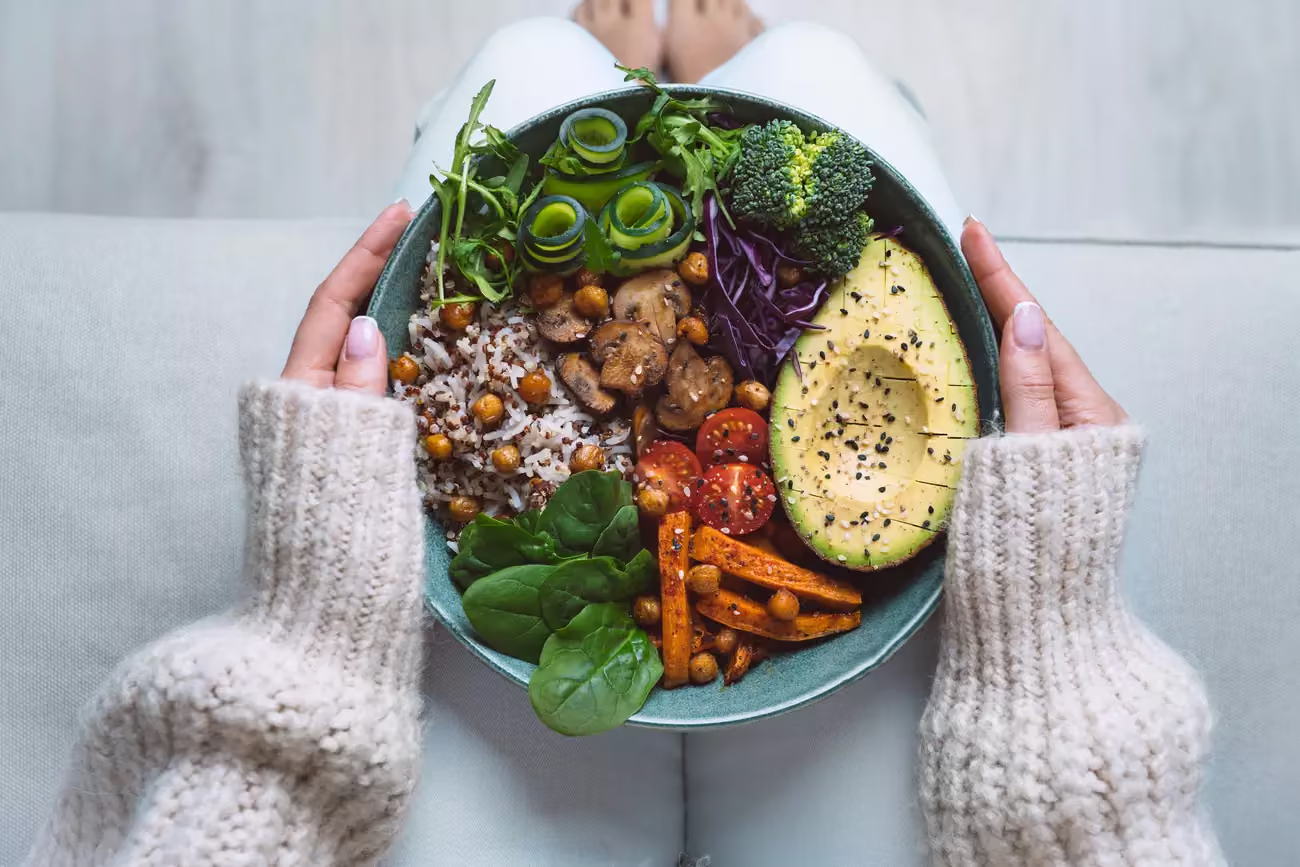
Food is one of the most direct ways we communicate with our reproductive system. Hormone production relies on adequate healthy fats—cholesterol is the literal building block of estrogen and progesterone, and blood sugar regulation has a direct line to ovulation and cycle regularity.
A few nutrition principles that consistently show up in holistic reproductive health work:
Rather than chasing a single "fertility superfood," the goal is consistency: nourishing meals, regularly timed, built from real ingredients.
One of the simplest and most underused holistic tools is learning to read your own cycle. The American College of Obstetricians and Gynecologists has referred to the menstrual cycle as a "fifth vital sign," alongside blood pressure, heart rate, temperature, and respiration — a reflection of overall health, not just a reproductive detail.
Tracking basal body temperature, cervical mucus, cycle length, and symptoms over a few months can reveal patterns that a single blood draw never could: whether ovulation is happening consistently, whether the luteal phase is long enough to support a pregnancy, or whether symptoms like severe cramping, spotting, or mood shifts are following a predictable pattern worth discussing with a provider.
This kind of self knowledge does two things at once. Practically, it gives you and your healthcare provider more useful data to work with. Emotionally, it shifts the relationship with your own body from one of confusion or mistrust to one of familiarity and partnership. Many people find that simply understanding why their body is doing what it's doing — rather than feeling at the mercy of unpredictable symptoms — reduces anxiety on its own.
Emerging research continues to highlight how closely gut health and hormonal health are intertwined. A specific collection of gut bacteria, sometimes called the "estrobolome," helps metabolize and regulate circulating estrogen. When gut health is compromised — through poor diet, chronic stress, or antibiotic overuse — estrogen metabolism can become disrupted, potentially contributing to conditions like estrogen dominance, endometriosis, and PMS.
Supporting gut health through fiber-rich foods, fermented foods (yogurt, kefir, sauerkraut, kimchi), and minimizing ultra-processed foods can have a ripple effect on hormonal balance that many people don't expect.
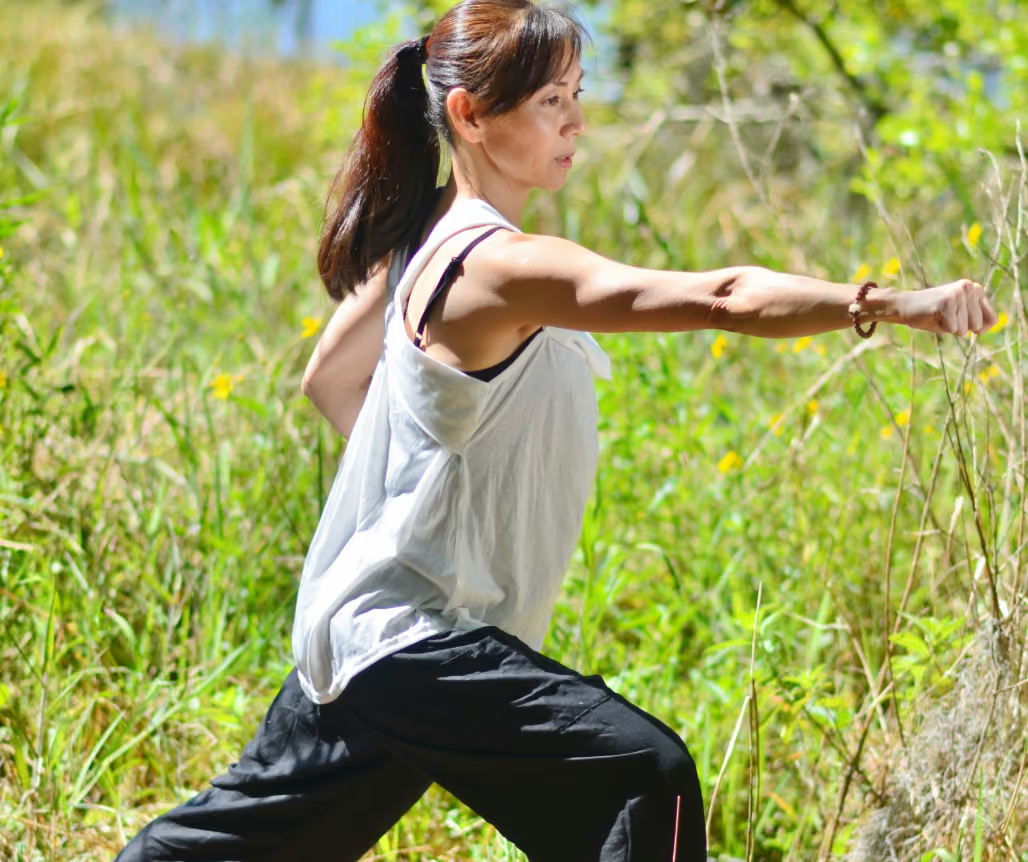
Movement supports circulation to the reproductive organs, helps regulate insulin sensitivity, and is one of the most effective tools we have for managing stress. But more isn't always better. Over-exercising, especially high-intensity training without adequate recovery, can suppress reproductive hormones and disrupt ovulation — the body interprets it as a stress signal, not unlike famine or danger.
A holistic approach to movement often means:

Melatonin, produced during darkness, isn't just a sleep hormone — it also acts as a powerful antioxidant in the ovaries and plays a role in regulating the menstrual cycle. Chronic sleep deprivation disrupts cortisol rhythms, which in turn can suppress the hormones responsible for ovulation.
The nervous system deserves equal attention. Reproduction is, biologically speaking, a low priority when the body perceives itself to be under threat. Chronic stress activates the hypothalamic-pituitary-adrenal (HPA) axis, and prolonged activation can suppress the hypothalamic-pituitary-gonadal (HPG) axis that governs the reproductive cycle. This is why so many people notice their cycles change during periods of intense stress, grief, or life transition.
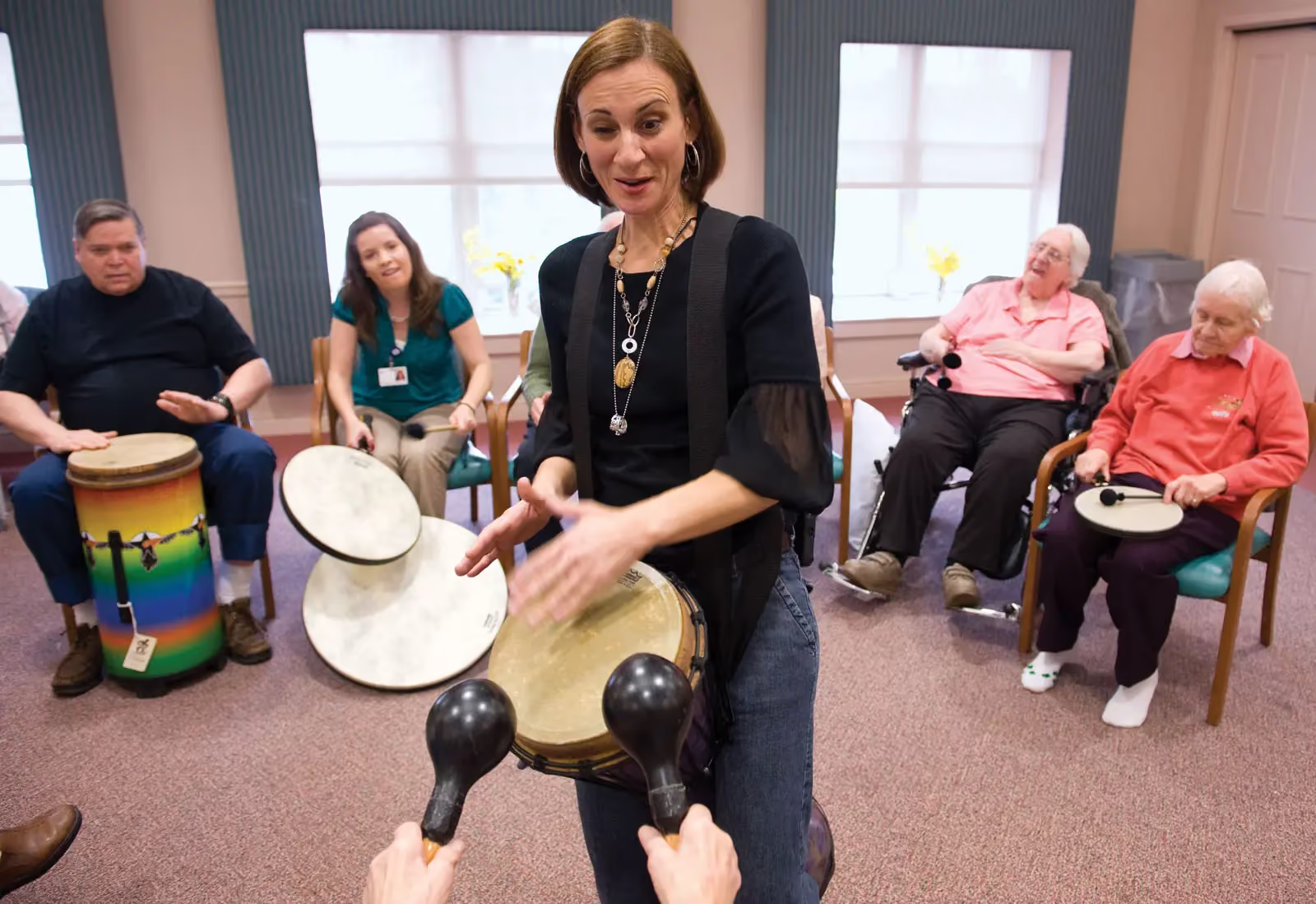
Practices that calm the nervous system are not "extras" — they're foundational:
Endocrine-disrupting chemicals — found in some plastics, personal care products, and household cleaners — can mimic or block hormones in the body. While it's impossible (and unnecessary) to achieve a zero-toxin life, small, sustainable swaps add up:
These changes are about reducing overall burden, not achieving perfection.
Many holistic practitioners integrate approaches with long histories of traditional use alongside modern medicine:
Reproductive health is too often framed as an individual project — something one person manages alone through diet, supplements, and appointments. But humans are not built to navigate fertility, pregnancy, loss, or postpartum recovery in isolation, and the research on social support backs this up. People with strong social support networks during pregnancy tend to experience lower rates of prenatal anxiety and depression, and postpartum isolation is one of the most consistently cited risk factors for postpartum mood disorders.
Holistic care means actively building support rather than waiting for it to appear: joining a birth circle or postpartum support group, leaning on friends and family for practical help like meals or childcare, and being honest with a partner about what kind of support is actually needed, rather than assuming it will be obvious. For those navigating infertility or loss, connecting with others who understand that specific experience — through a support group or a trusted friend who has been there — can ease a kind of loneliness that's hard to describe to someone who hasn't lived it.
This is also where professional support, like a doula, becomes so valuable: it formalizes and guarantees a level of consistent, knowledgeable companionship that we can't always count on getting informally.
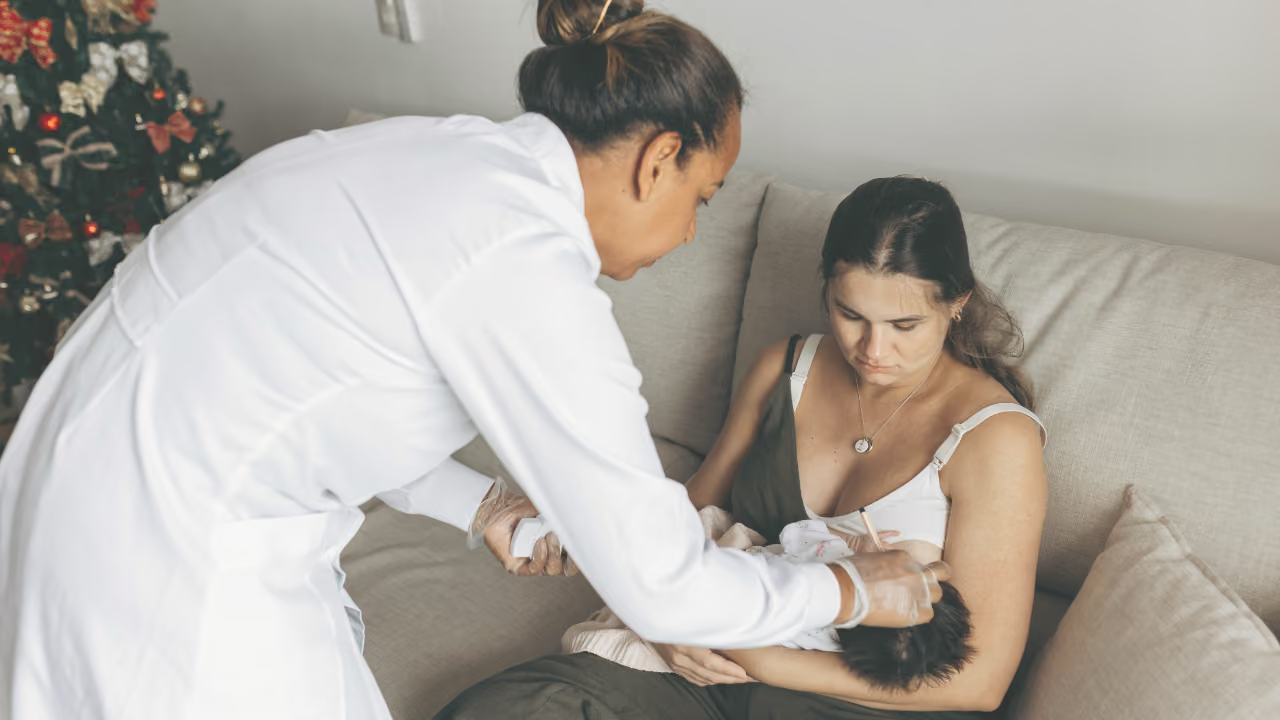
If there's one holistic support that's still underused and misunderstood, it's the doula. A doula is a trained, non-medical professional who provides continuous physical, emotional, and informational support before, during, and after birth — and increasingly, throughout fertility journeys, pregnancy loss, and postpartum recovery as well.
Here's why doulas make such a meaningful difference:
They fill the gap conventional care can't. Obstetric appointments are often short, and providers are stretched thin. A doula's role is to sit with the questions, fears, and details that don't fit into a fifteen-minute visit — helping someone understand their options, prepare emotionally, and feel less alone in the process.
The research backs it up. Studies have consistently found that continuous labor support from a doula is associated with shorter labors, reduced use of pain medication, lower rates of cesarean birth, and higher satisfaction with the birth experience. Some research also links doula support to reduced rates of postpartum depression and anxiety.
They advocate without taking over. A good doula doesn't make medical decisions or replace a midwife or OB — they help the birthing person understand their choices and communicate their preferences clearly, especially in moments when it's hard to find the words themselves.
They support the whole transition, not just the birth. Many doulas now offer postpartum support — helping with newborn care, emotional adjustment, feeding challenges, and simply making sure a new parent has someone checking in on them, not just the baby. Fertility doulas and loss doulas extend this same model of steady, informed companionship to the earlier and harder chapters of the reproductive journey: trying to conceive, navigating miscarriage, or facing a difficult diagnosis.
They provide continuity of care. Unlike hospital staff, who rotate through shifts, a doula is often the one constant presence throughout a birth or a difficult stretch of a reproductive journey. That continuity builds trust and allows for a kind of attentive, personalized support that's hard to replicate in a busy clinical setting.
In a holistic model of reproductive health, a doula isn't a luxury add-on — they're one of the clearest examples of what it means to care for the whole person, not just the medical event.
None of these approaches work in isolation, and none of them are meant to replace medical care when it's needed. Holistic reproductive health is about building a foundation — through food, sleep, movement, nervous system regulation, and supportive relationships — that allows the body to do what it's designed to do, and that gives conventional treatment the best possible environment to succeed when it's needed. If you're just starting to explore a more holistic approach, there's no need to overhaul everything at once. Pick one area — sleep, nutrition, stress, or finding a support person — and start there.
Don’t forget to follow Kellee for the latest news and music:
add soundcloud, IG





Sign up to get our latest news and stay connected.
Thank you! Your submission has been received!
Oops! Something went wrong while submitting the form