
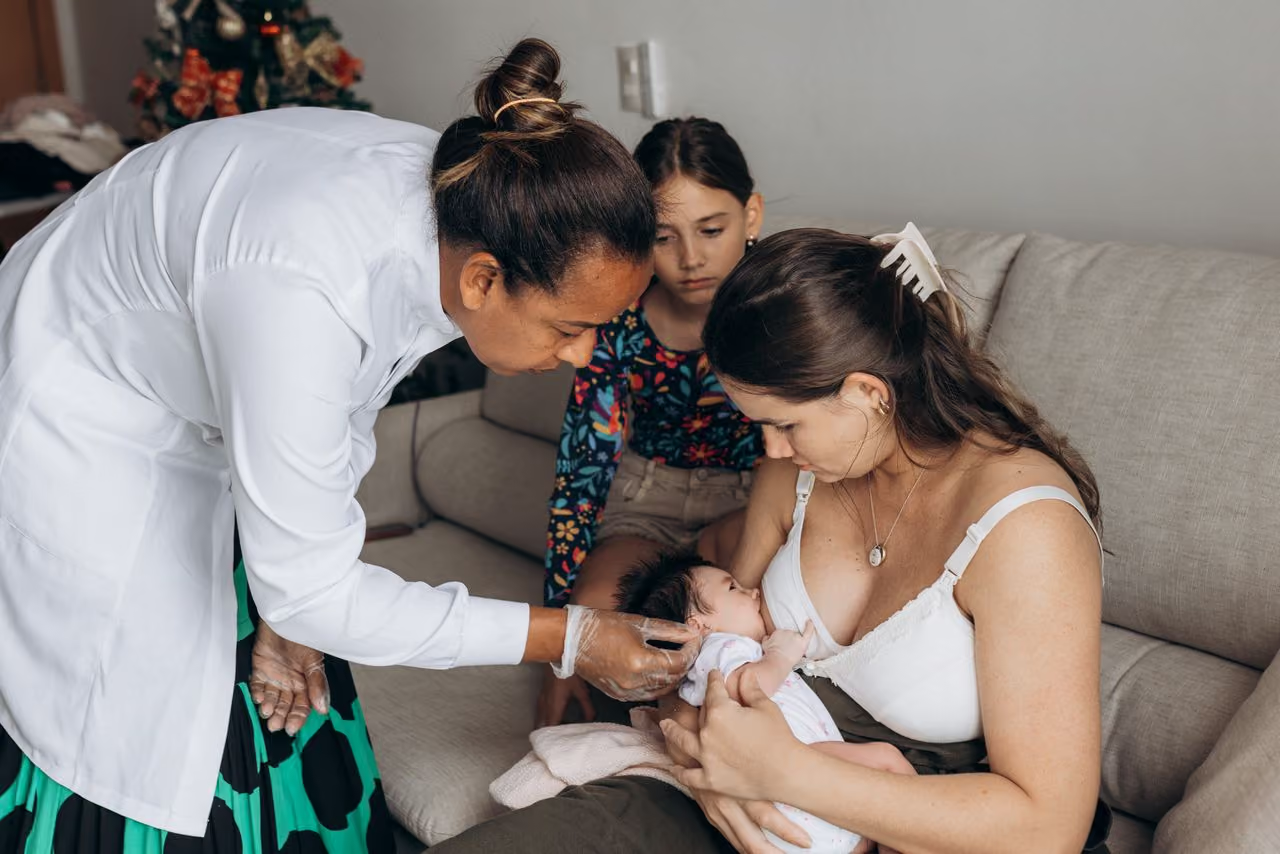
I didn't know what a doula was until I was pregnant.
That's more common than it should be. We spend so much cultural energy on the pregnancy itself — the tests, the appointments, the registry, the nursery — and lots of energy on figuring out how to consciously raise children... and yet we spend relatively little time on preparing for the actual experience of giving birth, which is the part that will stay with you for the rest of your life.
A friend mentioned her doula in passing during my second trimester. I looked it up. I hired one. And by the time my labor was over I had one very clear thought: why doesn't everyone know about this, and why isn't it the first thing people tell you when you get pregnant?
The research on doulas is genuinely striking. Studies consistently show that continuous labor support from a trained doula is associated with shorter labors, lower rates of cesarean section, reduced use of pain medication, and higher rates of satisfaction with the birth experience — for the birthing person and their partner both. These aren't marginal effects. They're significant enough that the American College of Obstetricians and Gynecologists has formally recognized doula support as beneficial.
But research aside, what I can tell you from personal experience is that having a person in that room whose entire job was to support me — not to monitor the baby's heart rate, not to manage the medical situation, just to be completely present with me — changed the experience in ways that are hard to fully articulate. I felt less alone. I felt less afraid. And when things got hard, I had someone who had been through this many times telling me I could do it, and who I believed.
This guide is the one I wish I'd had when I was interviewing doulas. The questions that actually matter, what to listen for in the answers, and how to know when you've found the right person.
Before you start interviewing, it helps to have a clear picture of what a doula actually does so you can ask the right quetions and evaluate the answers correctly.
A birth doula provides continuous emotional, physical, and informational support during labor and birth. That means they're with you — actually with you, in the room — throughout labor in a way that hospital staff often can't be, because nurses are typically managing multiple patients. The doula's entire attention is on you.
Physically, they help with positioning, massage, counter-pressure, breathing, and movement — the comfort measures that can make an enormous difference in how manageable labor feels. Emotionally, they offer reassurance, encouragement, and a calm presence during what is often the most intense experience of a person's life. Informationally, they help you understand what's happening, help you formulate questions for your medical team, and support you in communicating your preferences.
What a doula is not: a medical provider. They don't deliver babies, perform clinical assessments, make medical decisions, or replace the role of your OB, midwife, or hospital nursing staff. They have no clinical role whatsoever. Their entire function is support.
This distinction matters because it means you're evaluating something different than clinical credentials. You're evaluating presence, communication style, values alignment, and whether this person is someone you can trust in one of the most vulnerable moments of your life.
Doula training and certification are not standardized the way medical credentials are. There are several certifying organizations — DONA International, CAPPA, Birth Arts International, and others — and certification processes vary. Some doulas are certified; some are highly experienced but not formally certified. What matters is that they can speak clearly about their training, what it covered, and how they've continued to develop their practice.
There's no magic number, but this question gives you useful information about their experience level. A newer doula who has attended 10 births is a different proposition than someone who has attended 200. Neither is automatically better or worse for you — a newer doula may have more recent training and a lot of enthusiasm, while an experienced doula brings a depth of pattern recognition that only comes with time. What you want to hear is honesty rather than inflation.
Hospital births, birth center births, home births. Medicated and unmedicated. Cesarean sections. Births that didn't go as planned. A doula who has only supported one type of birth may be less equipped to navigate the unexpected. Listen for whether they describe a range of experiences — and whether they describe the difficult ones with wisdom rather than discomfort.
Babies arrive on their own timeline. A doula without a backup arrangement is a real risk — if they're sick, at another birth, or dealing with a family emergency when your labor begins, you need to know there's a plan. A professional doula will have a backup. You should meet or at least speak with that person before your due date.
These questions are less about credentials and more about fit — whether this person's values and approach align with yours.
Listen for alignment with what matters to you. Some doulas are more advocacy-forward, others more facilitative. Some have strong opinions about birth preferences; others take a more neutral stance. Neither is wrong, but you want someone whose approach matches what you're looking for. If you want someone who will actively help you push back on interventions you don't want, you need a doula comfortable with that role. If you want someone who will support whatever decisions you make without steering you, you need that.
This is one of the most important questions on the list. A doula's role is to support you, not to fight your medical team — but part of supporting you may mean helping you ask questions, helping you understand your options, and ensuring your voice is heard. How a doula navigates that line tells you a lot about their values and their professionalism. Red flags: a doula who talks about "fighting" doctors or who seems to have an ideological agenda about specific types of birth. Green flags: a doula who talks about communication, informed consent, and supporting your decision-making.
A doula who expresses judgment — in either direction — about epidurals or other pain management is a red flag. Their job is to support your choices, not to advocate for a particular type of birth experience. You want someone who will support you if you want an unmedicated birth and equally support you if you decide at 6 centimeters that you're done and want the epidural. Birth plans change. Your doula should be comfortable with that.
If you have a partner, parent, or friend who will be present at your birth, their experience matters too — and a good doula actively supports them rather than sidelining them. Ask how they typically work with support people. A doula who sees the partner as a resource to involve rather than an obstacle to work around tends to create better experiences for everyone in the room.
Most doulas go on call for their clients at a certain point before the due date — often 38 weeks — and remain on call until the baby arrives. Knowing this window matters because it tells you when you can expect them to be available and responsive.
When labor starts, how quickly can you expect to hear back? How quickly can they arrive? If you live far from your doula, or if your labors tend to be fast, this is a practical question with real implications.
A doula who has five clients due within two weeks of each other is at higher risk of being unavailable when you need them — which is why the backup question matters, but also why it's worth knowing their general scheduling approach.
Get specific. Most doulas include a certain number of prenatal visits, on-call labor support, attendance at the birth, and a postpartum visit. Some include additional support, resources, or services. Understand exactly what you're paying for and what the payment schedule looks like. Most doulas require a deposit to hold their calendar.
A doula who knows your birth location — who has relationships with the staff, who knows the layout, who understands the typical protocols — can navigate it more smoothly than one who's never been there. It's not a dealbreaker if they haven't, but it's worth knowing.
The interview isn't just about gathering information. It's about noticing what happens in your body when you're with this person.
Did you feel heard? Did they ask questions about you — your fears, your hopes, your previous experiences — or did they mostly talk about themselves?
Did you feel judged at any point? Even subtly? A doula who makes you feel like any of your choices need justification is not the right doula for you.
Could you imagine being vulnerable with this person? Birth is not the time to maintain composure. You need to be able to fall apart in front of this person and trust that they'll hold you through it.
Did your partner (if applicable) feel comfortable with them? Your birth partner's relationship with the doula matters. If one of you came away uneasy, that's information.
Does your gut say yes? This one sounds vague but it isn't. After all the practical questions are answered satisfactorily, the question is whether this person feels right. Trust that.
Doula support should not be a luxury available only to people who can easily afford it. The research showing better birth outcomes with doula support applies to everyone — and historically the people with least access to doula care are the people for whom better birth outcomes matter most.
Many doulas offer sliding scale fees, payment plans, or pro bono spots specifically for clients who couldn't otherwise afford their services. If cost is a barrier, ask directly — most doulas would rather find a way to make it work than turn someone away.
There are also doula collectives, volunteer programs, and community organizations in many cities that provide free or low-cost doula support. DONA International's website has a doula directory; a search for community birth doula programs in your area may turn up additional resources.
Some insurance plans and some FSA/HSA accounts cover doula fees. The landscape is changing as evidence for doula support grows — check your specific coverage and ask your doula if they have experience navigating insurance reimbursement.
Don’t forget to follow Kellee for the latest news and music:
add soundcloud, IG





Sign up to get our latest news and stay connected.
Thank you! Your submission has been received!
Oops! Something went wrong while submitting the form