.avif)
Tattoos have been a part of the hip-hop aesthetic for so long it's easy to forget that they weren't always as common as they are now.
There was a time -- not that long ago in cultural terms -- when tattoos weren't so common, when getting inked put you firmly outside mainstream acceptability, when the body art that is now a billion-dollar global industry was still mostly associated with sailors, bikers, and people who had done time. Seems like a pretty big leap to make about a person based on how they choose to adorn their own skin, right?
Hip-hop didn't just adopt tattoo culture. It transformed it, expanded its meaning, and brought it to the center of popular culture. That kind of exposure helped create one of the most fleshed out (haha) traditions in contemporary art: the visual tradition of tattoo art.
So if you want to understand how tattoos went mainstream, you've got to understand the history of tattoos in rap. Where rapper tattoos came from, what they mean, and how they evolved from permanent markers of being a part of one community or another to being standalone works of art. It tells us something about hip-hop, how we build creative identities (both for ourselves and the version we present to the world), and what it means to make the decision to own your story by permanently inking it on your body.
To understand tattoos in hip-hop you have to understand the communities hip-hop came from and the role body art played in those communities before the music was famous.
In Black and Latino communities in urban America through the 1970s and 80s, tattoos carried specific and serious meaning. They were not decorative in the casual sense the word implies today. They were markers of membership, survival, loyalty, and loss.
These traditions carried profound weight precisely because the people in them had limited access to other forms of permanent record. If you grew up in a community where your history wasn't written in books, where the deaths of people you loved weren't covered in newspapers, where institutions didn't keep records of what mattered to you, your body became the archive. It runs so much deeper than a fashion trend or superficial aesthetic choice. Tattoos are part of a cultural tradition, even a spiritual tradition, of community and expression, much the way music itself is.
Hip-hop emerged from these same communities carrying all of this. When the first generation of rappers and breakdancers and graffiti writers got tattoos, they were drawing on an existing tradition of body art as permanent testimony. The music told the story in sound. The tattoo recorded it on the body.
In hip-hop's early commercial years, tattoos were present but not yet a dominant visual element. The aesthetic of the era was defined more by jewelry, clothing, and stance than by body art. But underneath the visible aesthetic, tattoos were already doing important work.
Artists from the East Coast -- particularly those connected to New York's borough-specific rap communities -- wore tattoos that identified neighborhood, crew, and loyalty. These weren't statement pieces designed to be photographed. They were functional markers of where you came from and who you stood with.
The West Coast gangsta rap movement that emerged in the late 1980s brought a different tattoo tradition into hip-hop's visual vocabulary. Los Angeles gang culture had developed an elaborate tattoo language -- specific lettering styles, symbols, and imagery that communicated affiliation with precision. When N.W.A., Ice-T, and subsequent West Coast artists brought their communities' aesthetics to national attention, they brought that visual language with them.
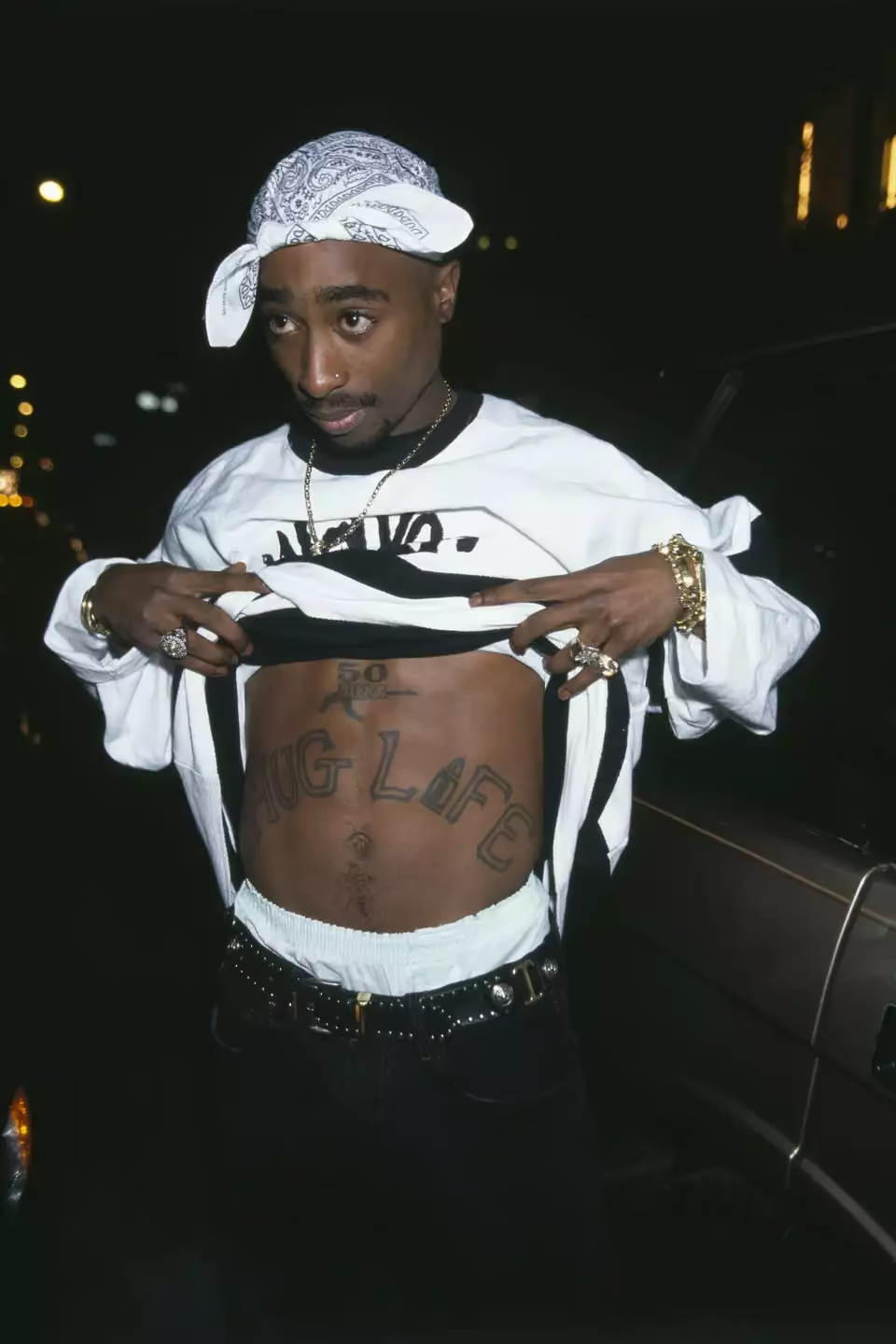
You can't talk about the history of tattoos in hip-hop without talking about Tupac Shakur. He's one of the most pivotal figures in the early era of rap tattoos, and to this day his ink is iconic.
Tupac's tattoos are among some of the most analyzed and most talked about tattoos in hip-hop history:
Each one was a statement. None of them completely captured his identity or values, but taken together they read like a manifesto. They articulate how he saw himself, his politics, his loyalties, and his spirituality -- all of which his music included, but not fully. The same way you can express love by holding someone's hand or sitting quietly while they vent or showing up to their gig, and all of those actions are expressions of something that can't be contained by a single medium, tattoos and music are two pieces that express who an artist is. Even together, they can't capture a whole spirit. But the more layers of expression, the more the picture comes into focus.
What Tupac demonstrated was that rapper tattoos were meant to be read. They weren't random decorations but a coherent visual story that rewarded attention and communicated something important. They showed us that the body itself could be a medium for the same kind of complexity and intention that goes into the music.
As hip-hop's commercial success grew through the 1990s, tattoo culture within it expanded in parallel. Visibility increased -- music videos showed more skin, magazine photo shoots featured elaborate inkwork, and the growing celebrity of rap artists meant their body art was scrutinized and discussed publicly in ways earlier tattoos hadn't been.
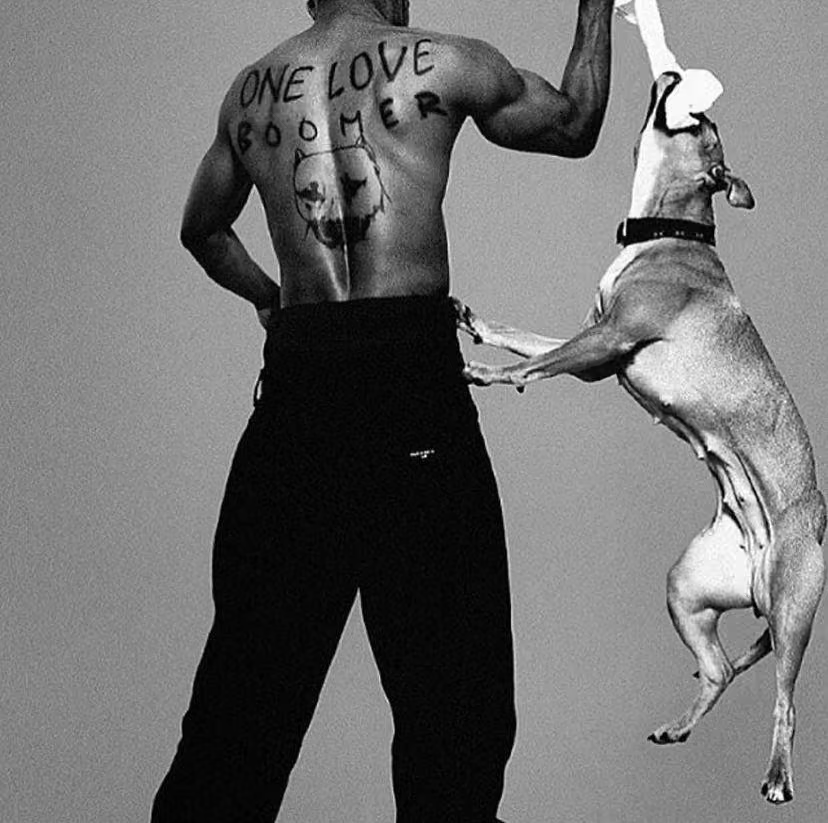
DMX brought a raw, spiritual quality to rapper tattoos -- crosses, dogs, and deeply personal imagery that reflected the same chaotic energy and genuine religiosity his music expressed. His tattoos were visually rough rather than polished, which suited the aesthetic of his work perfectly. They looked like they'd been made in difficult circumstances, because they had been.
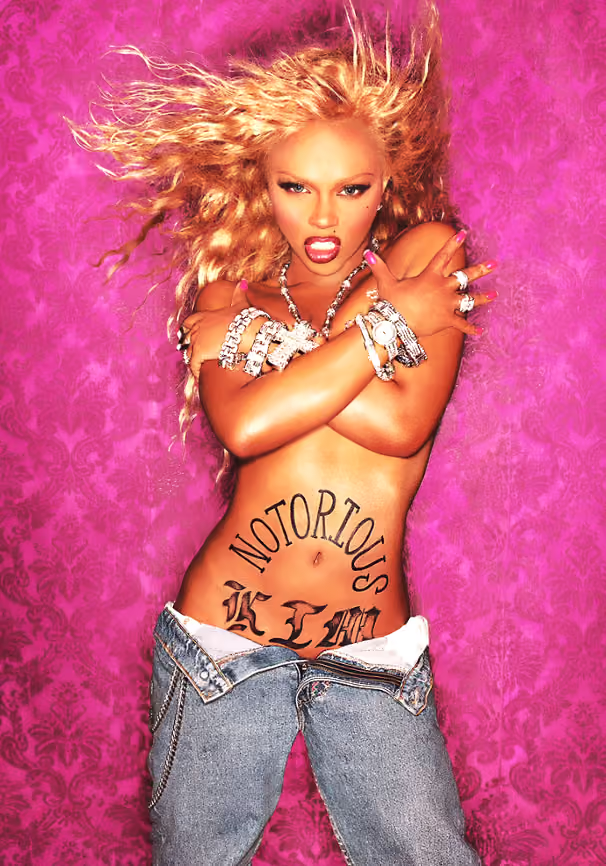
Lil' Kim's approach represented a different direction --fewer tattoos, more deliberately aesthetic, positioned as part of a larger visual identity that was as much about fashion and feminine power as about street credibility. The contrast between male and female rapper tattoo cultures in this era is worth noting: male artists tended toward quantity and documentation, female artists toward selectivity and symbolism.
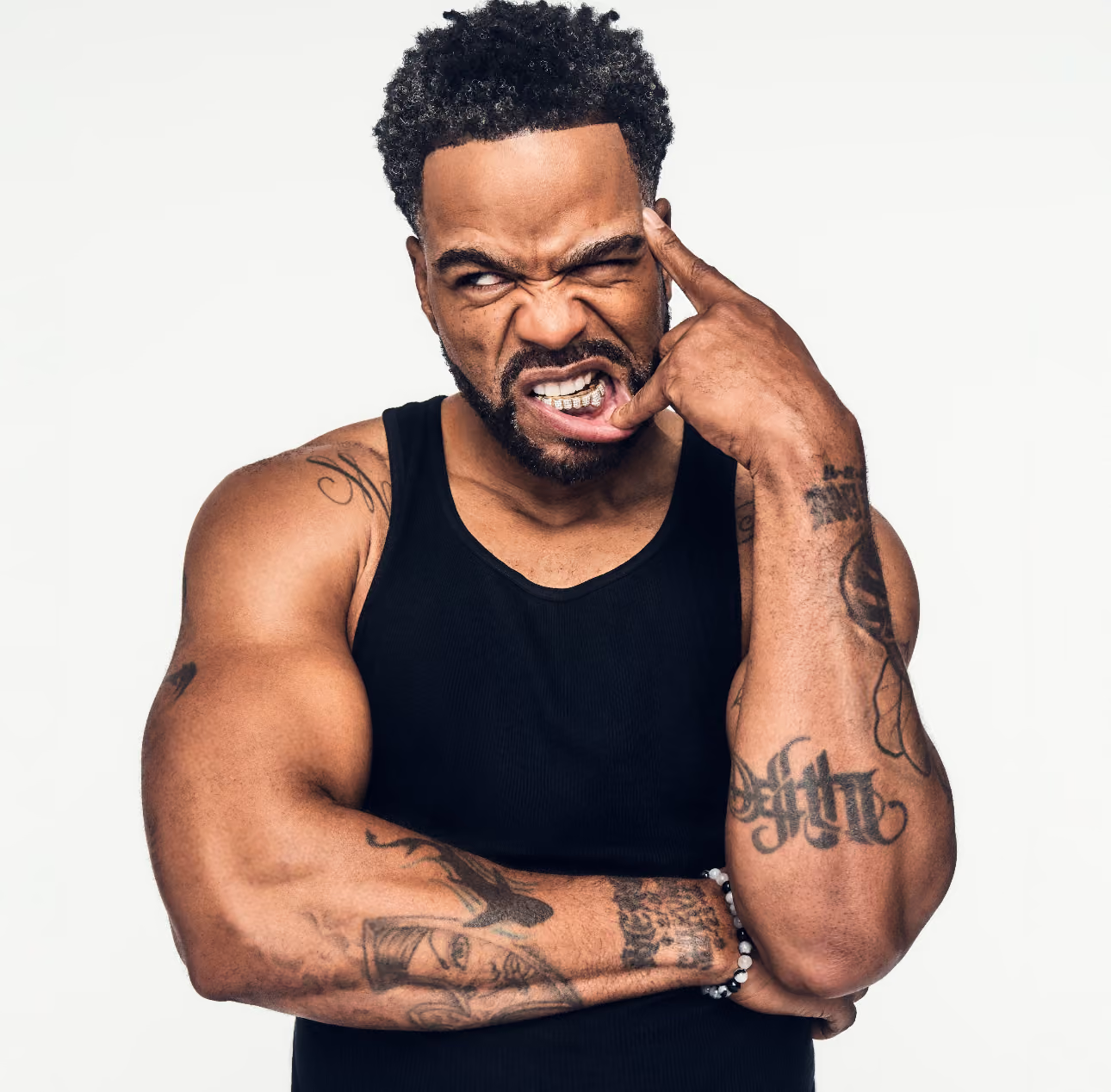
Method Man, Busta Rhymes, Redman, and the broader Wu-Tang extended universe brought elaborate tattoo work that reflected the crew's interest in martial arts, spirituality, and mythology — bodies covered with imagery that connected to the same eclectic cultural references that filled their lyrics.
By the mid-2000s, the full-body tattoo aesthetic was emerging. Rather than individual pieces placed deliberately, some artists began treating the entire body as a single canvas, building toward coverage that would eventually include the neck, hands, and face.
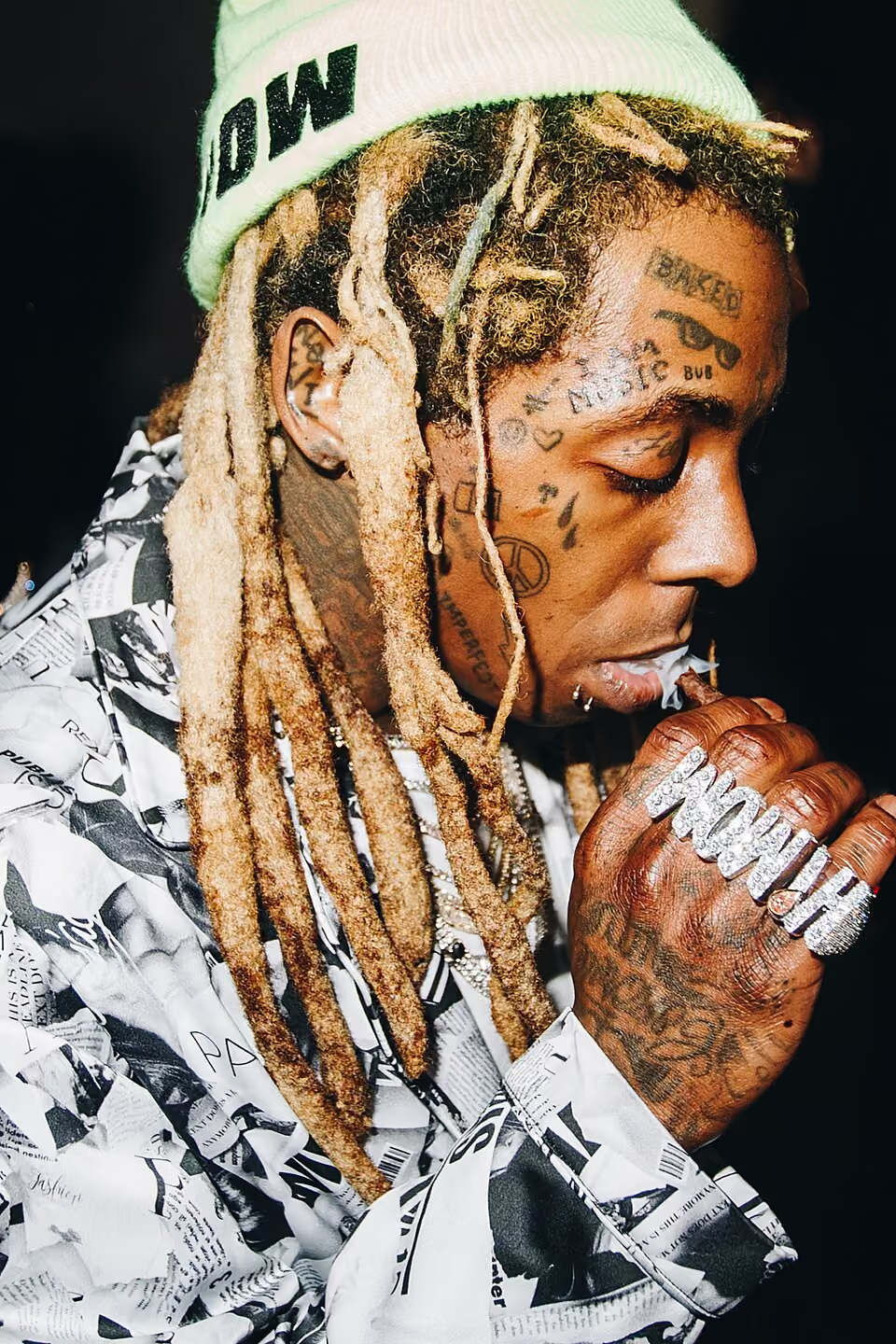
Lil Wayne was the artist who most clearly moved face tattoos from extreme outlier to a major part of the hip-hop aesthetic. His facial ink -- teardrops, stars, "misunderstood" beneath his eye -- arrived in a period when he was the most dominant MC in the genre, which meant his visual choices carried enormous weight. When the most acclaimed rapper alive chooses to tattoo his face, it changes what face tattoos mean in hip-hop. Period. It moved them from the fringe to the middle of the conversation.
The teardrop tattoo beneath the eye deserves its own section because of how much it carries and how widely misunderstood it is.
In prison culture, the teardrop has meant different things at different times and in different regional traditions. A filled teardrop has historically indicated time served or, in some traditions, a violent act. An outline teardrop has sometimes indicated the loss of a close friend or the grief of incarceration itself. The meaning has never been singular or universal — it has always depended on context, community, and the individual wearing it.
In hip-hop, the teardrop migrated from prison culture carrying some of that weight but developing its own meaning in the process. For many artists it represents grief -- the loss of friends to violence, the particular sorrow of surviving a world that took people you loved. It makes visible a mourning that often goes unnamed.
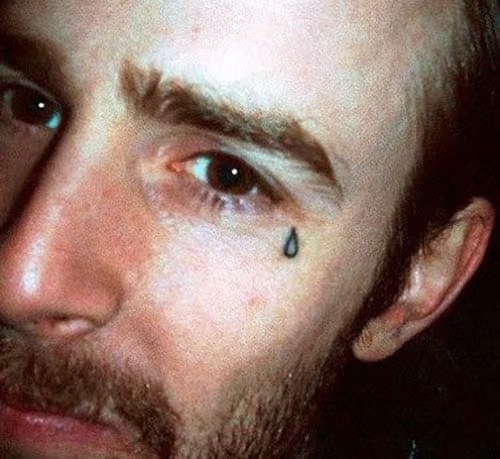
For others it has been adopted more aesthetically, the specific prison meaning less central than the general symbolism of tears and sorrow worn on the face rather than hidden behind it. The willingness to show grief publicly, permanently, on the most visible part of your body -- that's a form of emotional courage that resonates in a culture that has often demanded men perform toughness at the expense of visible vulnerability.
The complexity of the teardrop is worth holding rather than flattening. It doesn't mean one thing. It means something different depending on who wears it, and understanding that is understanding something important about how hip-hop tattoo culture works generally -- symbolism is real, context is everything, and the same mark carries different meaning on different bodies.
The full emergence of face tattoos as a mainstream hip-hop aesthetic belongs to the 2010s, driven by a generation of artists for whom the question wasn't whether to get face tattoos but which ones and where.
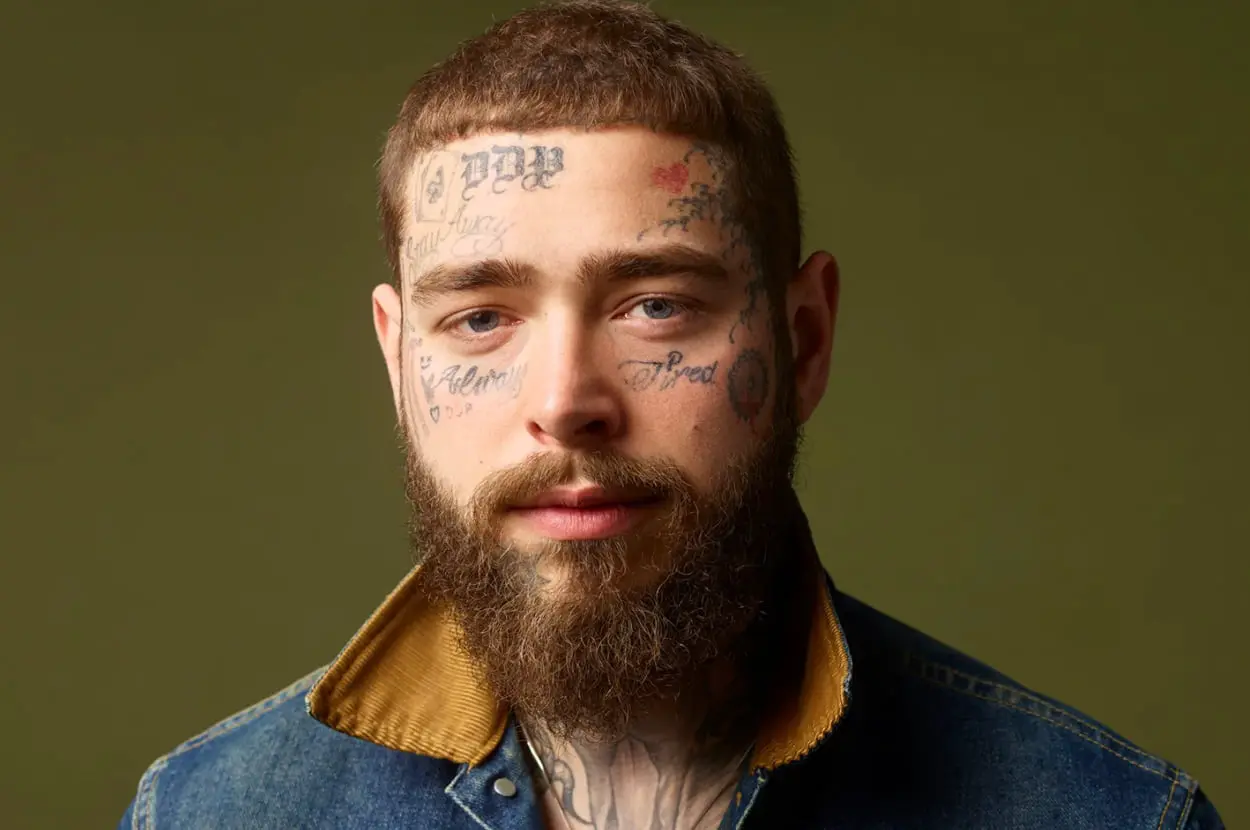
Post Malone is one of the most prominent white rappers with face tattoos, including "Always Tired" beneath his eyes, "Stay Away" on his forehead, "broken hearts" on his cheek. He debuted the look right around the same time he hit his commercial breakthrough, which made his facial ink as much a part of his artistic identity as his music. In interviews he has described them variously as reminders, impulse decisions, and permanent markers of specific moments in his life. The accumulation of them across his face reads like a diary, not planned as a single coherent statement but built up over time as he lives life.

XXXTentacion's face tattoos were darker in their symbolism -- skulls, daggers, the word "REVENGE" -- and fit within a visual identity that was confrontational and deliberately unsettling. His death in 2018 froze that visual identity in place, making the tattoos a permanent record of who he was at a specific moment.
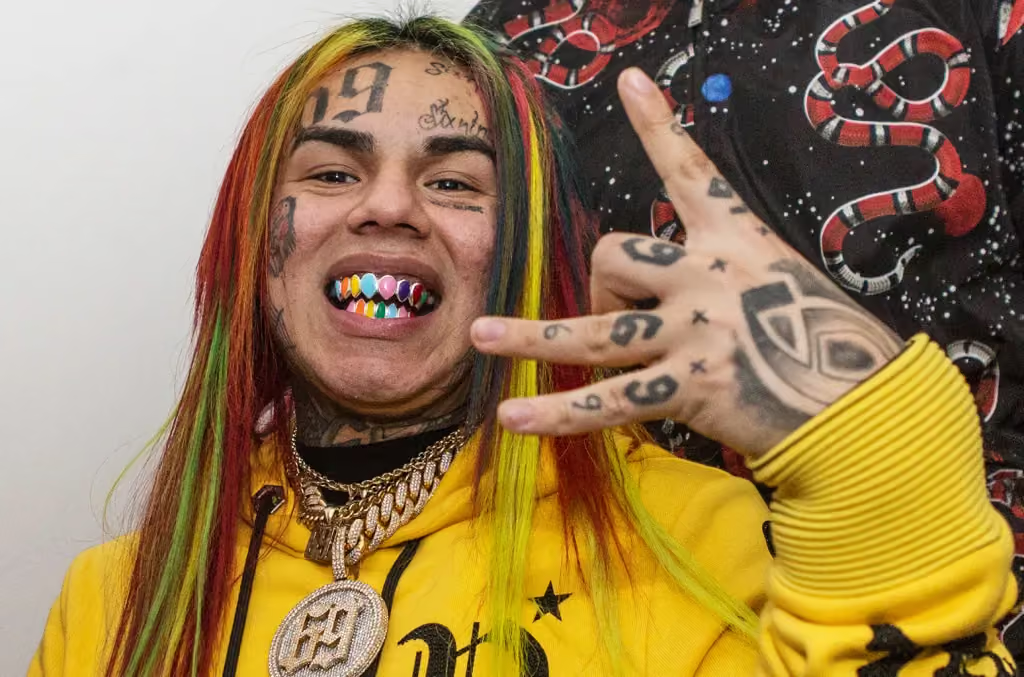
6ix9ine's approach was more explicitly theatrical -- rainbow hair, heavy face tattoos, a deliberately cartoon-villain aesthetic that understood itself as performance. His face tattoos weren't meant to be read as authentic personal expression in the way Tupac's were. They were costume, character, provocation. Which is itself a legitimate use of tattoo culture, just a different one.
What the face tattoo generation shared, regardless of individual style or intention, was the rejection of a fundamental constraint: the idea that there are parts of yourself that must remain presentable, that certain visible choices are off-limits because they close doors, that you owe mainstream acceptability a version of yourself with a clean face.
Face tattoos say: this is non-negotiable. This identity is not code-switchable. This is me everywhere in every context. Take it or leave it.
Female rappers have always had a different relationship with tattoos than their male counterparts, shaped by the different pressures and expectations placed on women in hip-hop and in mainstream culture more broadly.
Women in hip-hop have historically navigated a double bind around body modification: the expectation of being visually appealing by mainstream standards while also being authentic to street culture. Tattoos in this context became tools of self-determination -- ways of marking the body as one's own rather than as something to be assessed by others.
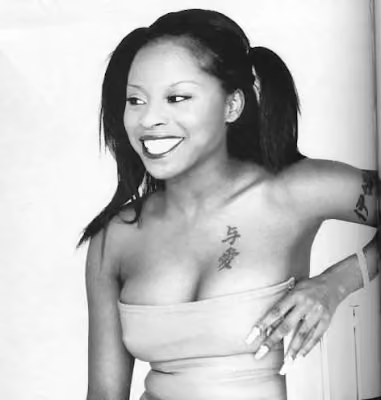
Lil' Kim, Foxy Brown, and the female artists of the 90s tended toward placement that was selective and often concealable -- personal rather than declarative.
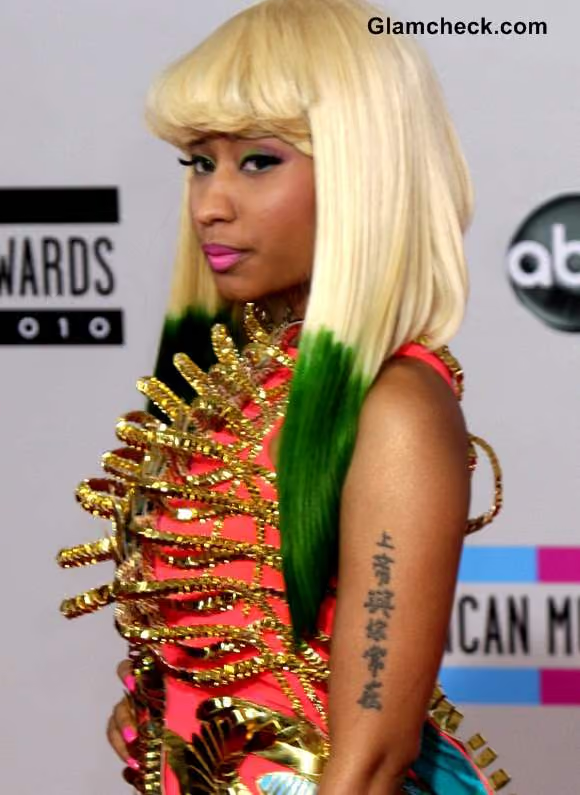
Nicki Minaj has relatively few visible tattoos -- a Barbie tattoo on her wrist and Chinese characters on her arm -- despite a career built on an elaborate visual identity. To me? It makes sense. She makes very deliberate decisions about how she presents her image, so being selective about her ink fits into those style calculations.
More recent female artists have moved in different directions. Cardi B's tattoos are extensive and personal -- a large peacock piece, roses, and other imagery that she has described as part of reclaiming her body and her story after years of navigating an industry that tried to define her.
Megan Thee Stallion has approached tattoos with similar intentionality. Both artists represent a generation of female rappers who are taking ownership of their visual identity in ways that include permanent body art without being defined entirely by it.
There's something a tattoo does that even the most personal lyric can't fully replicate.
A lyric is performed. Even when it's completely honest -- when it comes from the most vulnerable and true place in the artist -- it's delivered in a context of performance, recorded and mixed and mastered and released as a product. The listener knows this. The distance between the experience and the song is always present.
A tattoo has no such distance. It's on the body. It's permanent. It can't be taken back or recontextualized in a subsequent album. It was made at a specific moment, with a specific intention, by a specific person who decided that this mark was worth carrying forever.
This is why the most meaningful rapper tattoos aren't the most elaborate or the most expensive. They're the ones that clearly meant something at the time of making and continue to mean it — the name of a dead friend in an amateur hand, the neighborhood in simple block letters, the religious text that was the anchor point in a difficult period.
The tattoo as artistic medium in hip-hop is at its most powerful when it's doing what hip-hop does at its best: telling a specific true story, in language that belongs to a particular community, about experiences that deserve to be permanent.
Don’t forget to follow Kellee for the latest news and music:
add soundcloud, IG





Sign up to get our latest news and stay connected.
Thank you! Your submission has been received!
Oops! Something went wrong while submitting the form
.avif)

.avif)

.avif)