.avif)
Walk into any major fashion house's archive from the past thirty years and you'll find hip-hop's fingerprints everywhere.
The oversized silhouettes. The logomania. The sneakers elevated to objects of desire. The jewelry worn with complete conviction. The tattoos that started as subcultural markers and became mainstream aesthetics. The graffiti lettering that moved from subway cars to album covers to advertising campaigns to fine art galleries.
Hip-hop didn't just influence fashion and visual culture — it rebuilt them. Starting from almost nothing, in communities that mainstream culture had written off, a generation of young people created a visual language so distinctive and so compelling that it has become the dominant aesthetic influence in global popular culture. Understanding where it came from, how it evolved, and what it means is understanding a significant portion of how the world looks today.

Hip-hop was born in the South Bronx in conditions of extreme urban disinvestment. The neighborhood had been devastated by the construction of the Cross Bronx Expressway in the 1960s, which demolished homes and community infrastructure to build a highway that served people driving through rather than people living there. Landlords, anticipating further decline, began abandoning and burning buildings for insurance money. By the mid-1970s, parts of the South Bronx looked like a war zone.
What emerged from those conditions was one of the most creative cultural explosions in American history.
The four foundational elements of hip-hop — MCing (rapping), DJing, breakdancing, and graffiti — all emerged from the same communities in the same period, all serving the same fundamental function: creating beauty, identity, and expression in an environment that mainstream culture had decided wasn't worth looking at.
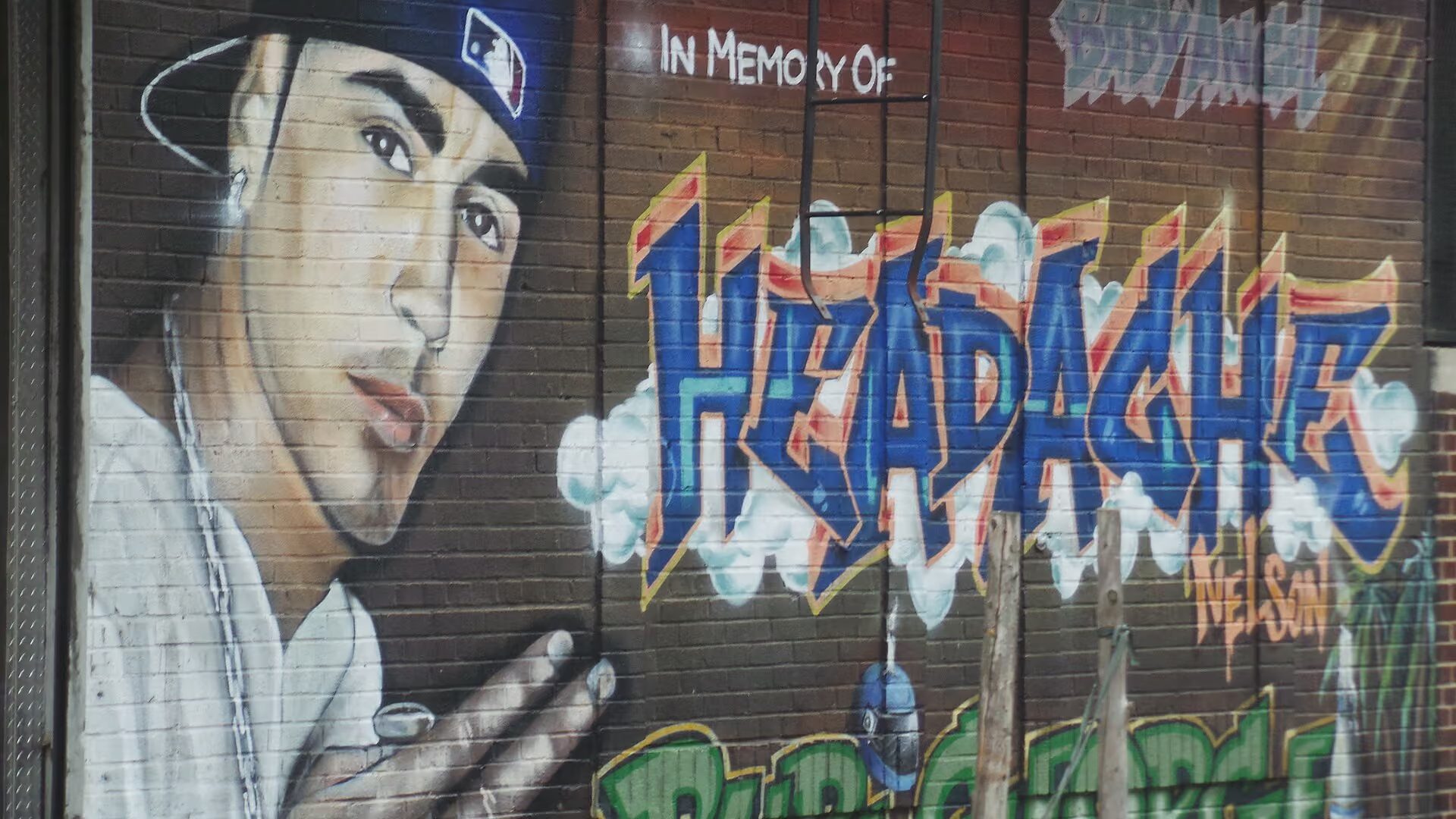
The visual dimension of hip-hop began here, with graffiti. Young writers — their medium the subway cars that moved through every borough, their audience the entire city of New York — developed an entire visual language from scratch. Tags became throw-ups became full pieces. Lettering styles evolved into wildstyle, 3D, chrome, and color fades. Artists developed signatures and crews and competed for the most visible spots on the most visible trains.
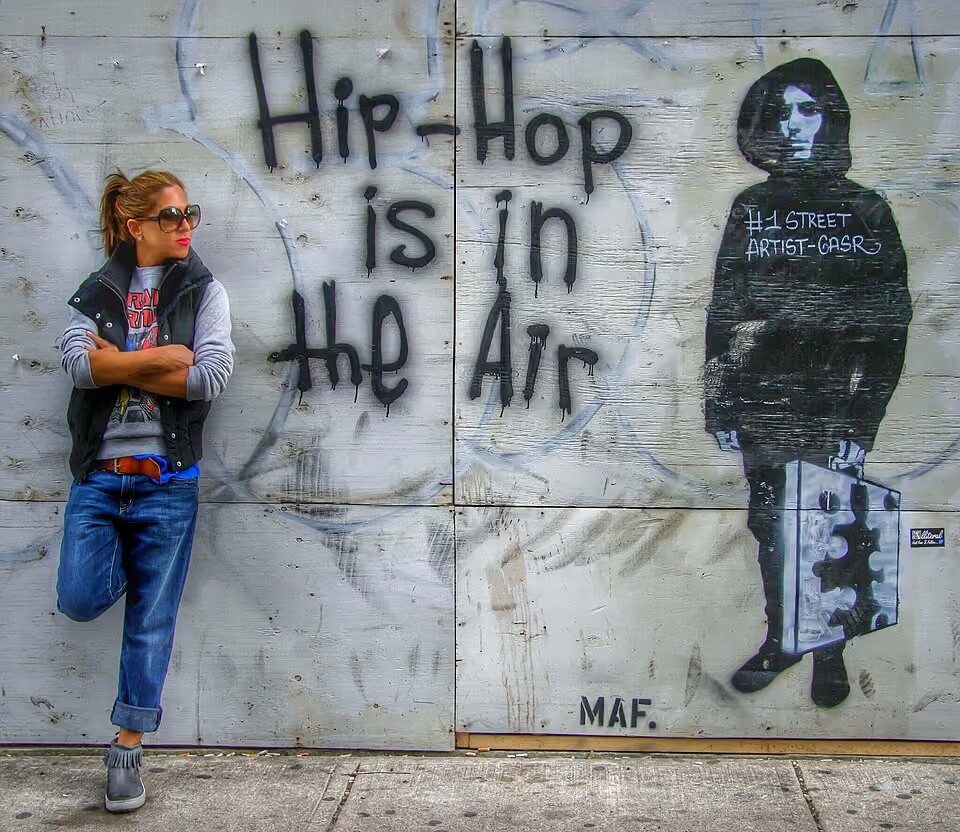
Graffiti wasn't vandalism that happened to look good. It was a deliberate, sophisticated visual art form created by people who had been told their neighborhoods, their communities, and their experiences didn't matter — and who responded by writing their names, in letters as large and as impossible to ignore as they could manage, on the most public surfaces available.
That impulse — visibility as resistance, aesthetics as assertion of existence — runs through every subsequent development in hip-hop visual culture.

Before face tattoos, before designer collaborations, before music videos with million-dollar production budgets, there were chains.
Gold chains appeared in hip-hop culture in its earliest documented period. By the time Run-DMC and the Beastie Boys were wearing them in the mid-1980s, they were already established as the signature accessory of the culture. But the meaning behind them runs deeper than fashion.
Jewelry as adornment has deep roots in West African and African diasporic cultural traditions — gold and precious objects carrying spiritual, social, and communal significance that predates hip-hop by centuries. When enslaved people were stripped of their names, their languages, their family structures, and their cultural practices, the prohibition on adornment was part of the same project of erasure. Reclaiming visible wealth, visible beauty, visible status through jewelry carries that history whether or not every person wearing a chain is consciously thinking about it.
In the specific context of hip-hop, jewelry — chains, pendants, grills, rings — became a public declaration of success achieved against the odds. Not inherited wealth, not institutional access, but something built from nothing by people the system wasn't designed to support. The more visible the jewelry, the louder the statement: I made it. I'm here. You will see me.
Run-DMC wore Adidas tracksuits and thick gold rope chains. LL Cool J had a signature Kangol hat and gold chains. Big Daddy Kane and Slick Rick wore jewelry so elaborate it verged on the theatrical. In each case the jewelry wasn't incidental to the image — it was central to what the image was saying.
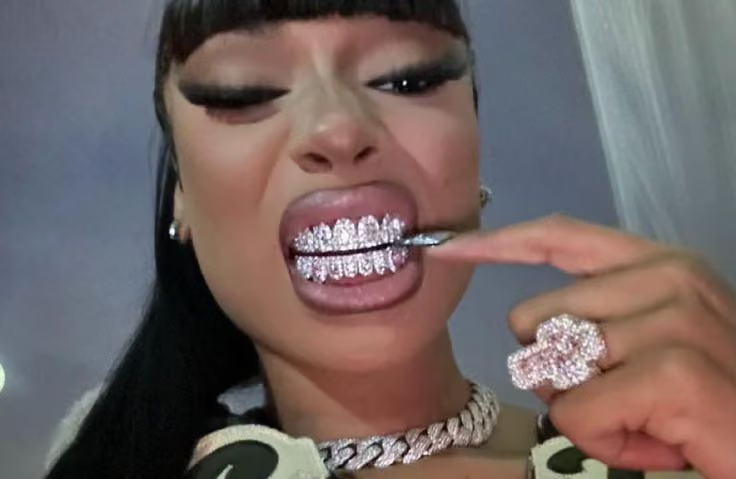
Grills — gold or diamond dental covers — extended this logic to the mouth itself. An accessory visible only when you open your mouth to speak or smile, worn by artists who made their names by speaking and performing. The grill says: even the way I talk is jewelry.
Run-DMC's 1986 tribute to their Adidas sneakers — "My Adidas" — was one of the first songs ever to earn a major corporate sponsorship deal for hip-hop artists, but it was also something more than a marketing moment. It was a declaration of aesthetic values.
The sneaker and the tracksuit were hip-hop's foundational garments not because hip-hop artists were particularly athletic but because athletic wear was what was available, affordable, and built for the physicality of breakdancing, of outdoor parties, of moving through the city on foot. Practicality became identity became cultural statement.
Adidas, Nike, and Puma all became canonized in hip-hop culture before the mainstream fashion industry recognized what was happening. By the time the fashion industry started paying attention, hip-hop had already developed its own internal hierarchy of sneaker culture — limited editions, colorways, collaborations — that operated entirely outside mainstream fashion media and didn't need its validation.
The sneaker resale market that now moves billions of dollars annually traces its direct lineage to hip-hop sneaker culture in the 1980s and 90s. So does the "drop" model of retail — releasing limited quantities to create immediate demand — that virtually every major fashion brand now uses. The industry took the model from a culture it originally dismissed as too street, too Black, too marginal to take seriously.
The oversized aesthetic that defined hip-hop fashion through the late 1980s and 1990s — XXXL t-shirts worn as dresses, jeans several sizes too large, jackets that swallowed the body — has practical origins that evolved into powerful symbolism.
Practically, baggy clothing was what was affordable and available in communities where money was tight. Children wore hand-me-downs from older siblings. Adults bought clothing that would last and allow for movement. The oversized fit wasn't a choice against fitted clothing — it was what people had.

But when hip-hop culture elevated its own aesthetics, the oversized silhouette became intentional. It communicated abundance — having more than you needed. It communicated ease — not constrained, not buttoned up, moving freely through the world. And it communicated a deliberate rejection of the fitted, formal aesthetics of mainstream respectability: the suit, the tie, the clothing of corporate power worn by people who had historically excluded the communities hip-hop came from.
This rejection of respectability politics in dress is worth naming explicitly. Hip-hop aesthetics from their origins have included a deliberate refusal to dress for mainstream white acceptance. The oversized fit, the baseball caps worn backward, the hoods up — these weren't ignorance of dress codes, they were rejection of dress codes and the power structures those codes represented.
The baggy silhouette wasn't anti-fashion. It was a different fashion, with a different value system, on its own terms.
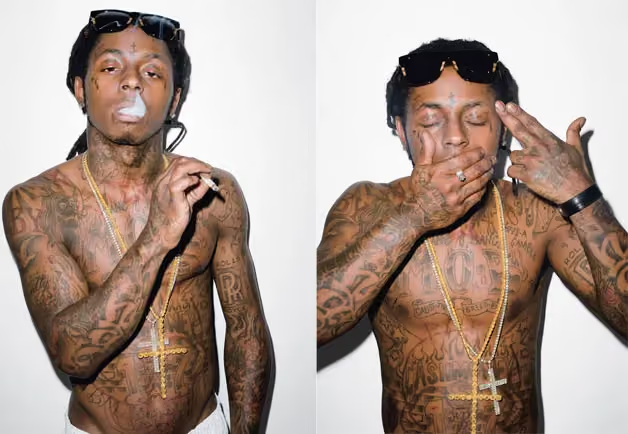
Tattoos have been part of hip-hop's visual language since at least the early 1990s, but their role has expanded dramatically over the past thirty years, culminating in the face tattoo era that represents the most extreme expression of hip-hop's commitment to visible self-declaration.
Understanding tattoos in hip-hop requires understanding what tattoos mean in the broader context of Black American and Latin American communities where hip-hop was born. Throughout history, tattoos have served as markers of group membership, survival, loyalty, and identity -- and their function in these communities is the same. Tattoos use the body as a canvas to declare -- publicly and permanently -- the things that matter most. If creative projects like making music can be seen as wearing your heart on your sleeve, inking what matters into your skin forever is the literal, physical embodiment of the concept.
Prison tattoos, gang tattoos, memorial tattoos for the dead, tattoos of names and neighborhoods -- all of these specific categories of tattoo are now common in hip-hop culture. But how did they embed themselves here? One thread these different styles all have in common is that they are authentic expressions of experiences within the community the rappers came from, much like the music itself. When Tupac tattooed "THUG LIFE" across his abdomen, it wasn't a marketing decision. It was a statement of where he came from and who he was accountable to.
As hip-hop moved into the mainstream, tattoos moved with it, but their meaning evolved. What began as organic markers of community became personal narratives. Tattoos became more about choosing your own identity. Bold, loud, unapologetic, and unafraid.
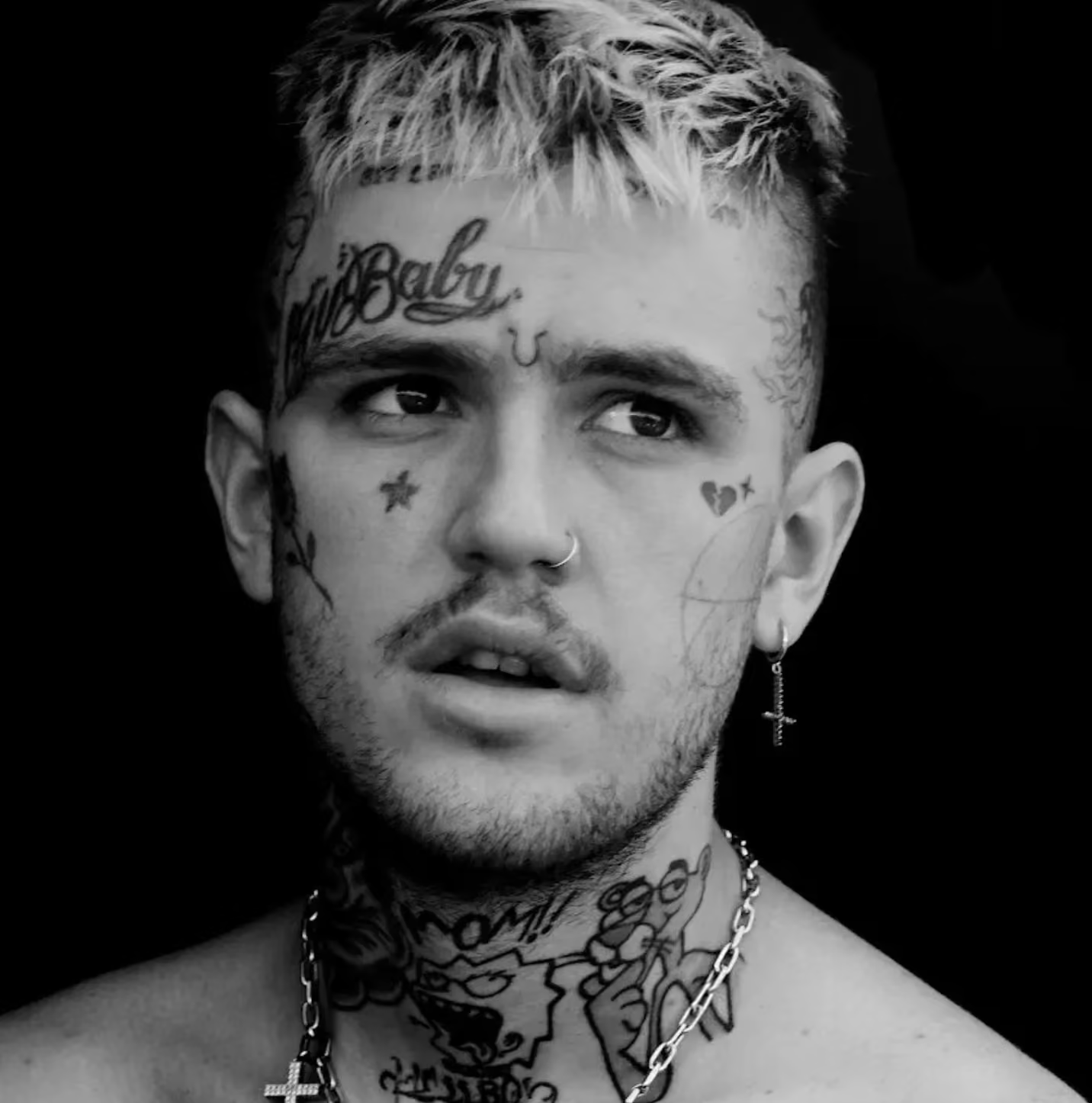
Face tattoos represent the furthest extension of this logic. Unlike body tattoos that can be covered by clothing, face tattoos are permanently visible, a commitment that cannot be taken back or hidden for professional or social convenience. They're a complete rejection of code-switching, a refusal to present a sanitized version of yourself for mainstream consumption. A refusal to present a different face for different audiences. Not to mention, the face is an essential element of how we interact with one another. It's how we convey emotion, intentionally (like smiling to reassure someone) or unintentionally (like when your brow furrows while you're thinking). When it comes to personal communication, we don't really put our "foot" forward, we put our face forward. So using the face as a canvas is even bolder. It's a way of controlling the narrative. When you see me, when you interact with me, this is who I want you to see. Artists including Lil Wayne, Post Malone, and many others have used face tattoos as declarations of identity that are specifically incompatible with the politics of "respectability."
And like lyrics, the meaning of a tattoo is always personal. The same design can carry different weight depending on who wears it and why. Tattoos are a visual storytelling tradition, a permanent personal narrative about life events, mental health, relationships, and more. They speak the same language as rap music does, just in a different medium.
The relationship between hip-hop and luxury fashion is one of the most complicated and interesting chapters in the visual culture story.
Through the late 1990s and 2000s, hip-hop artists began incorporating luxury fashion labels into their visual identity with a deliberateness that changed the fashion industry. Gucci, Louis Vuitton, Versace, Dior — labels that had historically catered to wealthy white consumers and had no particular relationship with hip-hop — became status symbols in the culture. But with a difference.
Luxury fashion in traditional contexts communicated inherited wealth, class membership, old money. In hip-hop, the same labels communicated something different: the ability to access spaces you were historically excluded from, the acquisition of symbols of wealth by people who weren't supposed to have them, and — crucially — the capacity to wear those symbols in a way that was specifically hip-hop rather than aspirationally upper-class.
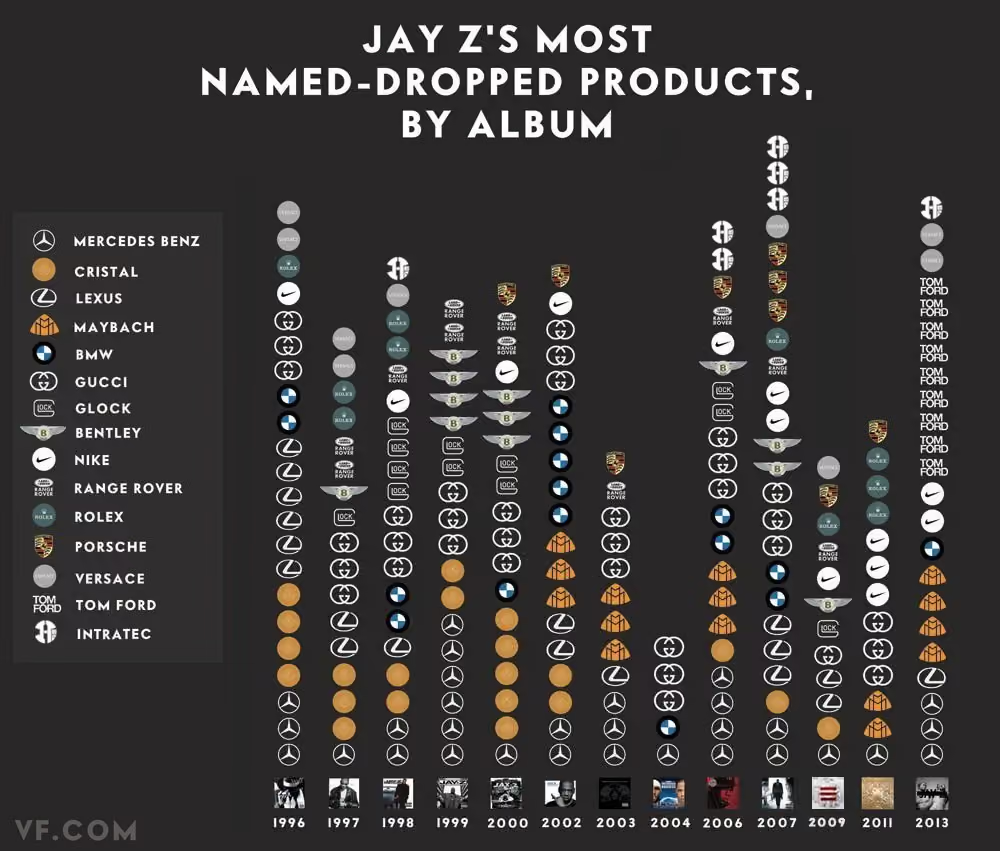
When Jay-Z rapped about Versace or Biggie rapped about Coogi sweaters, the message wasn't "I want to be like the people who traditionally wear this." The message was "I can afford this and I'm going to wear it my way." The reclamation of luxury aesthetics for hip-hop purposes, rather than the adoption of luxury aesthetics to signal mainstream acceptance.
The fashion industry initially responded with ambivalence — luxury brands benefited from the cultural exposure but were often uncomfortable with the association. That ambivalence has since given way to active pursuit: the same labels now actively court hip-hop artists as collaborators and ambassadors, and the streetwear-luxury hybrid that defines contemporary high fashion is a direct product of hip-hop's influence on the industry.
The music video era — from the launch of MTV in 1981 through its dominance in the 1990s and its transition to YouTube in the 2000s — gave hip-hop a visual format that accelerated and amplified the culture's aesthetic development.
Music videos allowed hip-hop artists to control their visual narrative in ways that press coverage, controlled by others, didn't. They became vehicles for establishing and evolving visual identity — the setting, the clothing, the choreography, the cars, the jewelry, all of it deployed with increasing intentionality as production values rose and the cultural stakes became clearer.
The video for "Straight Outta Compton" established a visual grammar for West Coast rap that was as distinct from East Coast aesthetics as the music itself.
Missy Elliott's videos with director Hype Williams created visual languages that were genuinely unprecedented — surreal, bold, specifically designed to be unlike anything else. Hype Williams himself became a visual auteur, his fisheye lens and saturated color palette defining an era's visual imagination.
The fashion and styling choices made in music videos had immediate real-world cultural impact in a way that almost nothing else did. An artist wearing a particular brand or style in a video could move that item from niche to ubiquitous within weeks. The cultural pipeline between hip-hop visual culture and mainstream consumer culture ran directly through the music video.
Contemporary hip-hop aesthetics exist in a state of deliberate contradiction. The genre that once defined itself against mainstream fashion has become the dominant influence on mainstream fashion. The aesthetic choices that were once marks of outsider status — tattoos, gold teeth, streetwear — are now aspirational for people who have never experienced the communities those choices came from.
This creates a genuine tension that different artists navigate differently. Some lean into the luxury fashion world completely, becoming brand ambassadors and fashion designers in their own right. Some return deliberately to the cultural roots, centering authenticity and community in their visual choices. Some create entirely new visual languages that don't map cleanly onto either tradition.
What hasn't changed is the fundamental function: hip-hop aesthetics are still, at their core, about the declaration of identity. Who you are, where you come from, what you've survived, what you value, what you refuse to apologize for. The specific visual vocabulary changes constantly. The underlying meaning — visibility as power, aesthetics as self-determination — is the same as it was in the South Bronx in 1973.
Don’t forget to follow Kellee for the latest news and music:
add soundcloud, IG





Sign up to get our latest news and stay connected.
Thank you! Your submission has been received!
Oops! Something went wrong while submitting the form

.avif)

.avif)

.avif)