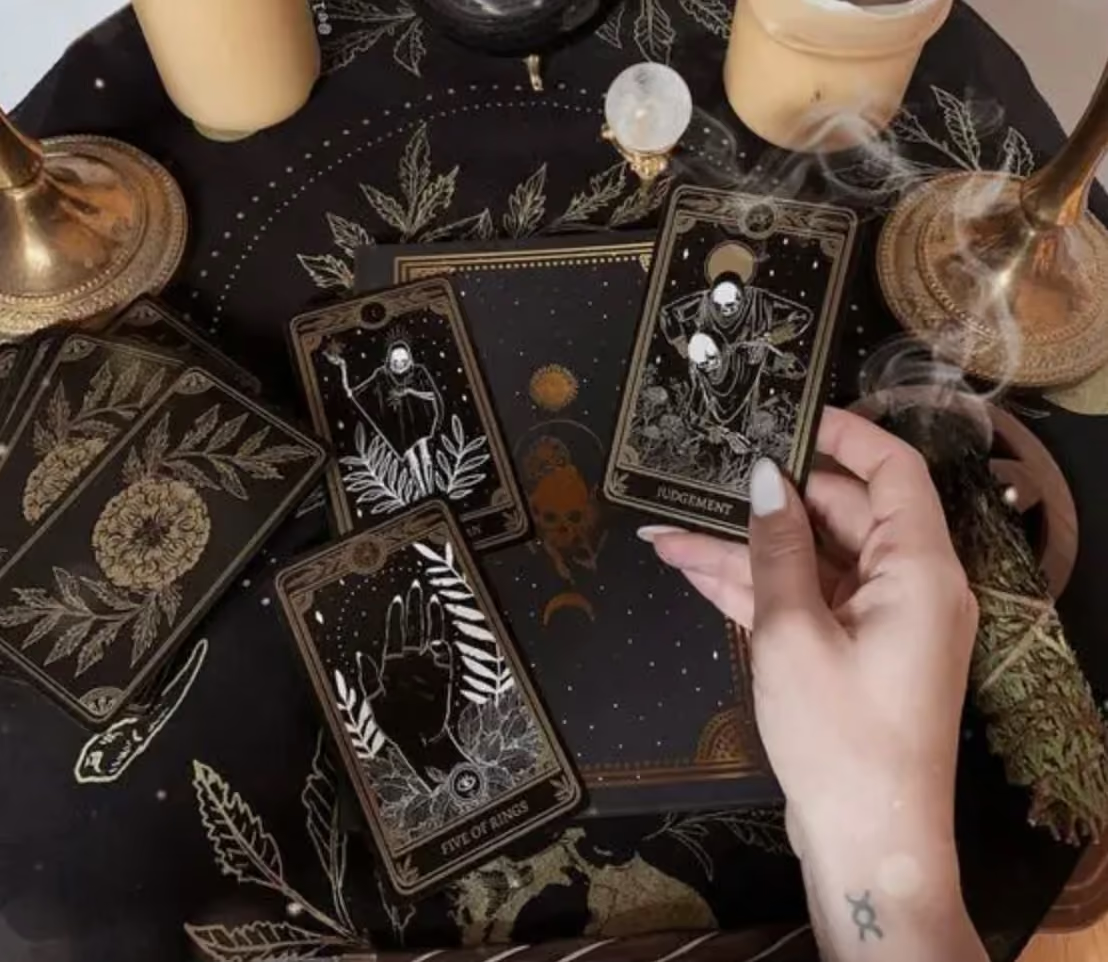
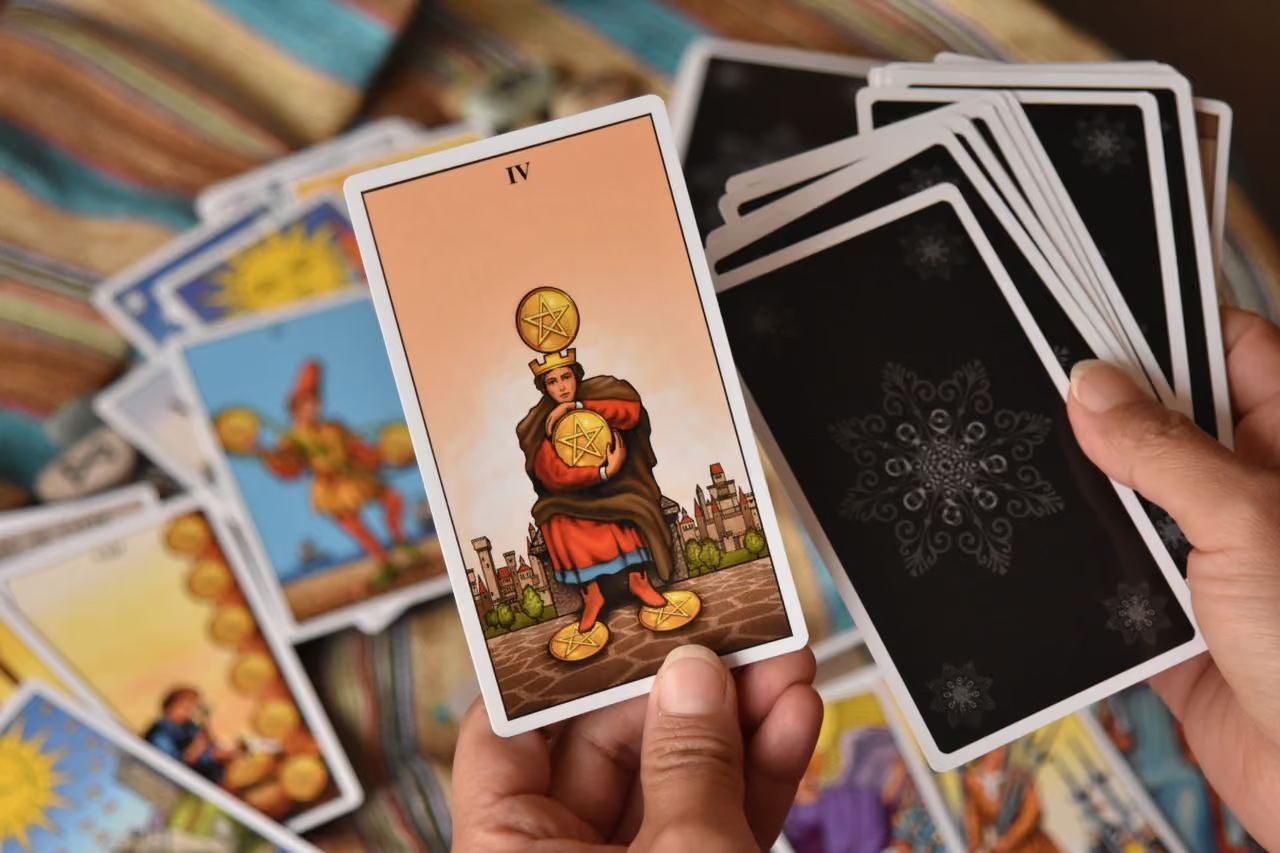
When people talk about tarot, they usually talk about the Major Arcana — the Death card, the Tower, the Fool setting off on his journey. These are the cards that carry the drama, the archetypes, the imagery that has seeped into popular culture. They’re also only 22 of tarot’s 78 cards.
The other 56 are the Minor Arcana. And in many ways, they’re where the real work happens.
I’ve been reading tarot for years and writing about it even longer, and the pattern I notice consistently is this: beginners are drawn to the Major Arcana because the imagery is striking and the meanings feel significant. Experienced readers often find themselves more interested in the Minor Arcana — because that’s where a reading becomes specific, personal, and genuinely useful rather than broadly true in the way that horoscopes are broadly true.
The Minor Arcana is where tarot stops talking about the shape of your life and starts talking about your Tuesday.
The Minor Arcana comprises 56 of the 78 cards in a standard tarot deck. It is divided into four suits — Cups, Wands, Swords, and Pentacles — each containing 14 cards: the Ace through Ten, plus four court cards (Page, Knight, Queen, King).
The word “arcana” comes from the Latin for secret or mystery. “Minor” doesn’t mean less important — it means closer to the everyday, more immediate, more directly connected to the texture of ordinary experience rather than the larger forces that the Major Arcana addresses.
Think of it this way: the Major Arcana tells you that a significant transition is underway. The Minor Arcana tells you how you’re feeling about it (Cups), what you’re actually doing about it (Wands), what you’re thinking about it (Swords), and what practical resources you have available (Pentacles). Both matter. But the second set of answers is often the more actionable one.
The Minor Arcana also has a direct ancestor: the standard playing card deck. The four suits — hearts, diamonds, clubs, spades — map closely onto Cups, Pentacles, Wands, and Swords respectively. Many historians believe the tarot deck evolved from existing playing card traditions in 15th century Europe, with the Major Arcana added as a trump suit for card games before the whole system was adopted for divination.
Each suit of the Minor Arcana corresponds to one of the classical four elements, a domain of human experience, and a quality of energy. Understanding the suits is the most efficient way to begin reading the Minor Arcana, because once you know what each suit is about, you have an immediate orientation to every card within it.
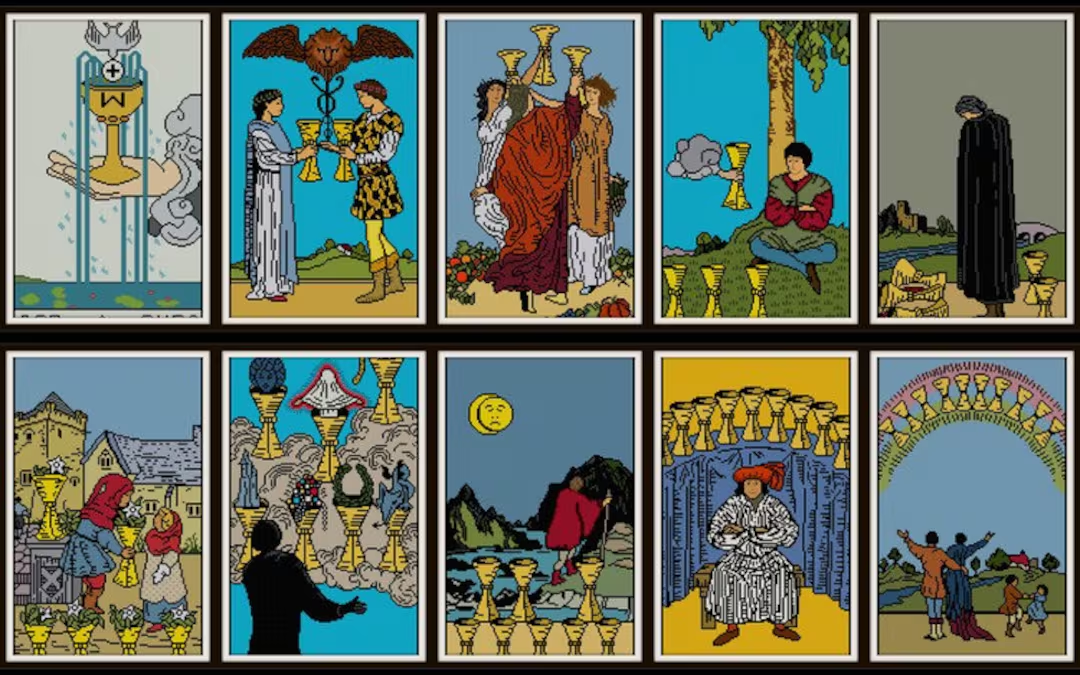
Cups governs the emotional and relational dimension of experience. When you pull Cups cards, the reading is asking you to look at how you feel — not what you think or what you’re doing, but what’s actually happening emotionally. Love, grief, connection, longing, compassion, joy, heartbreak — all of this is Cups territory.
Cups cards ask you to feel your way through situations rather than think your way through them. A spread heavy in Cups is almost always pointing toward an emotional truth that needs to be acknowledged before the practical situation can move forward.
The Cups suit tends to appear in questions about relationships (romantic, familial, and deeply personal friendships), about creative and spiritual life, and about the things we want and fear in ways we don’t always know how to name.
Key Cups cards to know:
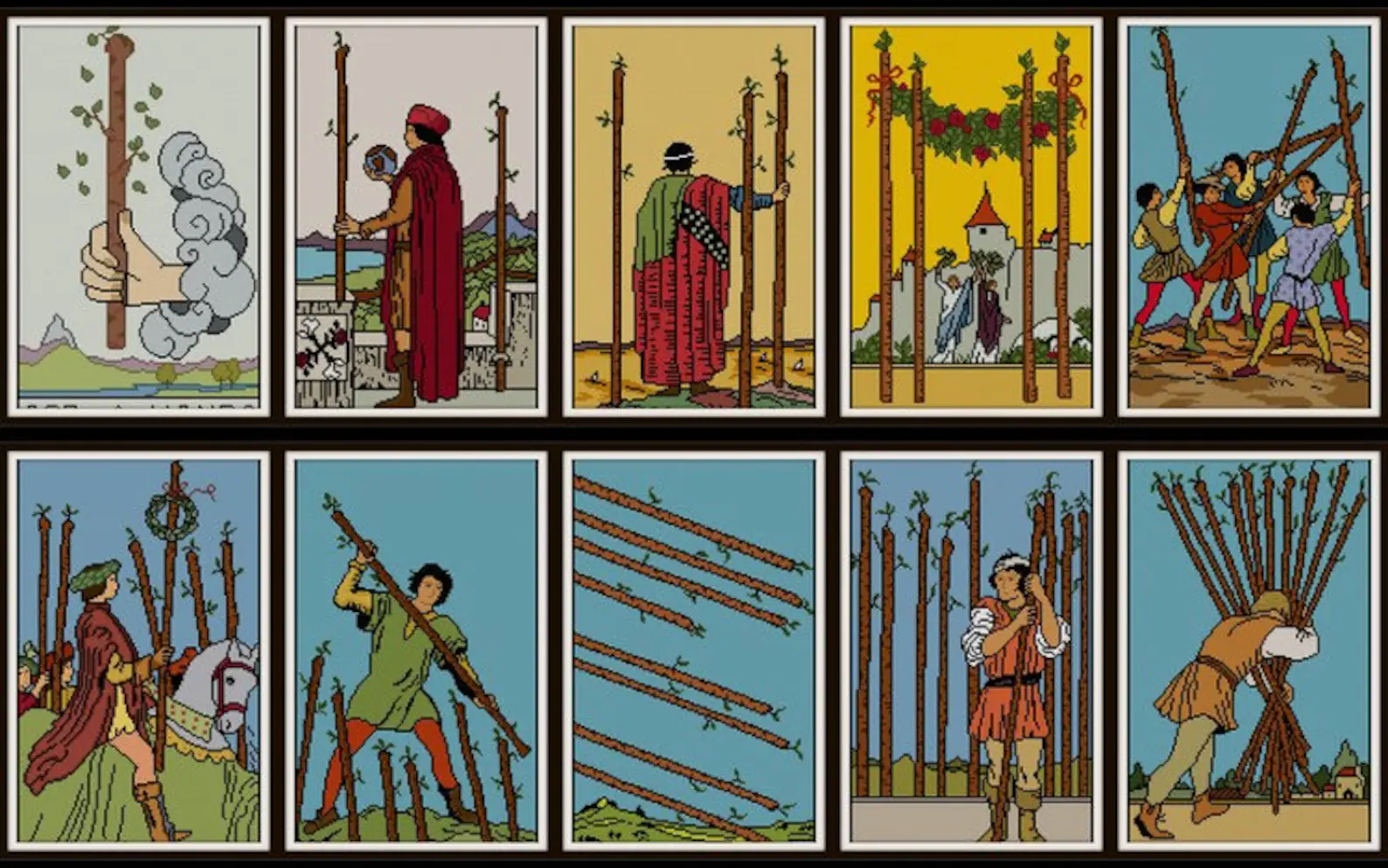
Wands governs the energetic and creative dimension — ambition, passion, inspiration, the drive to make something happen. When you pull Wands cards, the reading is asking about your energy, your motivation, your relationship to action and momentum.
Wands energy is entrepreneurial, visionary, sometimes impatient. It moves fast. It lights up and occasionally burns out. A spread heavy in Wands suggests something is actively in motion — ideas igniting, projects gaining speed, ambition seeking an outlet.
The shadow side of Wands is the suit that starts what it doesn’t finish, competes for competition’s sake, and burns through energy without sustainable direction. When Wands cards appear reversed or in challenging positions, that shadow is usually what’s being named.
Key Wands cards to know:
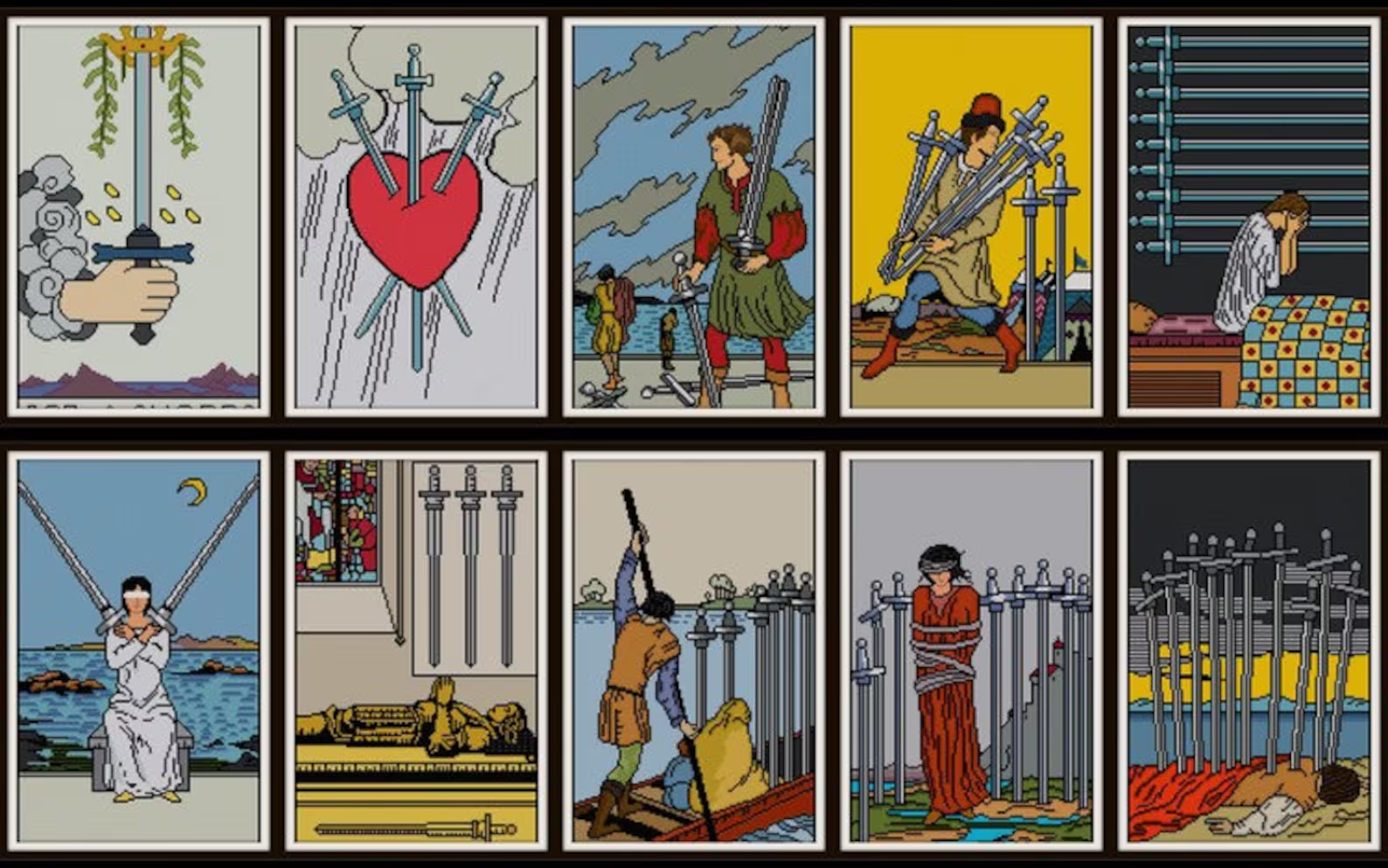
Swords governs the mental dimension — thought, communication, decision, conflict, and the kind of clarity that sometimes arrives as a cut rather than a comfort. Swords are the most intellectually demanding suit and the one most associated with difficulty.
That reputation for difficulty is worth examining. Swords cards aren’t difficult because they predict bad outcomes — they’re challenging because they ask for honesty. They represent the situations where something needs to be said, decided, or faced that we’ve been avoiding. The discomfort of Swords is almost always the discomfort of truth.
A spread heavy in Swords is asking you to think clearly, communicate directly, and make a decision you’ve been circling. The sword cuts both ways — it can wound, but it can also free.
Key Swords cards to know:
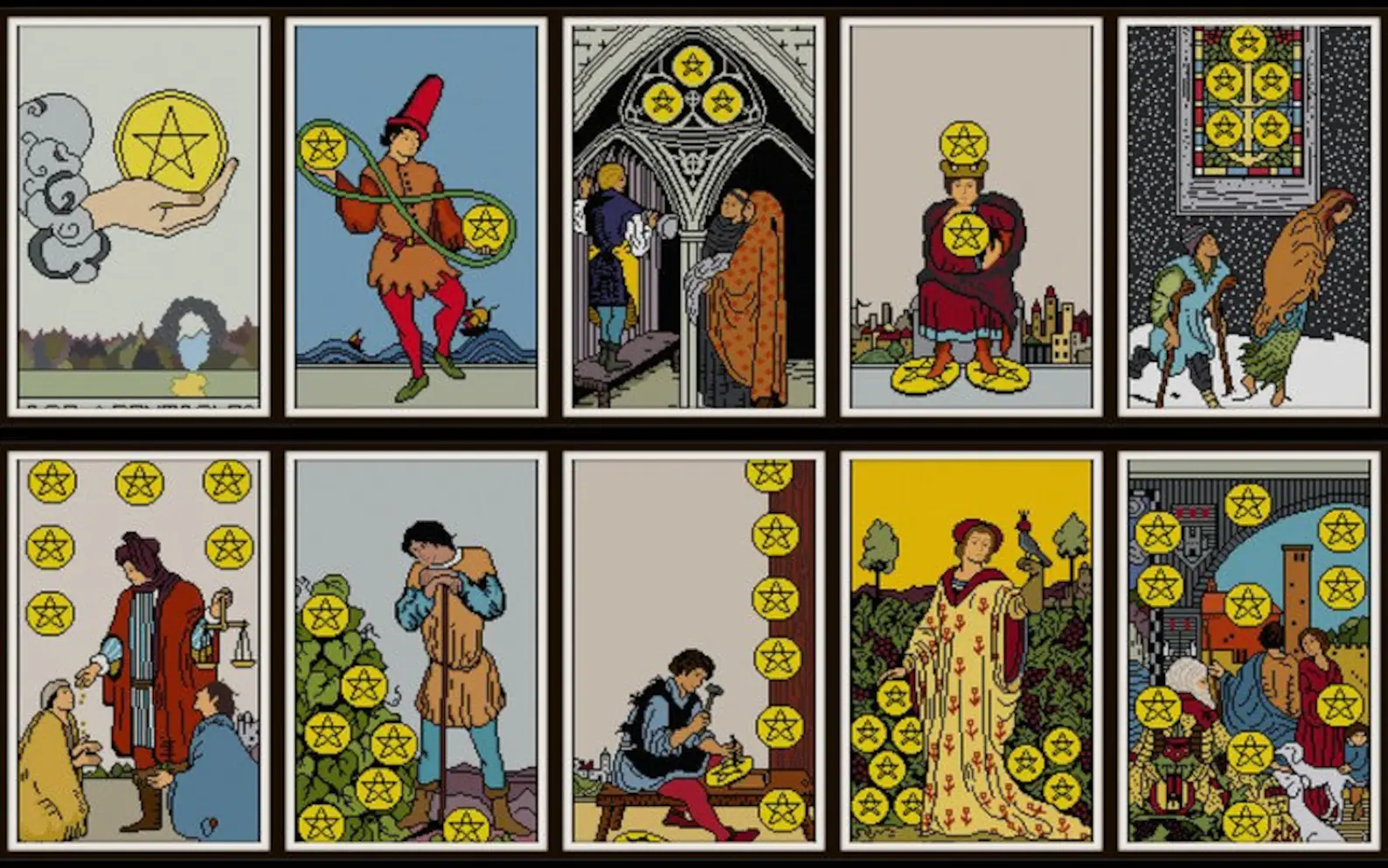
Pentacles governs the material and physical dimension — money, work, health, home, the body, and the long slow process of building something stable. When Pentacles cards appear, the reading is asking about practical reality: what resources are available, what’s being built, what the actual financial or physical situation is.
Pentacles is often called the “boring” suit, which is a misunderstanding. It’s the suit that asks whether your values are reflected in how you actually spend your time and money — which is one of the most searching questions in any reading. It’s patient in a way the other suits aren’t, and it’s honest about what things actually cost.
A spread heavy in Pentacles is asking you to attend to practical, material reality rather than escaping into emotion, vision, or analysis. Sometimes the most spiritual answer is to pay attention to the physical.
Key Pentacles cards to know:
Within each suit, the numbered cards tell a story of progression — from the pure, undifferentiated energy of the Ace through the complexity and completion of the Ten. Learning the numerical meanings gives you an additional layer of interpretation for every card in the Minor Arcana.
Ace — Pure potential. The Ace of any suit is the seed of that suit’s energy in its most essential form — unmodified, unlimited, not yet shaped by circumstance or choice. An Ace is an opening, an invitation, the moment before the story begins.
Two — Balance and choice. Twos represent the moment when the initial energy of the Ace encounters something else — another person, a decision, an opposing force. The Two asks: how do these two things relate? What decision needs to be made?
Three — Initial growth and expression. Threes represent the first flowering of the suit’s energy into the world — the idea becoming visible, the collaboration producing something, the emotion finding expression. Three is the first number where something actually exists.
Four — Stability and consolidation. Fours represent a pause in the story — a moment of rest, assessment, or consolidation. The energy that has been moving settles temporarily. Fours can feel stagnant when what’s needed is movement, or stabilizing when what’s needed is rest.
Five — Conflict and disruption. Fives are the challenging middle of the story — the point where things get harder, where conflict arises, where the initial direction is tested. Five is rarely comfortable and almost always necessary.
Six — Resolution and harmony. After the disruption of Five, Six represents a moment of resolution — things coming back into balance, generosity flowing, movement resuming after a period of difficulty. Sixes often carry a quality of relief.
Seven — Reflection and reassessment. Sevens ask you to look at the situation from a different angle — to step back, to question assumptions, to assess what’s actually happening beneath the surface. There’s often a quality of strategy or inner work in Seven cards.
Eight — Momentum and movement. Eights represent the energy of the suit in full motion — action accelerating, movement becoming rapid, things that have been building finally releasing. Eight is kinetic in a way that earlier numbers aren’t.
Nine — Near-completion and intensity. Nines are almost there — one step from the end of the suit’s story, which produces both the satisfaction of near-completion and the specific anxiety of almost-but-not-quite. Nine cards often feel intense.
Ten — Completion and transition. Tens represent the end of the suit’s cycle — the story arriving at its conclusion, which is simultaneously a completion and the seed of a new beginning. Ten carries both fulfillment and the awareness that something is ending.
The court cards are the 16 cards — four per suit — that represent human figures rather than situations. They are frequently the most confusing part of the Minor Arcana for developing readers, because they can mean several different things depending on context.
A court card in a reading might represent:
The four levels of court card across each suit represent a progression of mastery:
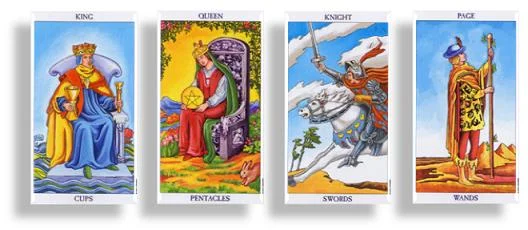
Pages represent the beginning stage of the suit’s energy — the student, the curious newcomer, the person just encountering this territory for the first time. Pages can also represent messages or communications. Their energy is enthusiastic, open, and unfinished.
Knights represent the suit’s energy in active pursuit — the person in motion, committed to the suit’s goals, sometimes to an extreme. Knights are the most single-minded of the court cards, which makes them powerful and occasionally reckless. The Knight of Swords charges forward with complete conviction; the Knight of Pentacles moves with methodical, unstoppable steadiness.
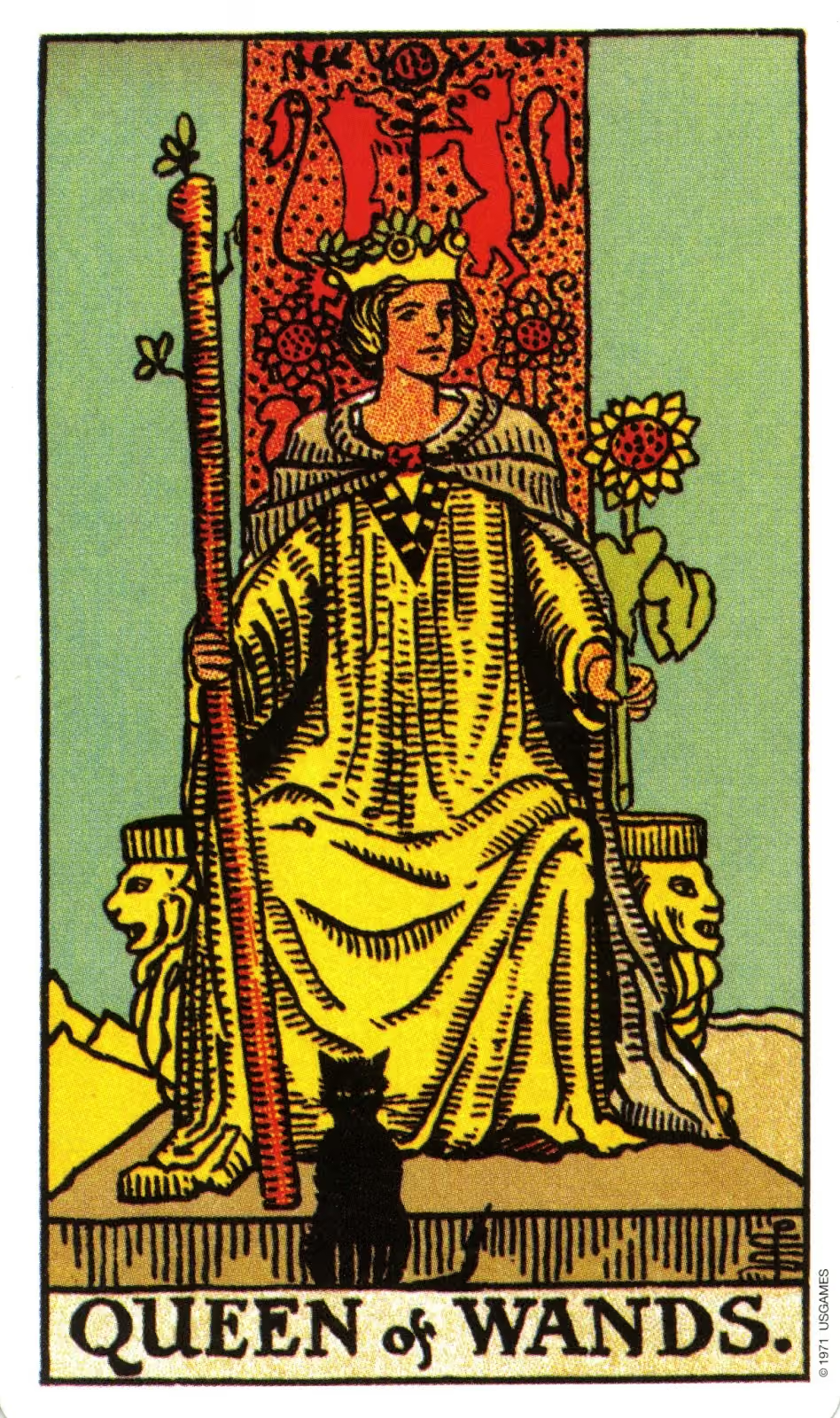
Queens represent the suit’s energy internalized and mastered — the person who has deeply absorbed the suit’s wisdom and expresses it naturally, without effort. Queens tend to be receptive and relational in their mastery. The Queen of Cups feels deeply and holds that depth with grace; the Queen of Swords has moved through pain and arrived at a clear-eyed compassion.
Kings represent the suit’s energy externalized and directed — the person who commands the suit’s domain, who leads and decides from a place of established authority. Kings tend to be outward-facing and directive. The King of Wands leads with vision and charisma; the King of Pentacles builds and manages with long-term thinking.
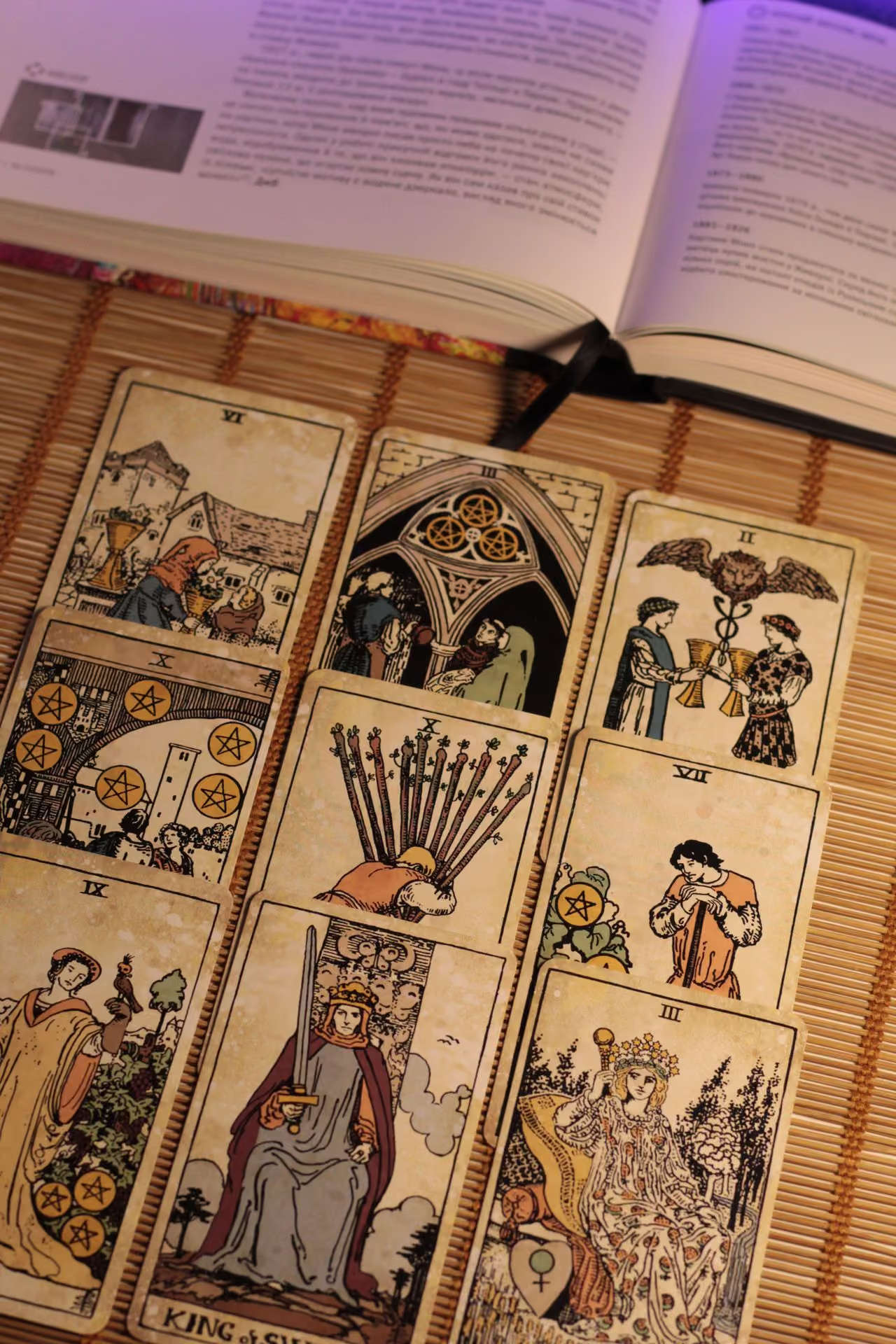
Understanding the suits and the numbers gives you the building blocks. Reading the Minor Arcana in practice means learning to combine those elements fluidly — to look at the Three of Cups not as a definition to be recalled but as the energy of Cups (emotion, relationship) at the stage of Three (initial growth, expression) in a specific situation, and to let that combination speak to what’s actually happening.
A few practical notes for developing readers:
Pay attention to suit distribution. When multiple cards of the same suit appear in a reading, that suit’s domain is where the most significant energy is currently concentrated. Three Swords cards in a five-card spread is the reading asking you, directly, to think clearly about something.
Watch the numbers. The numerical progression tells a story about where in a process the situation currently is. Low numbers (Ace through Four) suggest beginnings and early stages. Mid numbers (Five through Seven) suggest the complicated middle. High numbers (Eight through Ten) suggest the situation is further along than it might feel.
Court cards often point at people — but not always. When a court card appears, ask both questions: is this someone in my life, and is this an aspect of myself? Often the most useful answer is the second one.
Reversed cards add nuance. A reversed Minor Arcana card can indicate the energy of that card is blocked, internalized, or operating at reduced intensity. It can also indicate the shadow side of the card’s energy — the less constructive expression of that suit and number combination. Reversed readings deserve their own full exploration.
What I return to, after years of reading and writing about tarot, is this: the Minor Arcana is a map of what it’s actually like to be alive in the everyday sense. Not the archetypal forces that shape a life — those are the Major Arcana’s territory — but the texture of living it.
How it feels when something begins (Aces). How it feels when two things are in tension (Twos). The difficulty of the middle (Fives). The relief of resolution (Sixes). The weight of carrying something almost to completion (Nines). The bittersweet quality of endings that are also beginnings (Tens).
The Minor Arcana knows what Tuesday feels like. That’s not a small thing. Most of life is Tuesday.
Don’t forget to follow Kellee for the latest news and music:
add soundcloud, IG





Sign up to get our latest news and stay connected.
Thank you! Your submission has been received!
Oops! Something went wrong while submitting the form

.avif)